
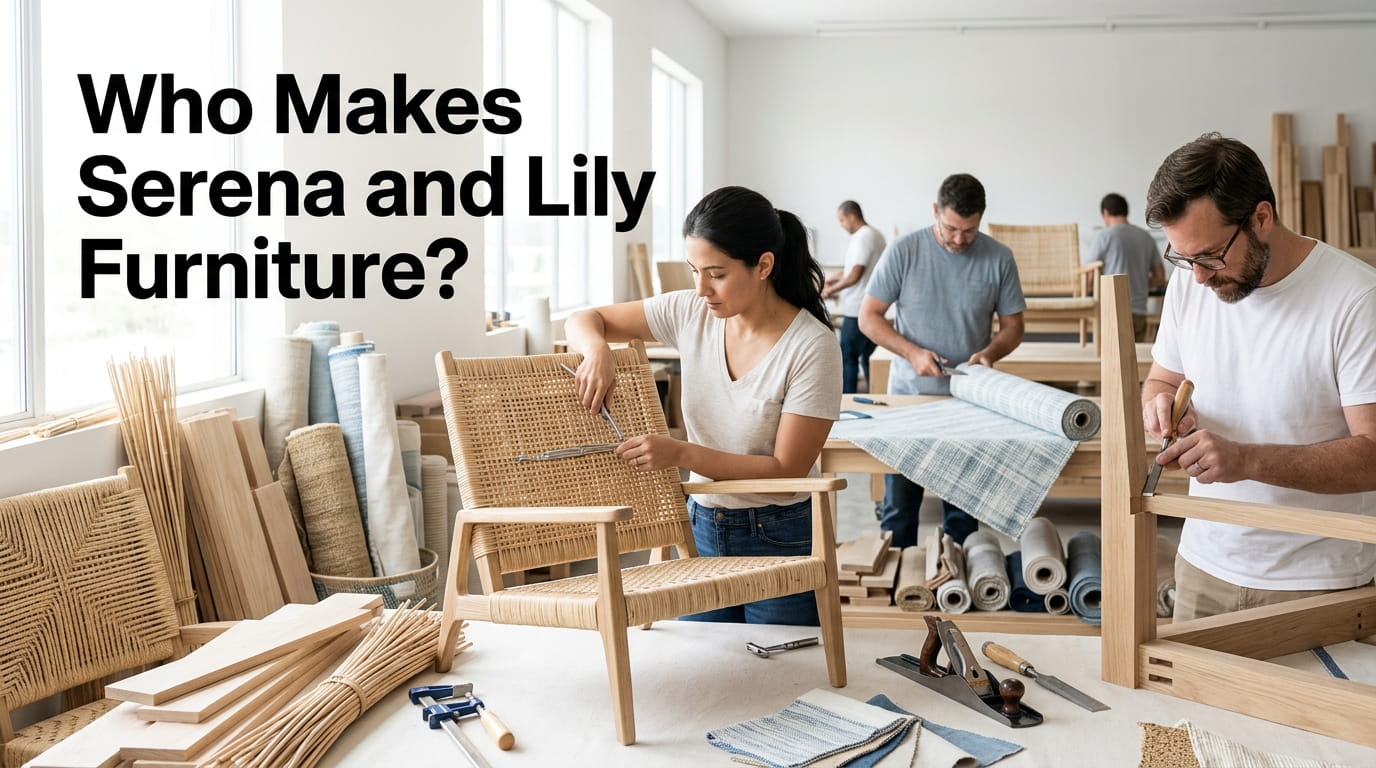
Serena and Lily furniture is sourced from manufacturers around the world, with a focus on artisan workshops in Asia and globally inspired materials such as rattan, seagrass, and handwoven textiles.
Serena and Lily is a luxury coastal lifestyle brand founded in 2003 by Serena Dugan and Lily Kanter, headquartered in Sausalito, California.
The company is privately held and sells through its website at serenaandlily.com, a growing network of retail stores, and a design trade program.
Who actually makes Serena and Lily furniture, and does the brand’s coastal aesthetic come with genuine craftsmanship behind it?
This guide covers Serena and Lily’s sourcing model, ownership, product quality, and how it compares to Pottery Barn and Arhaus.
So let’s get started.
Table of Contents
Who Owns Serena and Lily?

The brand was built around a coastal, natural aesthetic inspired by the founders’ Northern California surroundings.
The company has considered a US IPO in recent years, with reports in 2022 suggesting it could be valued at over $1 billion.
As of 2025, Serena and Lily remains privately held and independent from any major retail conglomerate.
Where Is Serena and Lily Furniture Made?
The brand’s signature rattan and seagrass pieces are produced by artisan workshops primarily in Asia, where these materials and weaving techniques originate.
Upholstered pieces are produced through a mix of domestic and international manufacturing partners depending on the collection.
Each product page on serenaandlily.com lists country of origin, allowing buyers to check sourcing before purchasing any specific item.
What Is Serena and Lily’s Design Aesthetic?
Serena and Lily is best known for its coastal and relaxed-luxury design language, built around natural materials, soft palettes, and breezy silhouettes.
The brand’s signature materials include rattan, whitewashed wood, seagrass, linen, and handwoven textiles sourced from artisans around the world.
New collections are released seasonally, with the Spring 2025 collection featuring new colorways in dining furniture, bedroom pieces, and outdoor seating.
The brand’s Riviera collection, trademarked in late 2024, signals a continued expansion of its European-coastal influenced product line.
Is Serena and Lily Furniture Good Quality?
Serena and Lily occupies the upper-premium tier of the lifestyle furniture market, with pricing that reflects its design-led positioning and natural material sourcing.
Rattan and seagrass pieces from the brand’s core collections are widely praised for craftsmanship and durability compared to mass-market alternatives.
Upholstered pieces receive positive reviews for fabric quality and construction, though some buyers note lead times can be longer than competitors.
Interior designers consistently recommend the brand as one of the strongest options in the coastal and natural-materials furniture segment.
How Does Serena and Lily Compare to Pottery Barn?
Both brands are premium lifestyle furniture retailers with similar pricing but distinct aesthetic identities.
Pottery Barn has a broader catalog covering traditional, transitional, and contemporary styles with a warmer, more classic American feel.
Serena and Lily is more narrowly focused on coastal and globally inspired natural materials, making it the stronger choice for buyers with that specific aesthetic.
Pottery Barn has a larger retail footprint and more accessible price points across its range, while Serena and Lily skews slightly higher at the mid-catalog tier.
Where Can You Buy Serena and Lily Furniture?
Serena and Lily sells through its website at serenaandlily.com and a growing number of retail stores across the United States.
The brand operates a design trade program for interior designers with dedicated trade pricing and project support.
Distribution for online orders is handled from the brand’s large Rincon, Georgia fulfillment facility, which serves the entire continental United States.
For other furniture brand comparisons, also read about where West Elm furniture is made, where Restoration Hardware furniture is made, and where Crate and Barrel furniture is made.

I am Jack Neel, a mechanical engineer, researcher, and writer. I created this website to share my knowledge about different brands and products with you. I research the manufacturers behind the brands and provide you with the information you need to make smart buying decisions.