

The Wagoneer and Grand Wagoneer are made by Jeep, a brand owned by Stellantis, the multinational automaker formed in 2021 through the merger of Fiat Chrysler Automobiles and PSA Group.
Both the standard Wagoneer and the premium Grand Wagoneer are assembled at the Warren Truck Assembly Plant in Warren, Michigan, a factory that has been producing American trucks and SUVs since 1938.
The Wagoneer nameplate was revived by Jeep for the 2022 model year after a 28-year absence, with Stellantis investing over $1 billion to retool the Warren plant specifically for the new SUV program.
The 2025 Grand Wagoneer starts at $84,945 and is powered by a twin-turbocharged 3.0-liter Hurricane inline-six engine producing up to 540 horsepower, making it one of the most powerful SUVs in its class.
The 2025 Wagoneer, which starts at $59,945, is positioned as the most affordable full-size SUV in America, undercutting the Chevrolet Suburban and Ford Expedition on base price.
In October 2025, Stellantis announced a $100 million additional investment at Warren Truck to prepare the plant for a range-extended electric vehicle version of the Grand Wagoneer, planned for 2028.
Table of Contents
Who Makes the Wagoneer and What Company Is Jeep?

Jeep is an American automotive brand with roots stretching back to the 1940s military Willys MB. Today it is owned by Stellantis N.V., a Dutch-registered company with operational headquarters in Amsterdam and Auburn Hills, Michigan.
Stellantis was created in January 2021 when Fiat Chrysler Automobiles and PSA Group completed their merger. The resulting company owns 14 vehicle brands including Jeep, Ram, Dodge, Chrysler, Fiat, Peugeot, Citroen, Alfa Romeo, Maserati, Opel, Vauxhall, and Lancia.
Within Stellantis, Jeep is one of the most profitable and globally recognizable brands. It is responsible for the company’s largest-volume SUV lineup and is central to Stellantis’s North American revenue. The Wagoneer and Grand Wagoneer sit at the very top of Jeep’s lineup, above the Grand Cherokee and Gladiator.
Where Is the Wagoneer Made?
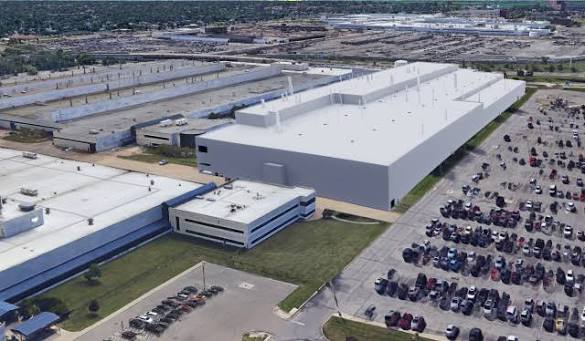
Every Wagoneer and Grand Wagoneer sold in the United States is assembled at the Warren Truck Assembly Plant at 21500 Mound Road in Warren, Michigan. The plant has been in continuous operation since 1938, making it one of the longest-running automotive assembly facilities in American history. It has produced more than 14.5 million vehicles over its 87-year history as of 2025.
The Wagoneer is built on a body-on-frame platform shared with the Ram 1500 pickup truck, which means the plant tooling and production processes are well integrated with Ram truck manufacturing techniques. Both short-wheelbase and long-wheelbase L versions of the Wagoneer and Grand Wagoneer come off the same Warren assembly line.
Warren Truck has operated on a single production shift since mid-2024 due to softer-than-expected demand for the large SUV lineup. The plant experienced multiple brief shutdowns in 2025 related to supply chain disruptions affecting the Hurricane inline-six engine. Despite these pauses, all Wagoneer production remains firmly rooted in Warren, Michigan.
What Is the Difference Between the Wagoneer and Grand Wagoneer?
The Wagoneer is the entry-level model in the lineup, starting at $59,945 for 2025. It uses a 3.6-liter Pentastar V6 engine in base trim and is positioned to compete with the Chevrolet Suburban L and Ford Expedition at a more accessible price point. The Wagoneer L is the long-wheelbase variant that adds third-row legroom and total cargo capacity.
The Grand Wagoneer is the premium variant, starting above $84,000 for 2025 and climbing well over $100,000 in fully loaded configurations. It uses the Hurricane twin-turbo inline-six as its standard engine, producing up to 540 horsepower in high-output form. The Grand Wagoneer is aimed squarely at the Cadillac Escalade and Lincoln Navigator, competing on luxury features, technology, and interior quality rather than on price.
Both nameplates are available in standard and L (long wheelbase) configurations. The Grand Wagoneer L in particular offers one of the largest passenger cabin volumes of any SUV currently on sale in the United States.
The Original Wagoneer: A Brief History of the Nameplate
The original Jeep Wagoneer was introduced in 1963 and ran in production until 1991, making it one of the longest continuous production runs of any single American vehicle nameplate. It is widely credited as the vehicle that defined the concept of the luxury 4×4 SUV before that segment had a formal name.
The original Wagoneer offered available woodgrain paneling, available air conditioning, and four-wheel drive in a package that blended station wagon practicality with off-road capability. It was revolutionary for its time and directly influenced the development of the Ford Explorer, Chevrolet Blazer, and every subsequent American luxury SUV.
After a 28-year gap, the nameplate was revived for the 2022 model year with a fully modern platform, all-new powertrains, and a focus on competing at the top of the full-size luxury SUV market rather than the mid-market positioning of the original.
Wagoneer vs. Suburban: Which Full-Size SUV Is Better?
The Chevrolet Suburban and Wagoneer are direct competitors in the full-size body-on-frame SUV segment. The Suburban starts at a higher price than the base Wagoneer for 2025, making the Jeep a legitimate value consideration in a segment where both vehicles serve essentially the same large-family transport purpose.
The Suburban is assembled in Arlington, Texas, and has a decades-long reputation for reliability and a vast dealer service network. The Wagoneer is a newer entrant with stronger off-road credentials through Jeep’s 4×4 heritage, more modern interior technology, and the Hurricane inline-six engine that outperforms the Suburban’s available engines on horsepower at comparable price points.
The Wagoneer has received strong reviews for its interior quality and feature content at its price point, but the Suburban benefits from Chevrolet’s much larger dealer footprint and longer service history data giving buyers more confidence in long-term reliability.
Is a Range-Extended Electric Wagoneer Coming?
Yes. In October 2025, Stellantis confirmed that the Warren Truck Assembly Plant will produce a range-extended electric vehicle version of the Grand Wagoneer, with production expected to begin in 2028. The REEV drivetrain pairs a large battery pack with a small combustion engine acting as a generator, delivering EV-like efficiency in everyday driving with the long-range capability of a traditional powertrain for trips beyond battery range.
The 2026 Grand Wagoneer was also introduced at a lower starting price of under $65,000, Stellantis’s effort to make the nameplate more accessible while preparing the electric variant. The Warren plant received a $100 million investment specifically to add the multi-energy assembly lines needed to build both combustion and REEV Wagoneers on the same production floor. For other American full-size SUV origins, see Where Are Jeeps Made and Who Makes Ram Trucks.
Frequently Asked Questions About Who Makes Wagoneer
Is the Wagoneer made in the USA?
Yes. Every Wagoneer and Grand Wagoneer is assembled at the Warren Truck Assembly Plant in Warren, Michigan, which has been in continuous operation since 1938. The Wagoneer is entirely American-assembled.
What engine does the Grand Wagoneer use?
The 2025 Grand Wagoneer uses Stellantis’s 3.0-liter Hurricane twin-turbocharged inline-six engine as its standard powertrain. In high-output form it produces 540 horsepower and 521 lb-ft of torque, making it one of the most powerful naturally aspirated equivalent engines in the full-size luxury SUV segment.
Is the Jeep Wagoneer the same as the Grand Cherokee?
No. The Wagoneer is a larger, body-on-frame full-size SUV that seats up to eight passengers and sits above the Grand Cherokee in Jeep’s lineup. The Grand Cherokee is a mid-size unibody SUV that seats five or seven. They are built on completely different platforms at different assembly plants.

I am Jack Neel, a mechanical engineer, researcher, and writer. I created this website to share my knowledge about different brands and products with you. I research the manufacturers behind the brands and provide you with the information you need to make smart buying decisions.