

Life Alert Emergency Response, Inc. is a privately held American company that owns and operates the Life Alert brand. It has no publicly traded parent company and has never been acquired by a larger corporation.
Quick Answer: Life Alert is owned by its original founders and remains a private company headquartered in Encino, California. It was founded in 1987 by Isaac Shepher, Zohar Loshitzer, and Arik Amir. Ofer Shepher currently serves as Co-Owner and Senior Vice President. The company employs over 600 people, all based in the United States, and operates US-based UL Listed monitoring centers 24 hours a day.
Life Alert provides personal emergency response systems (PERS) primarily for seniors and individuals with medical conditions who need fast access to emergency assistance. Its iconic slogan “Help, I’ve fallen and I can’t get up!” became one of the most recognizable advertising phrases in American history after its debut in the late 1980s.
Table of Contents
Who Owns Life Alert and Who Founded the Company?
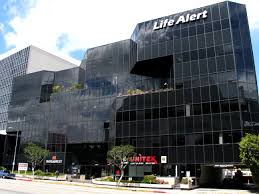
Life Alert was founded in 1987 by Isaac Shepher, Zohar Loshitzer, and Arik Amir. The company is privately owned and has remained under the control of its founders and their families since inception.
Ofer Shepher, identified as Co-Owner and Senior Vice President, is among the current key figures in the company’s leadership as of 2025. The company does not publicly disclose full executive details, which is standard for privately held businesses of this type.
A common misconception is that Life Alert was founded by a “Dr. Lester H. Lee.” Wikipedia’s documented record and the company’s own history attribute the founding to Shepher, Loshitzer, and Amir. The confusion may stem from early marketing materials and the brand’s long history in a pre-internet era.
Life Alert operates entirely as an independent company. It has not been acquired by any healthcare conglomerate, technology company, or private equity firm, which distinguishes it from many competitors that have changed hands multiple times.
Where Is Life Alert Based and How Does It Operate?
Life Alert is headquartered in Encino, California. The company operates its own monitoring centers within the United States, staffed 24 hours a day, seven days a week by trained emergency dispatchers.
Its monitoring facilities are UL Listed, meaning they meet Underwriters Laboratories standards for emergency response center performance and reliability. All 600 or more employees are based in the United States, which the company actively highlights as part of its service proposition.
Life Alert does not publicly disclose where its physical devices are manufactured. Like most consumer electronics in this category, components are likely sourced internationally with potential final assembly in the US or through contract manufacturers abroad.
What Products Does Life Alert Offer?
Life Alert’s core product line centers on three main systems. The in-home system uses either a landline or cellular base unit that connects to Life Alert’s monitoring center. Users wear a lightweight, waterproof pendant that activates a two-way voice connection when pressed.
The Micro Voice Pendant is a wearable device with a built-in two-way speaker, allowing users to speak directly through the pendant without needing to reach a separate base unit. The On-the-Go system includes GPS tracking and cellular connectivity for protection outside the home.
Beyond medical emergencies, Life Alert also offers monitored protection for fire detection, carbon monoxide detection, and home intrusion. These additional monitoring layers make it a broader home safety service rather than a single-purpose medical alert.
One notable absence in Life Alert’s lineup is automatic fall detection as a standard or widely available option. Most competitors now offer this as either a standard feature or an affordable add-on, making it a relevant consideration for buyers comparing options.
Life Alert vs Medical Guardian vs Philips Lifeline vs Bay Alarm Medical
Life Alert competes in the personal emergency response systems market against Medical Guardian, Philips Lifeline, Bay Alarm Medical, and MobileHelp among others. Each differs meaningfully in pricing transparency, contract terms, and feature sets.
Life Alert is consistently noted as being on the higher end of the pricing spectrum. The company does not publish pricing on its website, requiring prospective customers to call for a quote. It has historically required multi-year contracts of two to three years, with strict early termination terms.
Medical Guardian and Bay Alarm Medical both offer transparent online pricing, month-to-month plans, and automatic fall detection as standard or low-cost add-ons. Philips Lifeline, owned by Philips Healthcare, has a stronger clinical positioning and is frequently recommended by hospitals and physicians as a post-discharge safety tool.
For buyers who prioritize brand recognition and US-based monitoring, Life Alert remains a defensible choice. For those who want pricing flexibility, automatic fall detection, and month-to-month terms, competitor options merit serious consideration.
Is Life Alert Worth the Cost?
Life Alert provides a genuine and potentially life-saving service. Its long track record since 1987, US-based monitoring centers, and UL Listed facilities reflect a company with real operational depth.
The legitimate criticisms are centered on pricing and contract terms rather than service quality. Higher monthly fees combined with multi-year contract commitments and limited pricing transparency make it harder to recommend to cost-conscious buyers without first comparing alternatives.
For families where a senior is already familiar with the Life Alert brand and that familiarity provides additional confidence and compliance in wearing the device, that factor has real value. Compliance, meaning actually wearing and using the device, is the most important variable in whether any medical alert system saves a life.
Frequently Asked Questions
Who actually owns Life Alert?
Life Alert Emergency Response, Inc. is privately owned by its founders and their families. The company was founded in 1987 by Isaac Shepher, Zohar Loshitzer, and Arik Amir. Ofer Shepher currently serves as Co-Owner and Senior Vice President. No outside corporation, private equity firm, or public shareholders own the company.
Where is Life Alert headquartered?
Life Alert is headquartered in Encino, California. It operates US-based monitoring centers and employs over 600 people, all in the United States. The company has been headquartered in California since its founding in 1987.
Does Life Alert require a contract?
Life Alert has historically required multi-year contracts, typically two to three years, which is longer than most competitors. Early termination fees apply. Prospective customers should ask specifically about contract length, monthly fees, equipment costs, and cancellation terms before signing up, as Life Alert does not publish this information on its website.
Does Life Alert have automatic fall detection?
Life Alert primarily relies on user-initiated alerts rather than automatic fall detection. The user presses a button to call for help. Many competitors such as Medical Guardian and Bay Alarm Medical now offer automatic fall detection as a standard or add-on feature. For buyers who specifically need automatic fall detection, comparing Life Alert against these alternatives is strongly recommended.

I am Jack Neel, a mechanical engineer, researcher, and writer. I created this website to share my knowledge about different brands and products with you. I research the manufacturers behind the brands and provide you with the information you need to make smart buying decisions.