
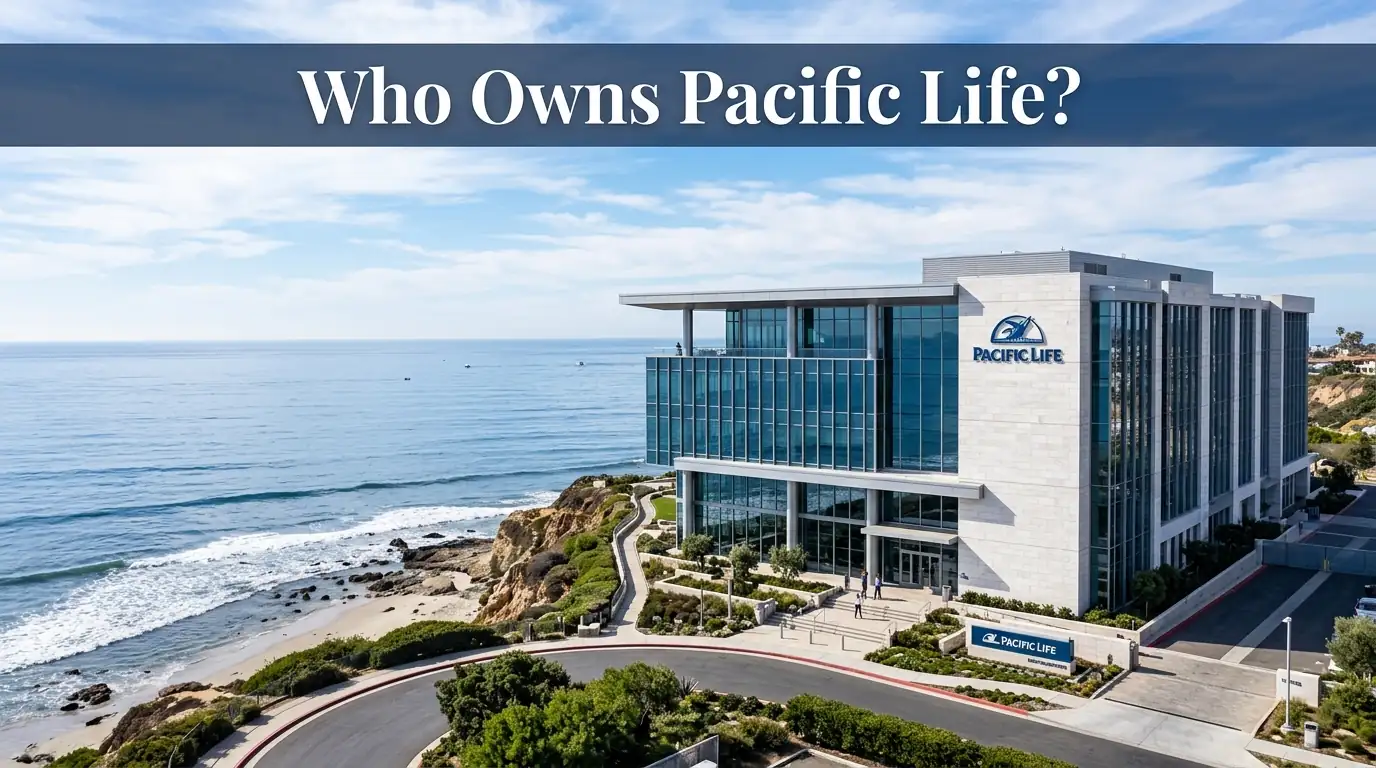
Pacific Life is owned by its policyholders through Pacific Mutual Holding Company, making it a mutual insurance organization rather than a publicly traded corporation. There are no outside shareholders, and the company is not owned by any other financial institution.
Pacific Life Insurance Company is one of the largest life insurers in the United States, providing life insurance, annuities, and investment products to individuals, families, businesses, and pension plans nationwide.
The company traces its roots to 1868 in Sacramento, California, and converted to a mutual holding company structure in 1997 so it could raise capital more flexibly while remaining policyholder owned.
So how does a mutual insurer founded more than 150 years ago end up holding over 275 billion dollars in assets, and who really controls it today?
This article looks at Pacific Life ownership structure, its corporate parent, its CEO and founder, its history of growth, how much the company is worth, its retirement and investment services, and how to reach Pacific Life customer support.
So let us get started.
Table of Contents
Who Owns Pacific Life
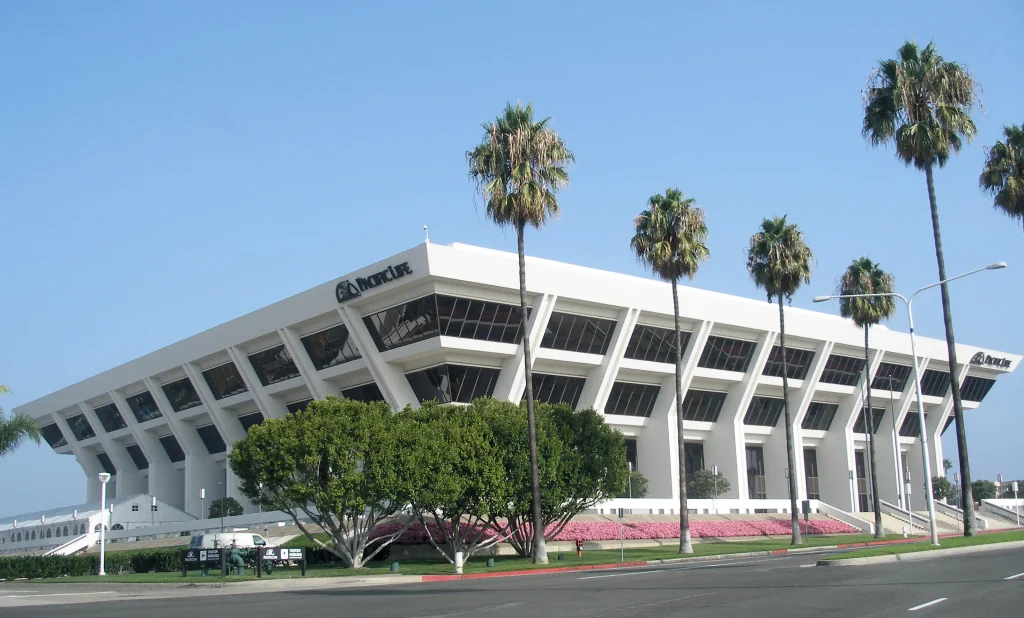
Pacific Life Insurance Company is one of the largest life insurers in the United States, offering life insurance, annuities, and investment products.
The company traces its roots back to 1868, when it was founded in Sacramento, California as Pacific Mutual Life Insurance Company.
Today it serves individuals, families, businesses, and pension plans across the country, working primarily through independent financial professionals rather than direct retail sales.
| Company | Details |
|---|---|
| Founded | 1868 |
| Headquarters | Newport Beach, California |
| Ownership | Policyholder owned mutual holding company |
| CEO | Darryl Button |
| Total Assets | $275.1 billion (2025) |
| Structure | Mutual, not publicly traded |
Pacific Life Insurance Ownership and Parent Company
Pacific Life Insurance Company operates under Pacific LifeCorp, which in turn is wholly owned by Pacific Mutual Holding Company.
Pacific Mutual Holding Company is a mutual organization, meaning it is owned by eligible policyholders rather than public shareholders.
This mutual structure means Pacific Life answers to its policyholders and a board of directors instead of Wall Street investors focused on quarterly earnings.
Top level mutual parent, owned by policyholders
Intermediate holding company
Operating insurance and annuity company
Pacific Life Insurance Public or Private, Shareholders
Pacific Life is a private, mutually structured company, so it has no stock ticker and no public shareholders.
Instead of shareholders, eligible policyholders hold membership interests in Pacific Mutual Holding Company and can vote on certain corporate matters, such as electing directors.
Because it is not publicly traded, Pacific Life does not file quarterly earnings reports the way companies like MetLife or Prudential do.
You can read more about how a similarly structured mutual competitor operates in our guide on who owns MetLife.
Pacific Life Insurance CEO and Founder
Darryl Button serves as President and Chief Executive Officer of Pacific Life, a role he took on in 2021 after previously serving as the company’s Chief Financial Officer.
Jim Morris, the former CEO, now serves as Chairman of the Board.
The company was originally founded in 1868 by a group of Sacramento businessmen as Pacific Mutual Life Insurance Company, later relocating its headquarters to Southern California.
Pacific Life Insurance Ownership and Acquisition History
Pacific Life converted to a mutual holding company structure in 1997, a process that allowed it to raise capital more flexibly while remaining policyholder owned.
Over the decades the company expanded from life insurance into annuities, mutual funds through Pacific Funds, and institutional asset management.
Pacific Life has grown primarily through organic expansion and strategic reinsurance transactions rather than large scale mergers, which is part of why its ownership has stayed stable and mutual.
Financials: Revenue, Net Income, AUM or Valuation
According to Pacific Life’s own 2025 annual company publications, total assets reached $275.1 billion at year end 2025, an increase of roughly 16 percent over the prior year.
As a mutual company, Pacific Life does not report a market capitalization or stock valuation since it has no publicly traded shares.
Instead, its financial strength is tracked through independent ratings agencies such as A.M. Best, Moody’s, and Standard and Poor’s.
Pacific Life Insurance Retirement and Investment Services
Pacific Life offers a range of retirement focused products, including fixed, indexed, and variable annuities that can provide guaranteed income in retirement.
The company also provides pension risk transfer solutions for corporate defined benefit plans and structured settlement annuities.
Through its Pacific Funds family, the company offers mutual funds that can be used inside IRAs and other retirement accounts.
Pacific Life does not typically offer direct 401(k) plan administration to individuals the way a payroll provider might, but it does supply annuity products used within retirement plans.
For readers comparing annuity providers, our article on who owns Lincoln Financial Group covers a major competitor in this space.
Pacific Life Insurance Customer Service and Contact Information
Pacific Life provides several dedicated phone lines depending on the type of policy or product a customer holds.
General inquiries can be directed to (800) 800-7646, available 8 a.m. to 5 p.m. Pacific time, Monday through Friday.
Life insurance customers can call (800) 347-7787, while annuity contract owners can reach support at (800) 722-4448.
Full contact details are available on the official Pacific Life contact page at pacificlife.com.
Pacific Life Insurance Headquarters

Pacific Life is headquartered in Newport Beach, California, where its executive leadership and core corporate functions are based.
The company also maintains major operational centers in Omaha, Nebraska and Lynchburg, Virginia to support policy administration.
Is Pacific Life Worth It or Good?
Pacific Life holds strong financial strength ratings from major agencies, which reflects its ability to pay claims and honor long term policy obligations.
The company maintains a profile on the Better Business Bureau, which tracks customer complaints and responses for the organization.
- Strong financial strength ratings
- Mutual structure focused on policyholders
- Wide range of annuity and life insurance products
- Products sold mainly through advisors, not direct to consumers
- Annuities can carry complex fee structures
- Not all products available in every state
As with any insurer, it is worth comparing quotes, riders, and fees across multiple companies and speaking with a licensed financial professional before purchasing an annuity or life insurance policy.
Frequently Asked Questions About Pacific Life
Is Pacific Life a publicly traded company?
No. Pacific Life is a mutual insurance organization owned by its policyholders through Pacific Mutual Holding Company, so it has no public stock ticker.
Who is the CEO of Pacific Life?
Darryl Button is the current President and Chief Executive Officer of Pacific Life, having taken the role in 2021.
When was Pacific Life founded?
Pacific Life was founded in 1868 in Sacramento, California, originally as Pacific Mutual Life Insurance Company.
Does Pacific Life offer retirement accounts?
Pacific Life offers annuities, pension risk transfer solutions, and mutual funds that can be used within IRAs, though it does not directly administer 401(k) plans for individuals.
AM Best News: Pacific Life Annual Report Assets Grew to $275.1 Billion
Pacific Life Official About Page

I am Jack Neel, a mechanical engineer, researcher, and writer. I created this website to share my knowledge about different brands and products with you. I research the manufacturers behind the brands and provide you with the information you need to make smart buying decisions.