
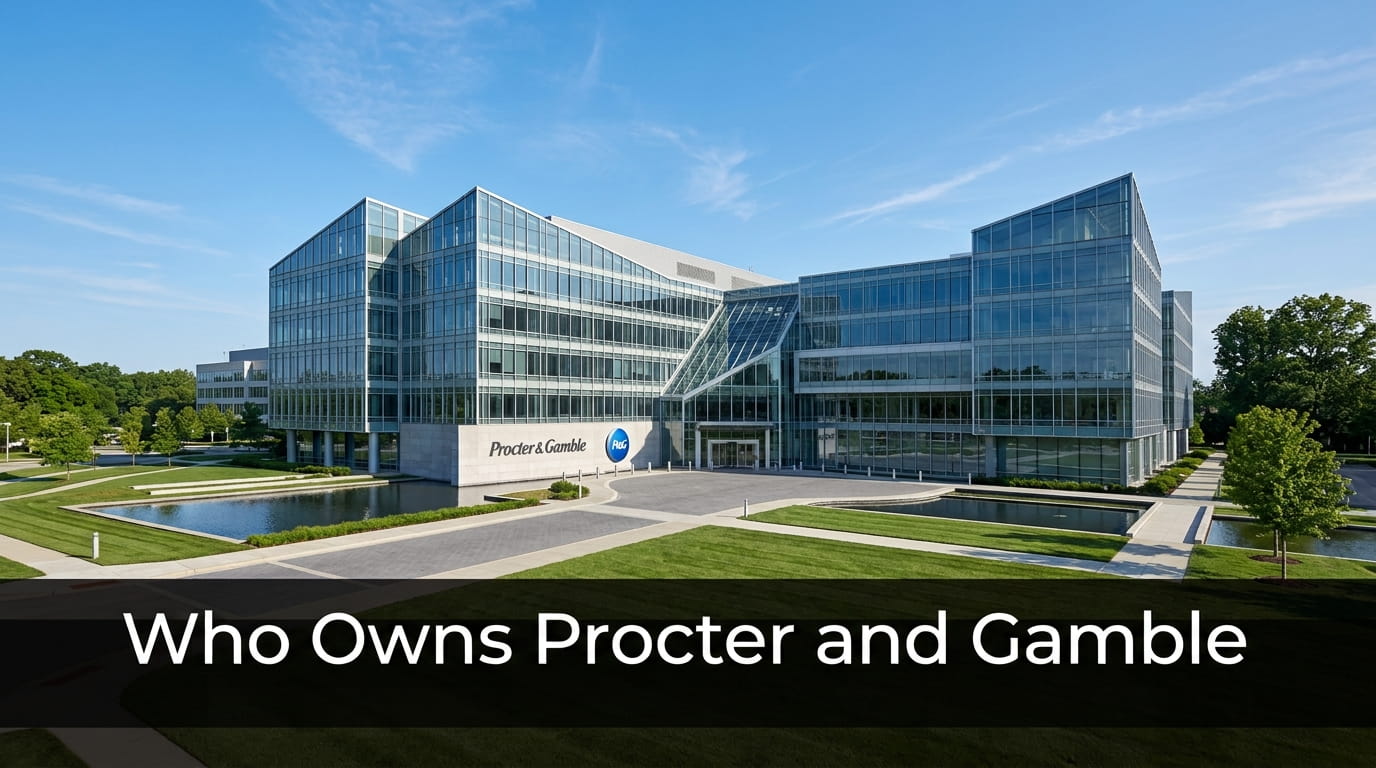
Procter and Gamble is not owned by another company. It is an independent public company traded on the New York Stock Exchange under the ticker PG, with ownership spread across millions of individual and institutional shareholders.
P&G manufactures its products at roughly 100 facilities across around 70 countries, and it owns dozens of household brands including Tide, Pampers, Gillette, and Crest. Some products sold in the United States are made domestically, while others are produced abroad depending on the plant network for that category.
This article covers who owns Procter and Gamble, where its products are actually manufactured, its founding history, and how its brand strategy compares to a rival like Unilever.
So let’s get started.
Table of Contents
Who Owns Procter and Gamble?
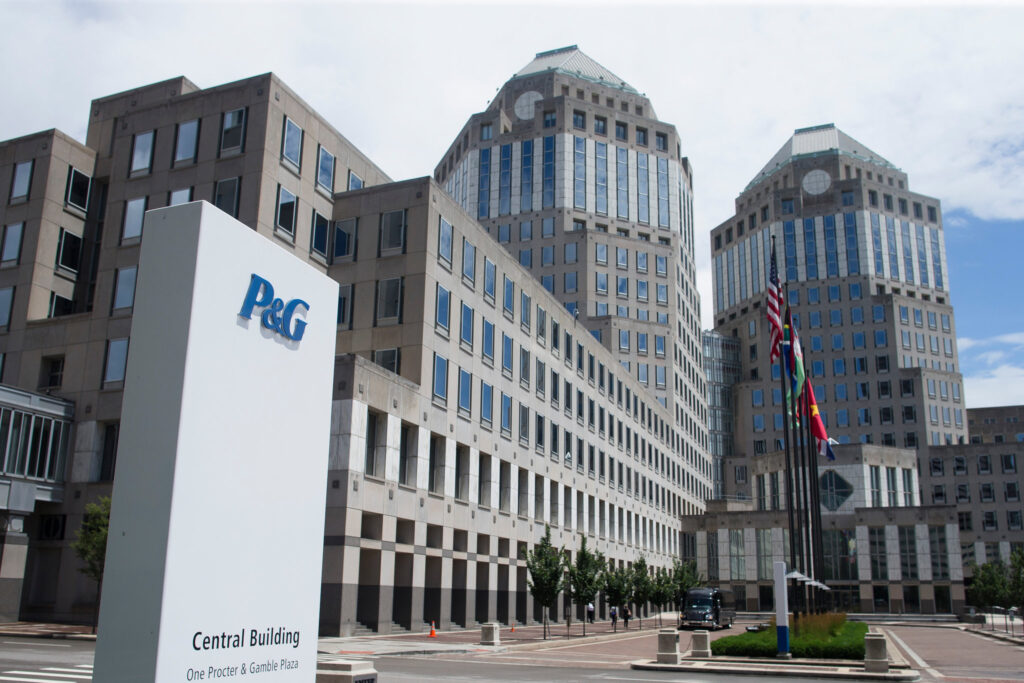
Procter and Gamble is a publicly traded company with no controlling parent. Shares trade on the New York Stock Exchange under the ticker PG, and current company information is available on P&G’s official website.
The largest shareholders are institutional investment firms such as Vanguard and BlackRock, which hold shares on behalf of millions of individual fund investors rather than exercising personal control over the company.
Shailesh Jejurikar became President and CEO effective January 1, 2026, and was appointed Chairman of the Board effective August 1, 2026, succeeding longtime executive Jon Moeller.
P&G has paid a dividend every year since 1890 and has increased that dividend for 70 consecutive years, a record few public companies can match.
Where Are Procter and Gamble Products Made?
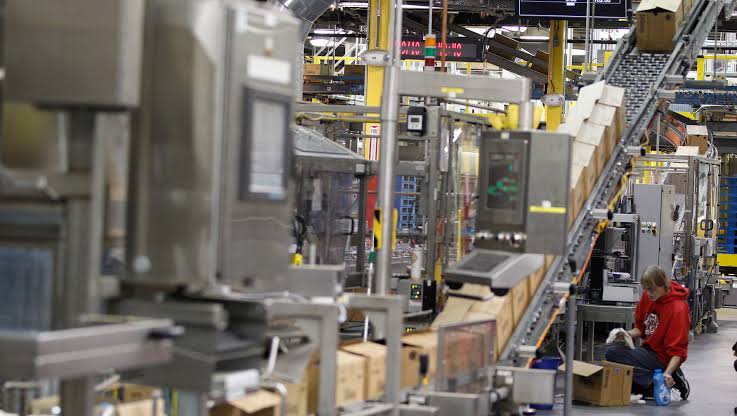
P&G operates roughly 100 manufacturing facilities in about 70 countries worldwide, and many of its plants produce items for several different brands at once rather than one factory per product line.
In the United States, P&G runs two dozen or more manufacturing sites, including a large facility in Tabler Station, West Virginia that produces Bounce, several fabric and home care lines, and more than 200 varieties of body wash, shampoo, and conditioner.
Other US plants handle products such as Pampers diapers and portions of the Oral B toothbrush lineup.
Because P&G sells the same brand names worldwide, a bottle of a familiar product bought in the US is not automatically made domestically. Many single brand product lines mix domestic and imported manufacturing depending on the specific item and region.
What Brands Does Procter and Gamble Own?
P&G organizes its portfolio into five main segments: Beauty, Grooming, Health Care, Fabric and Home Care, and Baby, Feminine, and Family Care.
Well known names in the portfolio include Tide, Ariel, Downy, and Gain in fabric care, Pampers and Luvs in baby care, Gillette, Braun, and Venus in grooming, and Crest and Oral B in oral care.
The Beauty segment includes Olay, SK II, Pantene, Head and Shoulders, and Old Spice, while Health Care includes Vicks and several vitamin and supplement lines.
P&G periodically sells off brands that no longer fit its core categories, including its former pharmaceuticals business, which it divested in 2009, keeping its overall portfolio focused on daily consumer staples rather than specialty or medical products.
When Was Procter and Gamble Founded?
Procter and Gamble was founded in 1837 in Cincinnati, Ohio, by William Procter, a candle maker, and James Gamble, a soap maker, who became brothers in law after marrying two sisters. More on the company’s founding and early growth is documented on Wikipedia.
The company incorporated in Ohio in 1905 and has remained headquartered in Cincinnati ever since.
P&G grew through both internal product development and a long string of acquisitions, including Gillette in 2005, which brought razors, Braun appliances, and Oral B into the portfolio in one of the largest consumer goods mergers in history.
Today P&G is one of the largest consumer packaged goods companies in the world, reporting revenue above 87 billion dollars for fiscal year 2026.
Procter and Gamble vs Unilever: Who Makes Each?
Procter and Gamble and Unilever are the two largest consumer packaged goods companies most American shoppers encounter, and both follow a similar model of owning many separate brands rather than selling under one master name.
P&G is a US company headquartered in Cincinnati and trades on the New York Stock Exchange, while Unilever is a UK based company with dual listings in London and Amsterdam.
Both companies manufacture through global factory networks rather than a single central plant, and both mix domestic and overseas production depending on the brand and region.
Where the two differ most is category focus. P&G leans more heavily into fabric care, baby care, and grooming, while Unilever has a larger presence in food and beverages alongside personal care, reflecting different acquisition histories over the past century.
Frequently Asked Questions About Who Owns Procter and Gamble
Is Procter and Gamble an American company?
Yes, Procter and Gamble is an American company headquartered in Cincinnati, Ohio, and it has been based there since its founding in 1837. It trades publicly on the New York Stock Exchange under the ticker PG.
Who is the CEO of Procter and Gamble?
Shailesh Jejurikar has served as President and CEO of Procter and Gamble since January 1, 2026. He was later appointed Chairman of the Board effective August 1, 2026, succeeding former Executive Chairman Jon Moeller, who retired from the company that month.
Are all Procter and Gamble products made in the USA?
No, only some Procter and Gamble products are made in the USA. The company operates roughly 100 manufacturing facilities across about 70 countries, and even single brands often mix domestic and imported production depending on the specific item.
How many brands does Procter and Gamble own?
Procter and Gamble owns dozens of brands across five main segments covering beauty, grooming, health care, fabric and home care, and baby, feminine, and family care. Well known examples include Tide, Pampers, Gillette, Crest, and Olay.

I am Jack Neel, a mechanical engineer, researcher, and writer. I created this website to share my knowledge about different brands and products with you. I research the manufacturers behind the brands and provide you with the information you need to make smart buying decisions.