
Progressive Insurance, formally known as The Progressive Corporation, is a publicly traded company. For other insurance company comparisons, also read about Geico and Northwestern Mutual. it is owned by its shareholders, not by a single individual, family, or private entity.
Progressive ranks among the largest and most recognized auto insurers in the United States. The company also offers home, renters, and several other insurance types.
As a publicly owned corporation, its shares trade on the New York Stock Exchange (NYSE) under the ticker symbol PGR. This structure enables a broad base of investors to hold a stake in the company.
But what does being publicly traded truly mean for the company’s operations and its policyholders?
This article examines Progressive Insurance’s specific ownership structure. It explores key shareholders, discusses how the corporate model influences business practices, and addresses common consumer questions about the company.
Let’s begin.
Table of Contents
Is Progressive Insurance a Publicly Traded Company?
Yes, The Progressive Corporation is a publicly traded company. Its shares actively trade on the New York Stock Exchange (NYSE).
Public ownership distributes control of the company among numerous shareholders. Anyone can purchase shares, becoming a partial owner.
As a publicly traded entity, the company must comply with strict financial reporting and transparency regulations, offering investors and the public regular performance updates.
Who are the Largest Shareholders of Progressive Corporation?
As a public company, Progressive’s largest shareholders typically comprise major institutional investors. These commonly include mutual funds, pension funds, and asset management firms.
Investment giants such as Fidelity, Vanguard, and BlackRock frequently hold substantial percentages of Progressive’s stock. These institutions manage extensive portfolios for their clients.
While these institutional investors exert significant influence due to their large holdings, no single entity or individual typically owns a majority stake in Progressive. This structure ensures broad public ownership.
Is Progressive an Independent Insurance Company?
Yes, Progressive operates as an independent insurance company. It is neither owned by nor a subsidiary of another larger insurance group or financial conglomerate.
The Progressive Corporation maintains a distinct brand identity, management team, and operational structure. It makes business decisions independently of other major insurers.
This independence enables Progressive to pursue its strategies, product development, and marketing campaigns without direct influence from external parent companies.
Does Progressive Own Other Insurance Brands or Subsidiaries?
Yes, The Progressive Corporation owns various subsidiaries that operate under its corporate umbrella. These entities help expand its offerings and market reach.
For example, Progressive’s subsidiaries include Progressive Direct, Progressive Agency, and others specializing in specific insurance aspects or distribution channels.
These subsidiaries primarily operate under the Progressive brand name, differing from the entirely separate insurance brands often owned by multi-brand conglomerates.
What is Progressive’s Business Model and How Does It Operate?
Progressive’s business model focuses on direct-to-consumer sales, supplemented by an extensive network of independent agents. This dual approach helps it reach a broad customer base.
A key innovation is its “Snapshot” program, which uses telematics to personalize rates based on driving behavior. This allows Progressive to assess risk more accurately.
The company also emphasizes competitive pricing and a broad range of discounts. Its goal is to attract and retain customers through value and diverse product offerings.
Where Is Progressive Insurance Headquartered?
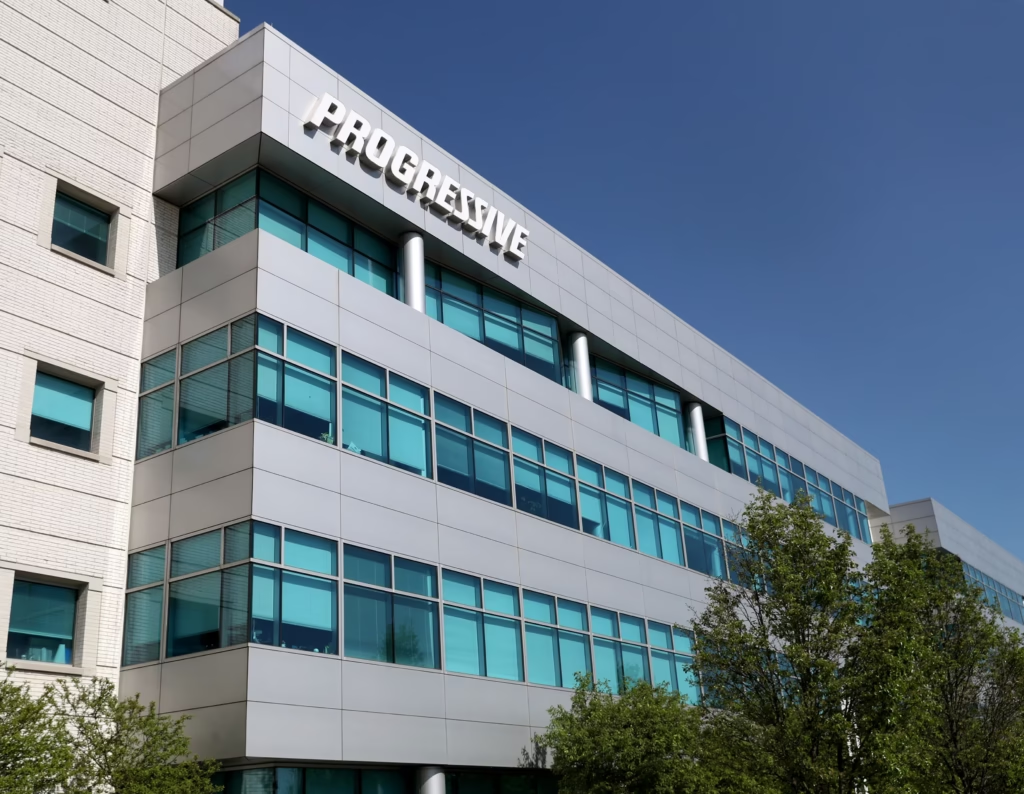
The Progressive Corporation’s primary headquarters is located in Mayfield Village, Ohio. This site has served as its operational hub for many decades.
From this central office, Progressive manages its nationwide operations, including customer service, claims processing, and strategic planning.
While its headquarters are in Ohio, Progressive maintains numerous offices and claims centers throughout the United States to support its extensive customer base and agent network.
What is the History of Progressive Insurance?
Progressive was founded in 1937 by Joseph Lewis and Jack Green in Cleveland, Ohio. The company initially focused on insuring high-risk drivers, a niche often overlooked by other insurers.
The company introduced several innovations over the years, such as drive-in claims service in 1956 and the option to pay premiums in installments.
In 1990, Progressive became the first company to offer 24/7 claims service. It also pioneered direct sales via phone and, later, online, becoming a significant force in the digital insurance space.
How Does Progressive’s Ownership Structure Impact Policyholders?
Progressive’s public ownership means the company is accountable to its shareholders. This often leads to a strong focus on financial performance, profitability, and growth.
Progressive’s management makes decisions with the goal of increasing shareholder value. These decisions can influence pricing strategies, product offerings, and customer service initiatives.
While shareholder interests are paramount, Progressive also balances these with customer satisfaction. Strong customer retention directly contributes to long-term profitability.
How Does Progressive Compare to Other Major Insurers in Ownership?
Progressive’s ownership structure aligns with that of many other large, national insurance carriers in the U.S. Companies like GEICO, however, operate as wholly owned subsidiaries of Berkshire Hathaway.
Companies such as Allstate and Travelers are also publicly traded corporations, similar to Progressive. They operate with comparable accountability to their shareholders.
State Farm, in contrast, is structured as a mutual insurance company. This means its policyholders technically own it, rather than external shareholders.
Is Progressive a Good Choice for Insurance?
Deciding if Progressive is a suitable choice depends on individual needs and preferences. Many consumers find its rates competitive, especially when bundling multiple policies.
Progressive is known for its extensive online tools, mobile app, and numerous discount opportunities. Its “Snapshot” program can benefit safe drivers seeking lower premiums.
As with any large insurer, customer experiences can vary by location and specific claim scenarios. It is always advisable to compare quotes and read reviews before making a decision.
Many users on Reddit’s r/insurance and other consumer forums discuss their experiences with Progressive, frequently highlighting its competitive rates for certain driver profiles.

I am Jack Neel, a mechanical engineer, researcher, and writer. I created this website to share my knowledge about different brands and products with you. I research the manufacturers behind the brands and provide you with the information you need to make smart buying decisions.