
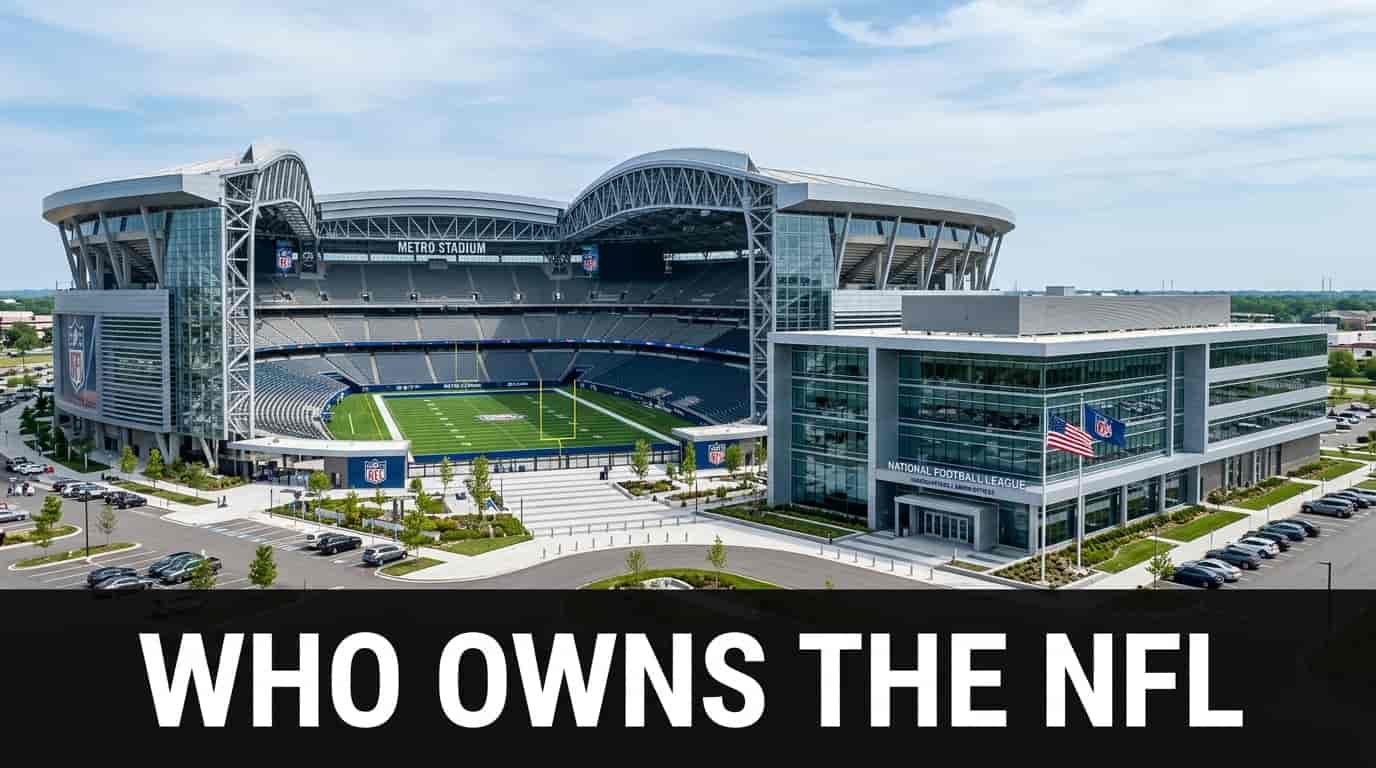
The NFL is collectively owned by the 32 individual teams that make up the league, with no single person or company owning the National Football League itself.
The NFL built its reputation as the most watched and most valuable professional sports league in the United States, generating billions of dollars in annual revenue through media rights and sponsorships.
The league operates as an unincorporated nonprofit association, a structure that dates back to its founding in 1920 and still shapes how power gets distributed among team owners today.
So if no single person owns the NFL, who actually makes the big decisions about the league future.
This guide will explore how NFL ownership actually works, the rules governing individual team owners, the unique Green Bay Packers structure, and how league wide decisions get made.
So let us get started.
Table of Contents
Who Owns The NFL Right Now

The NFL itself is owned collectively by its 32 franchise owners, who each hold an equal stake in the league office and its shared assets. League information is available on the official NFL website.
The league office, headquartered in New York, manages collective assets including the NFL Shield trademark, national television contracts, the game schedule, and league wide discipline.
Individual teams remain separately owned businesses, while the league office itself functions as a jointly funded and jointly controlled central management company.
How Individual NFL Team Ownership Rules Work
NFL rules require that each team have a single primary owner or a small ownership group, with at least 30 percent of the franchise owned by one individual.
This rule exists specifically to ensure clear accountability for each franchise, preventing the kind of widely dispersed public ownership seen in some European sports clubs.
Team valuations have grown enormously in recent years, with several franchises now valued well over 5 billion dollars, according to industry valuation reports tracking the league finances.
Private Equity Investment In NFL Teams
The NFL recently changed its rules to allow limited private equity investment in individual teams, a significant shift from decades of requiring wealthy individuals or small groups to fund franchises entirely on their own.
That rule change reflects how expensive owning an NFL team has become, with franchise values climbing so high that even billionaire owners increasingly want outside capital partners.
Private equity firms are still capped at owning a minority stake in any single team, preserving the league core requirement that one individual or small group maintain primary control.
Why The Green Bay Packers Are Different
The Green Bay Packers stand as the sole exception to typical NFL ownership rules, structured instead as Green Bay Packers Inc, a publicly held nonprofit corporation.
Hundreds of thousands of individual shareholders own small stakes in the Packers, though those shares carry no meaningful financial value and cannot be resold for profit, according to Wikipedia.
This unique structure has existed since the team early financial struggles in the 1920s, and the NFL has since barred any other team from adopting a similar community ownership model.
How League Wide Decisions Get Made
Major NFL decisions require approval from team owners through a formal voting process, with most significant matters needing a three quarter majority, or 24 of 32 votes.
Certain especially significant constitutional changes require unanimous consent from all 32 team owners before they can take effect.
The NFL Commissioner, currently Roger Goodell, manages day to day league operations and disciplinary matters, but ultimate authority still rests with the collective ownership group.
NFL Broadcast Rights And Media Company Partners
The NFL sells broadcast rights to major television networks including CBS, Fox, NBC, ESPN, and Amazon, generating a massive share of the league total annual revenue.
Our guide to who owns CBS and our guide to who owns Fox News cover two of the major media companies that pay billions of dollars each year for the right to broadcast NFL games.
Is The NFL Really Good Or Really Worth It
The NFL remains the most watched professional sports league in America, with television ratings consistently outperforming nearly every other form of entertainment programming.
Critics of the league point to concerns over player health and safety, stadium funding deals that shift costs onto taxpayers, and ongoing debate over how revenue gets shared among teams.
Fans and analysts frequently cite the NFL parity focused rules, including the salary cap and draft system, as reasons the league maintains such broad and consistent popularity across the country.
For fans, the NFL collective ownership structure has helped maintain competitive balance that keeps most teams relevant year to year rather than a small handful dominating permanently.
For anyone interested in sports business, NFL team valuations and ownership rules offer a useful case study in how a collectively governed league can still produce enormous individual wealth for owners.
The NFL also generates significant revenue through licensed merchandise, video games, and fantasy football partnerships, further diversifying league income beyond media rights and ticket sales.
That merchandise and gaming revenue gets shared among all 32 teams under the league revenue sharing rules, further reinforcing the competitive balance the NFL has built its business model around.
This shared revenue model is a major reason smaller market teams can still compete financially against franchises in much larger metropolitan areas year after year.
That balance remains one of the defining features that separates NFL business model from many other professional sports leagues worldwide.
Frequently Asked Questions About The NFL
Does One Person Own The NFL?
No. The NFL is collectively owned by its 32 individual team owners, each holding an equal stake in the league itself.
Why Are The Green Bay Packers Owned Differently?
The Packers are structured as a publicly held nonprofit corporation with hundreds of thousands of shareholders, a structure the NFL now prohibits any other team from adopting.
How Are Major NFL Decisions Made?
Most significant decisions require approval from at least 24 of the 32 team owners, while certain constitutional changes need unanimous consent.
Who Is The Current NFL Commissioner?
Roger Goodell serves as NFL Commissioner, managing day to day league operations on behalf of the collective ownership group.

I am Jack Neel, a mechanical engineer, researcher, and writer. I created this website to share my knowledge about different brands and products with you. I research the manufacturers behind the brands and provide you with the information you need to make smart buying decisions.