
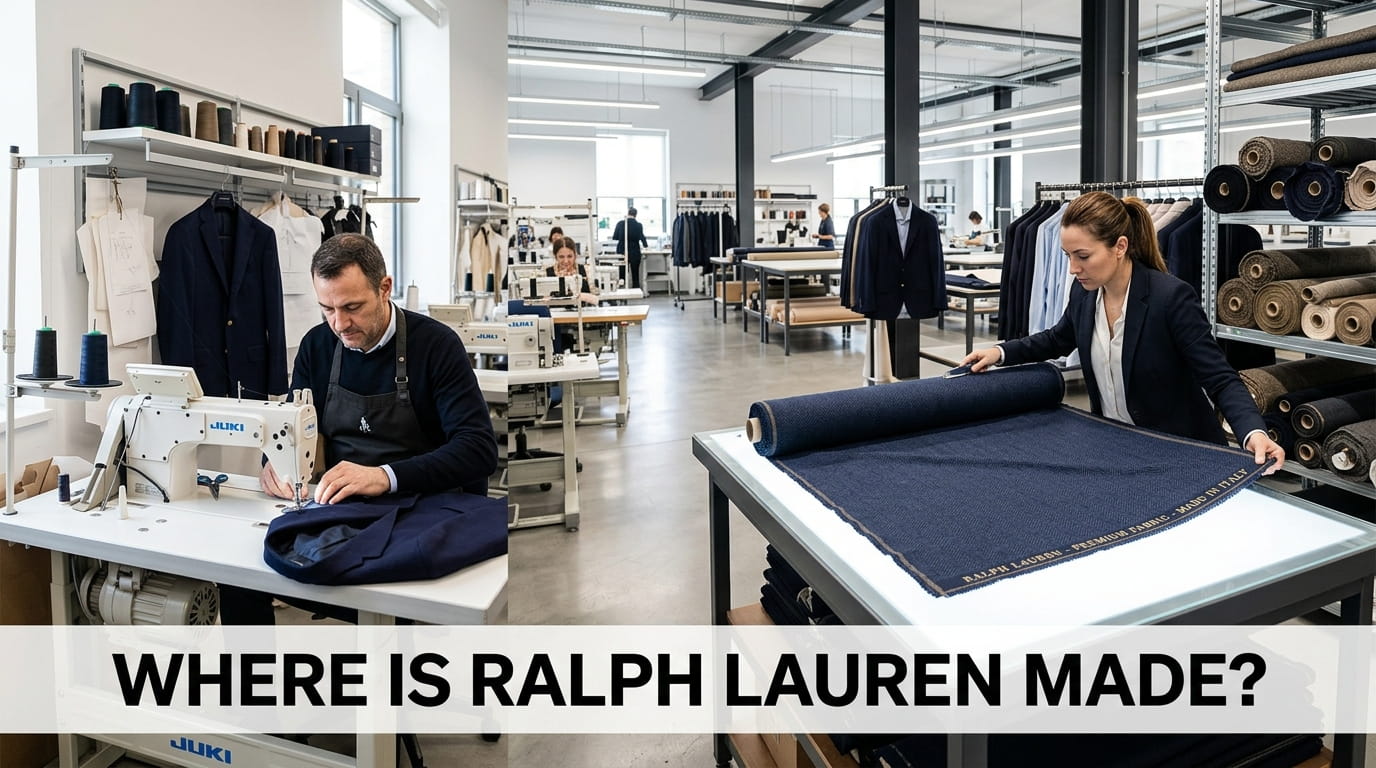
Ralph Lauren built an entire aesthetic around the idea of old money American style.
Polo ponies, tweed, ivy league colors, that whole world.
The irony is that very little of what carries the Ralph Lauren name is actually stitched together in the United States.
That has been true for a long time, but tariffs have made it a much more visible business issue in the last couple of years.
Ralph Lauren himself is still involved with the company, still its majority voting shareholder, which is unusual for a brand this large and this old.
Before getting into the manufacturing details, it helps to know how the company actually started.
So let’s get started.
Table of Contents
Where Is Ralph Lauren Made?
Ralph Lauren products are manufactured across a wide range of countries, including China, Vietnam, India, Sri Lanka, Italy, Portugal, Turkey, and a small amount of production in the United States, according to Ralph Lauren and the company’s own fiscal disclosures.
In fiscal 2025, about 96 percent of the company’s products were produced outside of the United States, with China accounting for roughly 12 percent of sourcing, according to company disclosures.
Asia is the primary manufacturing region overall, with China serving as a hub for mass scale production and Vietnam playing a growing role as the brand diversifies away from China.
Europe plays an important role for premium lines, with Italy known for luxury leather goods and detailed tailoring used in collections like Purple Label and RLX.
India contributes fine cotton fabrics, and a small domestic production presence remains for premium, specialty, and limited run pieces, including at facilities such as Apparel Manufacturing Co in Lilburn, Georgia.
Who Owns Ralph Lauren?
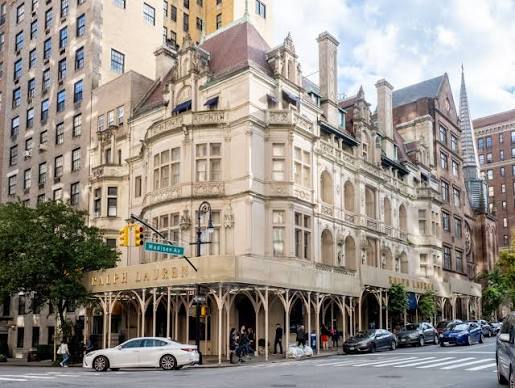
Ralph Lauren Corporation is a publicly traded company, but founder Ralph Lauren retains significant control through a dual class share structure.
Class A shares carry one vote each, while Class B shares, held primarily by Ralph Lauren and family trusts, carry ten votes each.
This structure gives the Lauren family roughly 84 percent voting control of the company, even though it is publicly traded on the New York Stock Exchange.
That level of founder control is unusual for a company of Ralph Lauren’s size and public trading history.
Where Did Ralph Lauren Come From?
Ralph Lauren, born Ralph Lifshitz, founded his company in 1967 in New York City, starting with a 50,000 dollar loan and an initial focus on designing men’s ties under the Polo name.
He worked as a tie designer for Beau Brummel of New York, which gave him his own style division that he named Polo, drawing on the sport’s image of refined style.
In 1968 he expanded into full menswear with Polo Fashions.
The business nearly went bankrupt by 1972 due to financial mismanagement and the costs of rapid expansion, and Lauren personally invested 100,000 dollars of his own savings to keep it afloat, bringing on Peter Strom as a partner.
The company later sold a stake to a Goldman Sachs investment fund in 1994, and went public on the New York Stock Exchange on June 13, 1997, with Ralph Lauren himself selling nearly 18 million shares for 465.4 million dollars.
How Ralph Lauren Sources Its Manufacturing
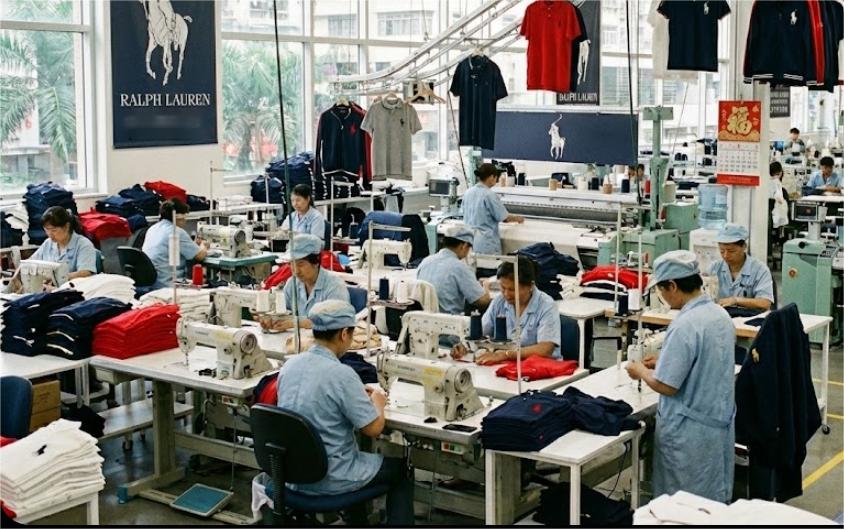
Ralph Lauren runs one of the more geographically diverse supply chains among major American fashion brands, spreading production across Asia, Europe, and a small amount in the Americas.
The company has been actively diversifying production away from China in recent years, citing both geopolitical tensions and tariff pressures as reasons for the shift toward Southeast Asia.
Premium and limited run collections get different treatment than mass market lines, with more emphasis on Italian craftsmanship for leather goods and a small domestic manufacturing presence for select specialty items.
This kind of tiered sourcing approach, where the flagship or luxury lines get more localized or higher end production while mainline goods go to lower cost countries, is common among large fashion houses trying to balance cost against brand image.
Does Ralph Lauren Claim Made in USA?
Ralph Lauren does not market itself as a broadly made in USA brand, and the company’s own disclosure that 96 percent of fiscal 2025 production happened outside the United States makes that clear.
The small domestic manufacturing presence that does exist is generally reserved for premium, specialty, or limited run products rather than everyday basics.
Shoppers who associate the brand’s classic American imagery with domestic manufacturing are likely to be surprised by how little of the actual clothing is made in the United States.
This gap between brand image and manufacturing reality is not unique to Ralph Lauren, but the contrast is especially notable given how central Americana is to the brand’s marketing.
Ralph Lauren vs Tommy Hilfiger: Who Makes Each?
Ralph Lauren and Tommy Hilfiger compete directly in the classic American style category, and both rely on extensive overseas manufacturing.
Tommy Hilfiger is owned by PVH Corp, the same parent company as Calvin Klein, and shares that company’s global network of more than 1,000 factories across nearly 40 countries, with heavy reliance on Vietnam, Bangladesh, India, and Turkey.
Ralph Lauren, as an independent public company, sources through its own network rather than sharing infrastructure with another brand, though the country mix looks similar, with China, Vietnam, and India all playing major roles.
Both companies have publicly discussed tariff pressure heading into 2026 and both are shifting production further toward Vietnam and other Southeast Asian countries as a result.
Neither brand can accurately claim broad made in USA production, though both maintain small premium or specialty lines with more localized manufacturing.
What Is Next for Ralph Lauren?
Tariffs have become a significant financial pressure point for Ralph Lauren heading into 2026, with the company forecasting increased pressure in its fiscal third quarter and a more pronounced impact by the fourth quarter, including a notable year over year gross margin decline.
CEO Patrice Louvet has said the company is assessing additional pricing actions for 2025 and spring 2026 to help offset tariff costs, on top of pricing adjustments already planned for North America and Asia.
The company expects fiscal 2026 revenue to grow in the low single digits, factoring in tariffs, inflation, and broader spending pressures on consumers.
Expect continued diversification away from China sourcing throughout 2026, along with incremental price increases as the company tries to protect margins without eroding its premium positioning.
For more brand supply chain breakdowns like this one, see our guides on Gucci and Levi’s.
Frequently Asked Questions About Where Ralph Lauren Is Made
What percentage of Ralph Lauren products are made outside the United States?
According to the company’s own fiscal 2025 disclosures, about 96 percent of Ralph Lauren products were produced outside the United States.
China accounted for roughly 12 percent of that sourcing, though the specific share of finished goods imported directly from China into the US was in the single digits.
The remaining production is spread across countries including Vietnam, India, Italy, Portugal, Sri Lanka, and Turkey.
Does Ralph Lauren make anything in the United States?
Yes, though it is a small share of overall production.
Ralph Lauren maintains some domestic manufacturing for premium, specialty, and limited run collections, including through facilities such as Apparel Manufacturing Co in Lilburn, Georgia.
This domestic production is not representative of the brand’s mainline products, most of which come from overseas factories.
Why is Ralph Lauren moving production away from China?
The company has cited both geopolitical tensions and tariff pressures as reasons for shifting manufacturing toward Southeast Asian countries like Vietnam.
This shift has been happening gradually over recent years and has become more urgent as tariff costs have increased heading into 2026.
Ralph Lauren has said it is assessing further pricing actions partly to offset these same tariff pressures.
Who controls Ralph Lauren Corporation?
Ralph Lauren Corporation is publicly traded, but founder Ralph Lauren and his family trusts control roughly 84 percent of the voting power through a dual class share structure.
Class B shares held by the Lauren family carry ten votes each compared to one vote for ordinary Class A shares.
This gives Ralph Lauren far more influence over company decisions than a typical public company founder would have at this scale.

I am Jack Neel, a mechanical engineer, researcher, and writer. I created this website to share my knowledge about different brands and products with you. I research the manufacturers behind the brands and provide you with the information you need to make smart buying decisions.