
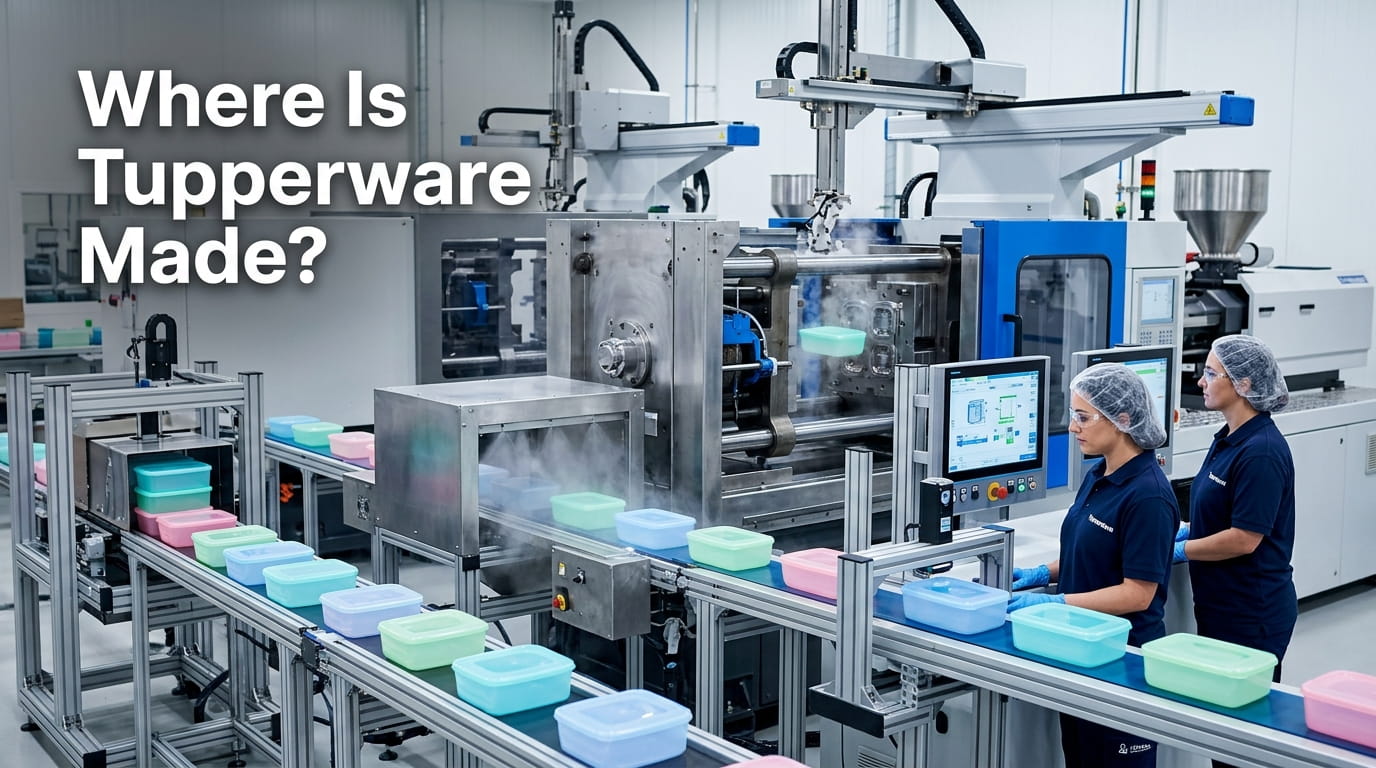
Tupperware is currently owned by Party Products LLC, a company formed by a group of Tupperware’s own secured lenders that completed its purchase of the brand in November 2024.
Tupperware makes food storage containers, kitchen preparation tools, and serving products, and the brand built its identity over nearly 80 years around its signature airtight seal and direct sales party model.
The original publicly traded company, Tupperware Brands Corporation, filed for Chapter 11 bankruptcy in September 2024 after years of declining sales, and its lenders bought the brand and core assets out of that bankruptcy for roughly 23.5 million dollars in cash plus about 63 million dollars in forgiven debt.
But how did an 80 year old household name end up owned by its own lenders, and is Tupperware still made the same way it always was?
This article will explore who owns Tupperware today, where its products are actually manufactured, what happened during the 2024 bankruptcy, and the brand’s founding history.
So let’s get started.
Table of Contents
Who Owns Tupperware?
Tupperware is owned by Party Products LLC, a private company formed specifically by a group of Tupperware Brands’ secured lenders.
Current products are shown on Tupperware’s official website.
The original Tupperware Brands Corporation, which traded on the New York Stock Exchange, no longer exists as an independent operating company.
That original entity entered a liquidation trust process effective June 2025, formally winding down what remained of the old public company.
Tupperware now operates as a smaller, privately held business focused on core markets rather than the roughly 2 million person consultant network it once relied on at its peak.
Where Is Tupperware Made?
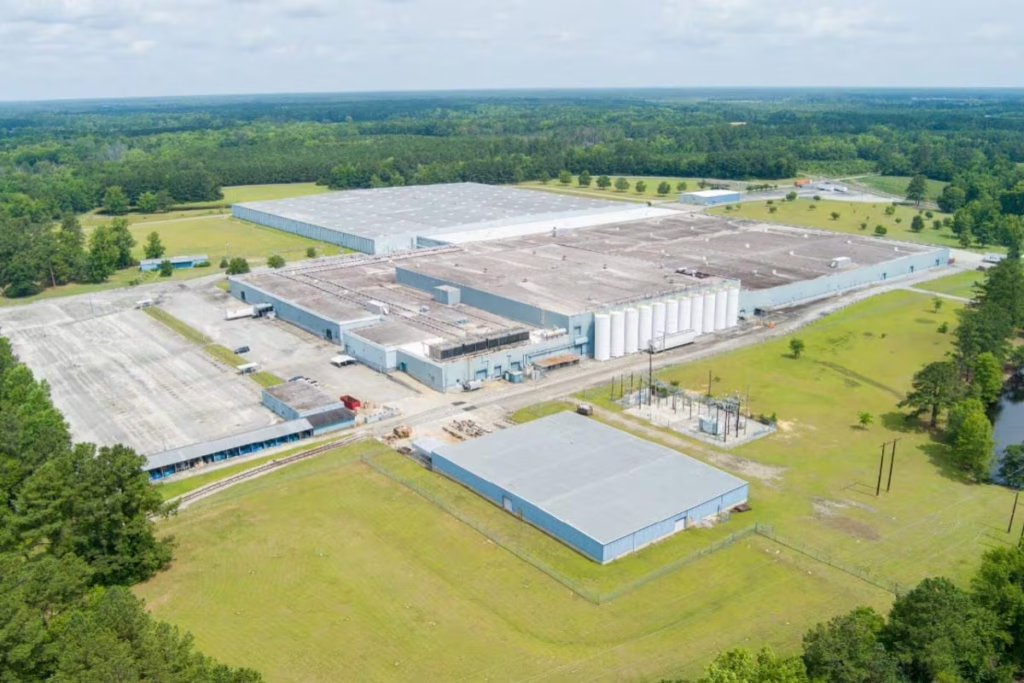
Tupperware is no longer made in the United States.
The company closed its last remaining US manufacturing plant in Hemingway, South Carolina in 2024, laying off 148 employees in the process, according to reporting from Plastics Today.
Production from the Hemingway facility shifted to Tupperware’s plant in Lerma, Mexico, which now handles a significant share of the company’s manufacturing.
Tupperware also operates manufacturing and distribution internationally, including facilities that have historically supported major markets like Indonesia, which at times has outsold even Germany as one of Tupperware’s largest markets.
Because the company has restructured its operations since 2024, current country of origin can vary by product, and shoppers should check individual item packaging for the most accurate manufacturing details.
What Happened During Tupperware’s 2024 Bankruptcy?
Tupperware Brands Corporation filed for Chapter 11 bankruptcy on September 17, 2024, in Delaware, citing roughly 812 million dollars in funded debt.
The company had already secured debt relief in 2023, but sales continued sliding, falling from a peak above 2.2 billion dollars annually to roughly 1.3 billion dollars by 2023.
Leadership cited shifting consumer behavior, anti plastic sentiment, and outdated infrastructure as key factors behind the decline.
The stock fell nearly 60 percent on the bankruptcy announcement and was delisted from the New York Stock Exchange the following day.
Rather than liquidating entirely, Tupperware’s own lenders purchased the brand and core assets in November 2024 for 23.5 million dollars in cash plus 63 million dollars in forgiven debt, keeping the name and products alive under new, smaller ownership, per Wikipedia’s account of the deal.
When Was Tupperware Founded?
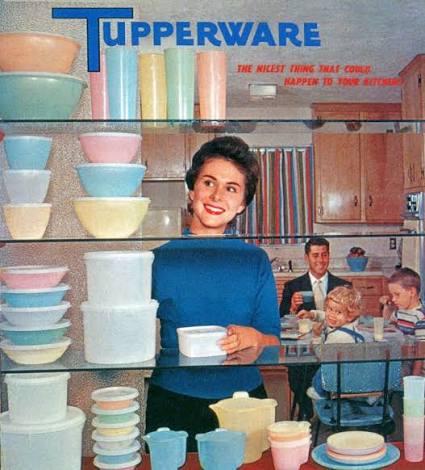
Tupperware traces back to 1946, when inventor Earl Tupper introduced his bell shaped, airtight plastic container to the public in Leominster, Massachusetts.
The product initially struggled in stores until saleswoman Brownie Wise pioneered the Tupperware home party model, which became the company’s defining sales method for decades.
Tupperware grew into a global name recognized in more than 100 countries, at one point supporting nearly 2 million independent sales consultants and generating more than 2 billion dollars in annual revenue.
Sales spiked temporarily during the COVID-19 pandemic as more people cooked and stored food at home, but that bump proved temporary and the company’s long decline continued shortly after.
Tupperware vs Rubbermaid: How Do They Compare?
Tupperware and Rubbermaid are the two most recognized names in American food storage, though they have taken very different paths in recent years.
Rubbermaid is owned by Newell Brands, a large publicly traded consumer products company, giving it more financial stability than Tupperware has had in its post bankruptcy structure.
Tupperware built its business around direct sales through independent consultants, while Rubbermaid has always sold primarily through traditional retail stores, a difference that shaped each brand’s growth and vulnerability to shifting shopping habits.
Both brands compete on similar airtight seal technology, though Tupperware has generally positioned itself at a higher price point, reflecting its historical party sales model and brand loyalty among longtime customers.
Is Tupperware Still Good Quality?
Reviewers and longtime owners generally agree that Tupperware’s core product quality has not changed despite the corporate turmoil.
Vintage Tupperware pieces from decades ago are still functional in many households today, and that reputation for durability remains one of the brand’s strongest selling points.
Current reviews note that the products themselves remain genuine and well regarded, even as the company’s ownership and distribution model has shrunk considerably since the bankruptcy.
The main concerns raised by customers relate less to product durability and more to uncertainty about long term availability, warranty support, and the future size of the consultant network under the smaller, restructured company.
Shoppers who purchase directly through tupperware.com or authorized retail partners are generally advised to expect the same product quality the brand has always been known for, even as the business behind it continues adjusting to its new ownership structure.
For more kitchen brand ownership stories, see our guides to where All-Clad cookware is made, who makes Ninja blenders, and where Whirlpool refrigerators are made.

I am Jack Neel, a mechanical engineer, researcher, and writer. I created this website to share my knowledge about different brands and products with you. I research the manufacturers behind the brands and provide you with the information you need to make smart buying decisions.