

The first pizza as the world recognizes it today was made in Naples, Italy, a densely populated port city where working-class residents needed cheap, fast, portable food during the 18th and early 19th centuries.
The modern version with tomato sauce, mozzarella, and basil was formalized in 1889 when Neapolitan chef Raffaele Esposito created the pizza Margherita in honor of Queen Margherita of Savoy during a royal visit to Naples.
Flatbreads with toppings existed long before Naples, stretching back to ancient Egypt, Greece, and Rome, but those early versions lacked the tomato, which did not arrive in Europe until the 16th century.
The word “pizza” itself was first recorded in a Latin document dated 997 AD in Gaeta, a coastal city south of Rome, though that early reference described a stuffed bread quite different from what we eat today.
Pizza crossed the Atlantic with Italian immigrants in the 19th century, and the first American pizzeria, Lombardi’s, opened in New York City in 1905 and still operates today.
In 2017, UNESCO added the art of Neapolitan pizza-making to its Representative List of the Intangible Cultural Heritage of Humanity, formally recognizing Naples as the birthplace of the global pizza tradition.
| Birthplace of Modern Pizza | Naples, Italy |
| Era of Origin | 18th to 19th century (tomato-topped version) |
| First Documented Use of “Pizza” | 997 AD, Gaeta, Italy |
| Creator of Pizza Margherita | Raffaele Esposito, Naples, 1889 |
| First U.S. Pizzeria | Lombardi’s, New York City, 1905 |
| UNESCO Recognition | December 2017, Intangible Cultural Heritage |
Table of Contents
Where Was Pizza First Made?
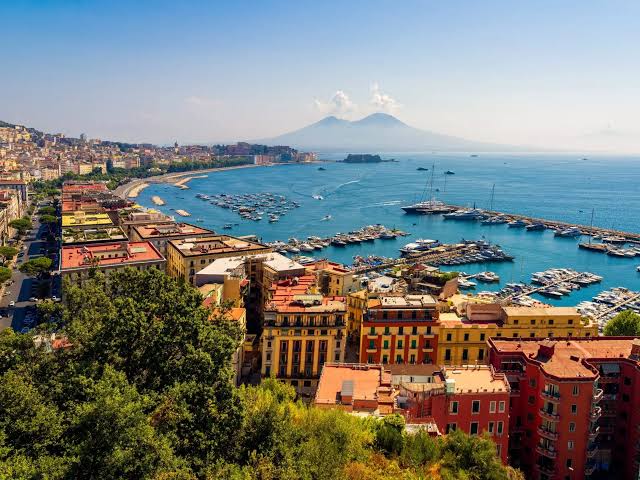
Modern pizza originated in Naples, Italy, a port city on the Tyrrhenian Sea where a vast working-class population lived in dense, outdoor conditions during the 1700s and 1800s. Street vendors sold topped flatbreads by the slice to workers and sailors who needed something affordable and easy to eat on the move.
The tomato, originally brought to Europe from Peru by Spanish explorers in the 16th century, was initially feared as poisonous by the upper classes but eagerly adopted by the poor as a cheap, flavorful topping.
Combined with olive oil, garlic, and cheese on leavened dough cooked in wood-fired ovens, this street food gradually evolved into the pizza the world recognizes today.
By the early 19th century, dedicated pizza shops began opening in Naples. Antica Pizzeria Port’Alba, founded as a street stand in 1738 and established as a sit-down restaurant in 1830, is widely considered the world’s first pizzeria and still operates in central Naples today.
Who Made the First Pizza?
While countless Neapolitan bakers contributed to pizza’s early development, the person most credited with creating the defining version is Raffaele Esposito, a chef who ran Pizzeria Brandi. In 1889, King Umberto I and Queen Margherita of Savoy visited Naples, and Esposito prepared several pizzas for the royal couple.
Queen Margherita was particularly taken with a version topped with tomatoes, fresh mozzarella, and basil, which mirrored the red, white, and green of the Italian flag. Esposito named that pizza Margherita in her honor, and the recipe became the template for Neapolitan pizza worldwide.
Did Ancient Civilizations Invent Pizza First?
Ancient Egyptians, Greeks, and Romans all made flatbreads with toppings, and historians trace a direct ancestor of pizza to the Roman panis focacius, a seasoned flatbread baked on hot stones. However, these ancient flatbreads lacked the tomato, which is central to what most people consider pizza.
Tomatoes are a New World plant that Europeans did not encounter until Spanish colonizers brought them from South America in the 1500s, and it took another century before Italians trusted them enough to eat. The flatbreads of antiquity therefore represent a precursor lineage rather than pizza itself.
When Did Pizza Come to America?
Italian immigrants began arriving in the United States in large numbers during the late 19th century and brought their food traditions with them. Street vendors in New York, Boston, Philadelphia, and Chicago began selling pizza in immigrant neighborhoods, and demand grew quickly.
In 1905, baker Gennaro Lombardi opened Lombardi’s on Spring Street in Manhattan, recognized as the first licensed pizzeria in the United States. Pizza remained largely confined to Italian-American communities until World War II, when American soldiers stationed in Italy returned home craving it, driving a national explosion in consumption that set the stage for chains like Pizza Hut (1958) and Domino’s (1960).
Neapolitan Pizza vs. New York Pizza: How Are They Different?
Neapolitan pizza is governed by strict certification rules from the Associazione Verace Pizza Napoletana, requiring San Marzano tomatoes, buffalo mozzarella, Italian 00 flour, and cooking in a wood-fired oven at roughly 900 degrees Fahrenheit for no longer than 90 seconds. The result is a small, soft, charred, slightly wet pie with a puffy crust and minimal toppings.
New York pizza developed from the same Neapolitan base but grew larger, thinner, and crispier. New York bakers used harder, higher-gluten flour and gas-fired deck ovens, producing a stiff yet foldable slice far bigger than its Neapolitan counterpart. Neither style is superior; they simply reflect two cities and two centuries shaping the same foundational idea.
What Does UNESCO Recognition Mean for Neapolitan Pizza?
In December 2017, UNESCO added the art of Neapolitan pizza-making to its Representative List of the Intangible Cultural Heritage of Humanity. The designation recognized not just the food itself but the entire craft tradition: the hand-stretching technique, the wood-fired oven preparation, and the social and cultural role pizza plays in Neapolitan identity.
This recognition formally confirmed what historians had long acknowledged: that Naples is the definitive birthplace of the pizza tradition the world has adopted. It also drew increased attention to the Associazione Verace Pizza Napoletana’s certification standards, which remain the benchmark for anyone claiming to make the original version of the dish.
Frequently Asked Questions About the Origins of Pizza
What country made pizza first?
Italy is the country where modern pizza was created, specifically in the city of Naples. While flatbreads with toppings existed in ancient Egypt, Greece, and Rome, the tomato-based pizza the world recognizes as the definitive version originated in Naples during the 18th and 19th centuries.
Who invented pizza, Italy or America?
Italy invented pizza. America adopted it, popularized it globally, and created its own distinctive regional styles, but the origin is clearly Neapolitan. Italian immigrants brought pizza to the United States in the late 1800s, and American culture then spread it worldwide through fast-food chains and popular culture in the 20th century.
What was the very first pizza topping?
Before the tomato arrived in Italy, early Neapolitan flatbreads were topped with lard, garlic, coarse salt, olive oil, cheese, and aromatic herbs including basil. The tomato became the defining ingredient only after the mid-16th century, when Spaniards introduced it to Italy from the Americas and Neapolitans slowly accepted it as food rather than an ornamental plant.
Is Lombardi’s in New York really the first pizza place in America?
Lombardi’s on Spring Street in Manhattan is recognized as the first licensed pizzeria in the United States, having received its operating license in 1905. It is still open today using a coal-fired oven. Some historians note that Italian vendors may have sold pizza earlier without formal licensing, but Lombardi’s holds the widely accepted distinction as the first documented American pizzeria. For more on iconic food origins, see Who Makes Dr Pepper and Who Makes Pop Tarts.

I am Jack Neel, a mechanical engineer, researcher, and writer. I created this website to share my knowledge about different brands and products with you. I research the manufacturers behind the brands and provide you with the information you need to make smart buying decisions.