
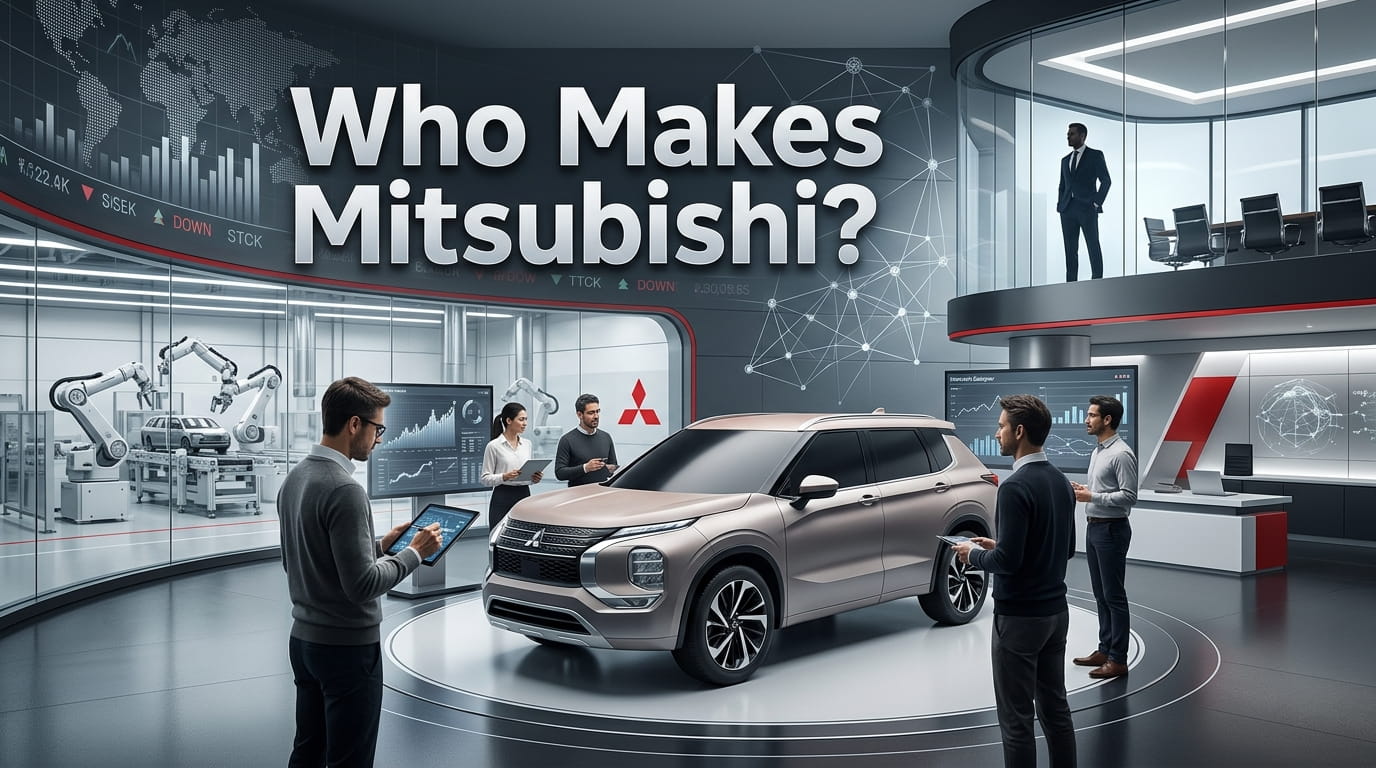
Mitsubishi cars are made by Mitsubishi Motors Corporation, an independent Japanese automaker headquartered in Minato, Tokyo, Japan.
The company traces its automotive roots to 1917, when Mitsubishi Shipbuilding Co. produced Japan’s first series-production automobile, the Mitsubishi Model A.
Mitsubishi Motors is publicly listed on the Tokyo Stock Exchange and operates within the Renault-Nissan-Mitsubishi Alliance, one of the world’s largest automotive groups.
As of early 2025, Nissan Motor holds approximately 24% of Mitsubishi Motors shares, making it the single largest shareholder, with Mitsubishi Corporation holding a further 20%.
All Mitsubishi passenger vehicles sold in the United States are imported, as the company closed its only North American assembly plant in Normal, Illinois in 2016.
The company currently employs around 28,000 people globally, producing vehicles at plants in Japan, Thailand, Indonesia, and the Philippines.
Table of Contents
Who Owns Mitsubishi Motors Corporation?
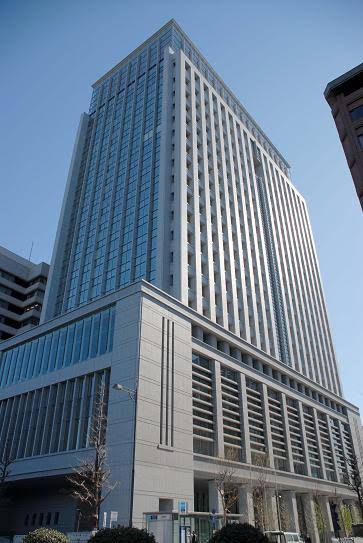
Mitsubishi Motors Corporation is not owned by any single parent company. It is an independently listed Japanese automaker trading on the Tokyo Stock Exchange under the ticker TSE: 7211.
Its largest shareholder as of early 2025 is Nissan Motor Co. at approximately 24%. Nissan reduced its previous 34% stake in November 2024 through a share buyback by Mitsubishi Motors itself.
Mitsubishi Corporation, the Japanese trading conglomerate, holds a further 20% stake. Mitsubishi Heavy Industries retains a smaller 1.44% position.
The remaining shares are distributed among public investors, institutional funds, and employee shareholders. Mitsubishi Motors therefore operates with genuine independence, governed by its own board and executive team.
Where Are Mitsubishi Cars Manufactured?
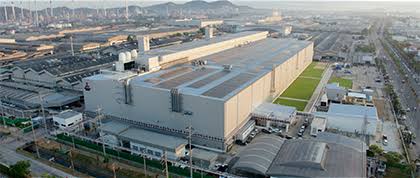
Mitsubishi’s primary manufacturing hub is Japan, where it runs two major assembly plants. The Okazaki Plant in Aichi Prefecture is the company’s flagship facility and serves as its mother factory, developing new technologies before transferring them to overseas operations.
The Okazaki plant builds the Outlander, the Eclipse Cross, and the RVR for global markets. It covers roughly one million square meters of land and includes an on-site test track and R&D center.
The Mizushima Plant in Kurashiki, Okayama produces smaller models including the Mirage and certain kei cars. All Mitsubishi engines across every model line are built at a dedicated powertrain plant in Shiga, Japan.
Outside Japan, Mitsubishi’s most important overseas production site is Thailand. The Laemchabang Factory handles pickup trucks including the Triton and SUVs for Asian and global export markets. Indonesia and the Philippines operate smaller assembly plants serving their respective domestic markets.
Are Any Mitsubishi Cars Made in the USA?
No Mitsubishi vehicles are currently manufactured in the United States. The company’s only American plant, in Normal, Illinois, closed permanently in April 2016.
That facility originally opened as a joint venture with Chrysler in the 1980s under the Diamond-Star Motors name. It produced iconic models including the Eclipse, the Galant, and the Endeavour over roughly three decades before declining sales and rising costs made it unviable.
The Normal plant was purchased by Rivian in 2017 and today produces Rivian’s R1T pickup truck and R1S SUV. Every Mitsubishi on U.S. roads today is imported from Japan, Thailand, or another overseas plant.
As of May 2025, Mitsubishi was actively exploring a return to American assembly. Reports from Automotive News confirmed the company was in discussions with Nissan about sharing an existing Nissan plant in the United States to offset import tariff costs on the Outlander and other models.
What Is the Renault-Nissan-Mitsubishi Alliance?
The Renault-Nissan-Mitsubishi Alliance is a strategic partnership formed progressively between 1999 and 2016. Renault and Nissan formed the original alliance in 1999. Mitsubishi Motors joined formally when Nissan acquired its 34% stake in 2016 after a fuel economy scandal left Mitsubishi financially vulnerable.
The three brands share vehicle platforms, electric vehicle technology, purchasing scale, and manufacturing efficiencies. Each company remains independently listed with its own identity, board, and model lineup.
Mitsubishi contributes its expertise in plug-in hybrid electric vehicles and its dominant position in Southeast Asian markets. The Outlander PHEV, launched in 2013, was the world’s first plug-in hybrid SUV and remains a core technology asset that Mitsubishi brings to the alliance.
In Europe, the alliance relationship runs even deeper. The 2025 all-electric Eclipse Cross sold in Europe is built on Renault’s CMF-EV platform and assembled at Renault’s ElectriCity plant in Douai, France, under an OEM supply agreement.
Mitsubishi Motors History: From Shipbuilding to SUVs
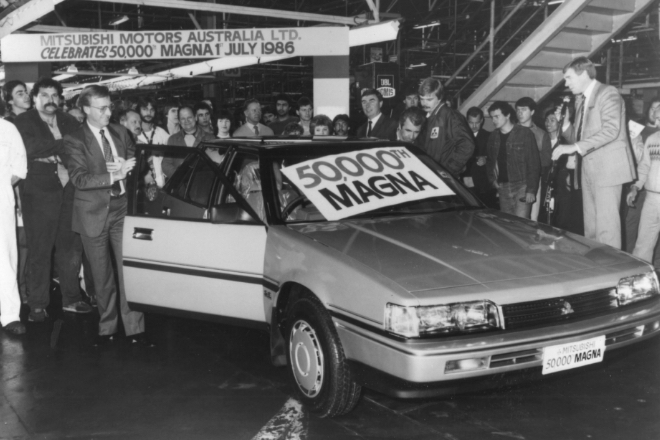
The Mitsubishi Group was founded in 1870 by Yataro Iwasaki as a shipping company in Japan. The automotive connection began in 1917 when Mitsubishi Shipbuilding produced the Model A, a hand-built touring car of which just 22 units were made.
Mitsubishi Motors Corporation was formally spun off as a separate automotive entity in 1970. Through the 1970s and 1980s it built a strong reputation for off-road capability and turbocharged performance with the Pajero SUV and Lancer Evolution rally car.
A series of scandals, including hidden defect cover-ups in 2000 and a fuel economy falsification scandal in 2016, severely damaged the brand’s credibility and finances. The 2016 scandal directly led to Nissan’s takeover of a controlling stake and Mitsubishi’s entry into the alliance.
Today the brand is rebuilding with a focused lineup centered on SUVs, electrification, and Southeast Asian markets, targeting 100% electrified vehicle sales by 2035.
Mitsubishi vs. Nissan: Same Alliance, Different Cars
Mitsubishi Motors and Nissan share platforms and technology through the alliance but sell entirely different vehicles through separate dealer networks. Mitsubishi’s U.S. lineup focuses on SUVs and crossovers, chiefly the Outlander, Outlander PHEV, Eclipse Cross, and Outlander Sport.
Nissan’s U.S. lineup is much broader, covering compact sedans, the Frontier pickup, the Armada full-size SUV, and the Leaf and Ariya electric vehicles alongside its crossover range.
The two brands do share underpinnings in Japan’s domestic kei car segment through the NMKV joint venture, a 50/50 partnership that produces small city cars badged as both Mitsubishi eK models and Nissan Dayz models. Outside Japan, the brands are entirely separate in their model strategies and dealer networks.
Mitsubishi Outlander: The Brand’s Most Important Car in America
The Mitsubishi Outlander is the brand’s best-selling and most important vehicle in the United States. The third-generation model, launched in 2022 and built at the Okazaki plant in Japan, gave the brand a significant boost in U.S. sales after years of declining numbers.
The Outlander PHEV version is particularly significant. It was the world’s first plug-in hybrid electric SUV when it launched in 2013 and remains a strong performer in markets where PHEV incentives are available. The Outlander PHEV is assembled in Japan at Okazaki, with overseas production at the Thailand plant for ASEAN markets.
All Outlanders destined for American buyers are shipped from Japan. The model faces tariff pressure under current U.S. trade policy, which is one reason Mitsubishi is exploring U.S. assembly with Nissan as a potential long-term solution for cost control.
Mitsubishi Electric vs. Mitsubishi Motors: Are They the Same Company?
No. Mitsubishi Electric and Mitsubishi Motors are two completely separate publicly traded companies that both descend from the historic Mitsubishi Group but have no operational connection to each other today.
Mitsubishi Electric makes air conditioning systems, elevators, factory automation equipment, and semiconductors. Mitsubishi Motors makes cars and SUVs. The Mitsubishi name and logo are shared across the broader Mitsubishi keiretsu, a loose network of historically connected Japanese companies, but each company is independently run with its own management, finances, and shareholders.
Other well-known members of the broader Mitsubishi keiretsu include Mitsubishi Heavy Industries, Mitsubishi UFJ Financial Group, and Mitsubishi Chemical Group. Buying a Mitsubishi car has no financial connection to any of these other entities.
Frequently Asked Questions About Who Makes Mitsubishi
Is Mitsubishi a Chinese company?
No. Mitsubishi Motors is a Japanese company headquartered in Tokyo. Nissan, a Japanese automaker, is its largest shareholder at around 24%, and Mitsubishi Corporation, also Japanese, holds another 20%. No Chinese company or government entity has a significant ownership stake.
Is Mitsubishi part of Toyota?
No. Mitsubishi Motors has no ownership connection to Toyota. They are two entirely separate, competing Japanese automakers. Toyota is part of the Toyota Group keiretsu, while Mitsubishi operates within the Renault-Nissan-Mitsubishi Alliance. There is no cross-ownership between the two.
Who makes Mitsubishi engines?
Mitsubishi Motors manufactures its own engines at a dedicated powertrain plant in Shiga, Japan. The company also engineers its own PHEV drivetrain systems in-house. For the European electric Eclipse Cross, the vehicle uses an electric motor sourced through the Renault alliance and assembled at Renault’s French plant.
What country makes the most Mitsubishi cars?
Japan produces the most Mitsubishi cars overall, with the Okazaki and Mizushima plants handling the majority of global output including all vehicles exported to North America. Thailand is the second-largest production country, specializing in the Triton pickup and certain SUVs for Asian and some export markets. For other Japanese automaker ownership details, see Who Makes Infiniti Cars and Where Is Nissan Made.

I am Jack Neel, a mechanical engineer, researcher, and writer. I created this website to share my knowledge about different brands and products with you. I research the manufacturers behind the brands and provide you with the information you need to make smart buying decisions.