
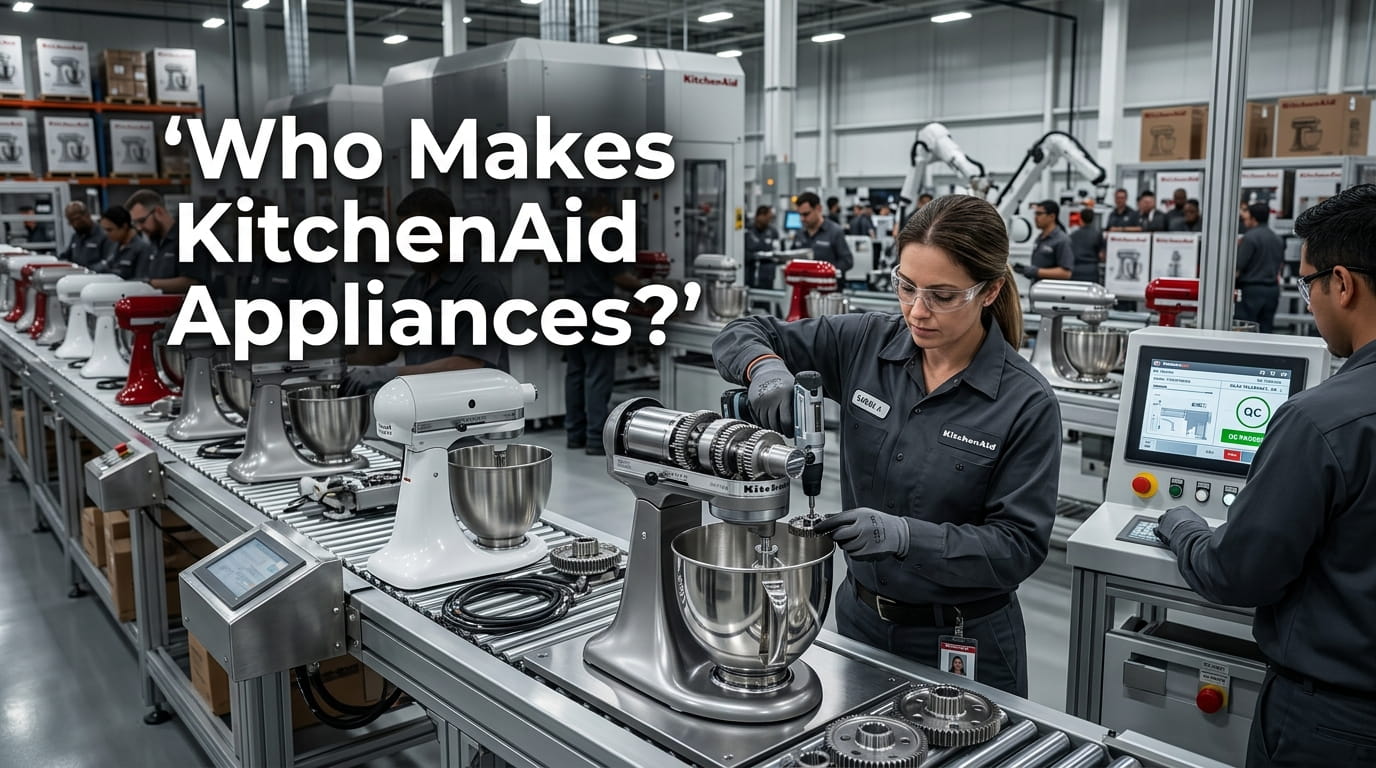
KitchenAid appliances are made by the Whirlpool Corporation, which also makes Maytag and Roper. For other appliance brand comparisons, also read about Bosch appliances and GE appliances. home appliances. This company is responsible for the design, production, and distribution of the entire KitchenAid product line, from its iconic stand mixers to major kitchen appliances.
KitchenAid itself is a well-established American home appliance brand owned by Whirlpool, known for its wide selection of kitchen tools. The brand became widely known for its stand mixers, which are now a staple in many home and professional kitchens.
Whirlpool Corporation acquired KitchenAid in 1986, integrating the brand into its extensive portfolio of household names. This acquisition allowed KitchenAid to utilize Whirlpool’s manufacturing capabilities and distribution networks, significantly expanding its reach and product offerings.
But who really stands behind these iconic kitchen tools and ensures their continued legacy?
This guide will explore the corporate structure behind KitchenAid. We will examine its manufacturing practices, trace its rich history, and look at the full range of products offered. It also covers the brand’s reputation for quality and its place within the broader appliance market.
So let’s get started.
Table of Contents
Who Owns KitchenAid Today?

Today, the KitchenAid brand is wholly owned by the Whirlpool Corporation. Whirlpool has owned the brand since 1986, acquiring it from Dart & Kraft that year.
Whirlpool Corporation is one of the world’s largest manufacturers of major home appliances. Its wide portfolio includes many well-known brands across various segments of the appliance market.
The parent company provides KitchenAid with substantial resources for research, development, manufacturing, and global distribution. Whirlpool’s financial backing allows KitchenAid to innovate and maintain its market position.
The acquisition allowed KitchenAid to grow beyond its core stand mixer business, expanding into a wider range of small and major kitchen appliances. Whirlpool’s operational scale was key to this diversification.
What is the History Behind the KitchenAid Brand?
The name “KitchenAid” reportedly came from a delighted user’s comment that the mixer was “the best kitchen aid” she had ever had. This early focus on utility and quality established the brand’s direction.
Throughout the 20th century, KitchenAid primarily focused on its mixers. These became increasingly popular among home bakers and culinary enthusiasts. The design evolved, but the core functionality remained.
In 1986, KitchenAid became part of the Whirlpool Corporation. This acquisition marked a significant turning point, allowing the brand to greatly expand its product lines beyond its original focus.
Under Whirlpool, KitchenAid launched a full line of major appliances, including refrigerators, dishwashers, and ovens. This strategic expansion transformed KitchenAid from a specialized mixer company into a full-range kitchen appliance provider.
Where Are KitchenAid Appliances Manufactured?
The manufacturing locations for KitchenAid appliances vary greatly depending on the specific product category. Like many global brands, KitchenAid uses a mix of domestic and international production facilities.
Many of KitchenAid’s major appliances, such as refrigerators, ranges, and dishwashers, are manufactured at several facilities across the United States. Whirlpool Corporation operates several large manufacturing plants within the US.
For instance, some KitchenAid dishwashers come from Findlay, Ohio. Many cooking appliances are produced at Whirlpool’s facilities in Cleveland, Tennessee. These US-based operations support American jobs and maintain regional supply chains.
However, specific components or entire product lines may be sourced or manufactured overseas, particularly for some smaller appliances and certain parts of major appliances. This global supply chain strategy is common in the appliance industry.
While the company highlights its American heritage, modern manufacturing often involves a blend of domestic and international production. This helps meet global demand and maintain competitive pricing.
What Range of Products Does KitchenAid Offer?
KitchenAid has significantly expanded its product portfolio far beyond its original stand mixers. The brand now offers a full suite of appliances for both the counter and the entire kitchen.
Their small appliance range includes blenders, food processors, toasters, coffee makers, and hand mixers. These products complement the iconic stand mixer in daily kitchen tasks.
In the major appliance category, KitchenAid provides a full line of premium kitchen solutions. This includes refrigerators, dishwashers, wall ovens, ranges, cooktops, and microwaves.
They also offer specialized built-in appliances like undercounter refrigerators and ice makers, catering to custom kitchen designs. Their varied offerings aim to outfit an entire kitchen with matching aesthetics and performance.
Each product line, from stand mixers to refrigerators, typically features distinct design elements and color options. This allows consumers to create a cohesive and stylish look in their kitchen.
How Does Whirlpool Corporation Influence KitchenAid’s Products?
Whirlpool Corporation’s ownership profoundly influences KitchenAid’s product development, manufacturing, and market strategy. This symbiotic relationship utilizes the strengths of both entities.
Whirlpool provides broad research and development capabilities, allowing KitchenAid to incorporate advanced technologies and features into its appliances. This includes innovations in energy efficiency, smart connectivity, and performance.
The shared manufacturing infrastructure under Whirlpool means KitchenAid benefits from economies of scale. This often leads to more efficient production processes and potentially more competitive pricing for consumers.
Whirlpool’s global distribution network significantly broadens KitchenAid’s market reach. KitchenAid appliances are sold in numerous countries. This would be challenging without its parent company’s logistical support.
Whirlpool also influences quality control standards and customer service infrastructure. It aims for consistent product reliability across its brands, including KitchenAid. This helps maintain the brand’s premium reputation.
Is KitchenAid Considered a Premium Appliance Brand?
Yes, KitchenAid is generally positioned and seen as a premium or upscale brand within the appliance market. Its pricing often reflects this higher-end placement compared to entry-level or mid-range brands.
The brand’s iconic design, especially its stand mixers, contributes significantly to its premium image. KitchenAid products often feature durable materials and a distinctive aesthetic that appeals to discerning consumers.
Many consumers associate KitchenAid with durability, performance, and style, especially among baking and cooking enthusiasts. Marketing and product quality carefully cultivate this perception.
While some products, like basic blenders, might be more accessible, its major appliances and high-end stand mixer models firmly place it in the premium segment. These products often come with advanced features and robust construction.
The brand targets consumers who prioritize performance, design, and culinary aspiration. This market positioning supports its reputation as a premium choice for kitchen equipment.
Are KitchenAid Stand Mixers Still Made in the USA?
This factory has produced KitchenAid stand mixers for many decades, maintaining a long tradition of American craftsmanship. This commitment to domestic manufacturing is a point of pride for the brand.
Consumers often value this “Made in USA” aspect, associating it with specific quality standards and supporting local economies. It’s a significant factor for many buyers considering a KitchenAid mixer.
While the core mixer unit is assembled in Ohio, some components or attachments might be sourced globally. However, the final assembly and key manufacturing processes for the mixer itself typically remain in the US.
This dedication to US manufacturing for its flagship product helps reinforce KitchenAid’s identity as an American brand with a strong heritage. It reflects their roots despite global operations.
How Does KitchenAid’s Warranty and Service Work?
KitchenAid appliances come with manufacturer warranties protecting against defects in materials or workmanship. The specific terms and duration of the warranty vary by product type and region.
Typically, major appliances like refrigerators, dishwashers, and ovens often carry a one-year limited warranty covering parts and labor. Some components might have extended warranties for specific periods.
Small appliances, such as stand mixers, blenders, and food processors, also include a limited warranty. The duration can range from one to five years, depending on the product and its classification.
For service, KitchenAid uses Whirlpool Corporation’s broad network of authorized service technicians. This ensures that trained professionals using genuine parts carry out repairs and maintenance.
Customers can usually initiate warranty claims or service requests through KitchenAid’s official website or by contacting their dedicated customer service lines. Proof of purchase is typically required to validate a warranty claim.
Who Are KitchenAid’s Primary Competitors?
KitchenAid operates in a competitive market, facing rivals across both small and major appliance categories. Its competitors vary depending on the product segment.
In the stand mixer and small appliance market, KitchenAid competes with brands such as Cuisinart, Breville, Smeg, and Hamilton Beach. These brands offer a range of products with varying price points and features.
For major kitchen appliances, KitchenAid competes with other premium and mainstream brands from large manufacturers. These include GE Appliances (owned by Haier), Samsung, LG, Bosch, and Viking.
Within Whirlpool Corporation’s own portfolio, KitchenAid complements brands like Maytag or JennAir. These target slightly different consumer segments or price points. JennAir, for example, is positioned even more exclusively in the luxury segment.
Competition revolves around factors such as design, performance features, durability, energy efficiency, brand reputation, and customer service. KitchenAid strives to differentiate itself through its blend of heritage, style, and culinary focus.
Is KitchenAid a Worthwhile Investment for Your Kitchen?
For many consumers, KitchenAid appliances are a worthwhile investment, particularly for those who prioritize durability, design, and culinary performance. The brand has built a strong reputation over decades.
Their iconic stand mixers are often considered a benchmark in their category, known for robust construction and versatility. These machines are designed to last for many years with proper care.
KitchenAid’s major appliances generally receive positive reviews for their aesthetics and functionality. They often fit well into modern and traditional kitchen designs and offer a cohesive look when purchased as a suite.
While KitchenAid products might cost more than some entry-level options, many users find the added expense justified by the quality, features, and longevity. The brand targets users who frequently cook and bake.
Ultimately, whether KitchenAid is a worthwhile investment depends on individual needs, budget, and priorities for kitchen appliances. For those seeking reliable, stylish, and performance-oriented tools, KitchenAid remains a strong contender.

I am Jack Neel, a mechanical engineer, researcher, and writer. I created this website to share my knowledge about different brands and products with you. I research the manufacturers behind the brands and provide you with the information you need to make smart buying decisions.