
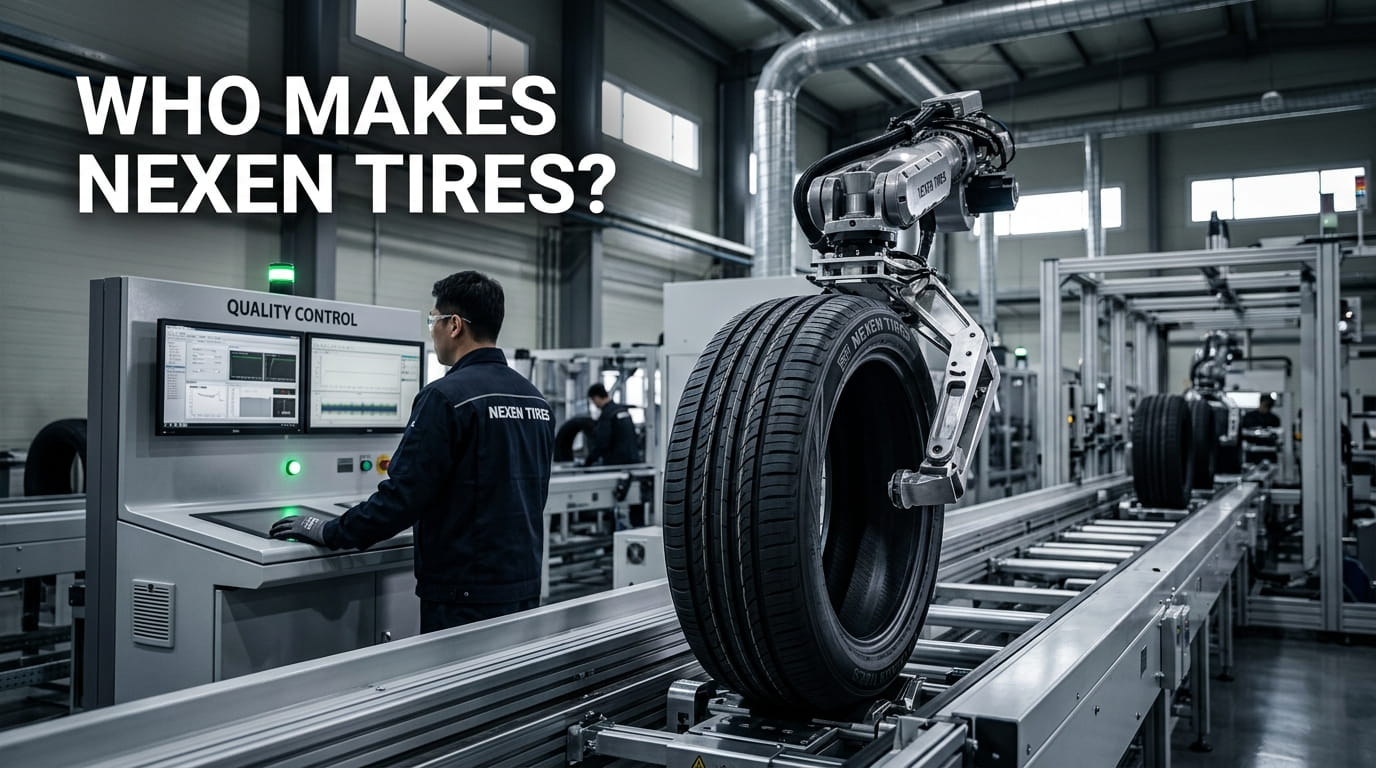
Nexen tires are made by Nexen Tire Corporation, an independent South Korean company founded in 1942 as Heung-A Tire Company and headquartered in Yangsan, South Gyeongsang Province, South Korea.
The company rebranded as Nexen Tire in 2000, combining the words “next” and “century” to signal its ambitions for global growth and technological advancement into the new millennium.
Nexen Tire is publicly listed on the Korea Stock Exchange under KRX: 002350 and is a subsidiary of Nexen Corporation, its parent holding company based in South Korea.
The brand supplies original equipment tires to major global automakers including Porsche, BMW, Volkswagen, Kia, and Hyundai, giving it credibility in the performance and premium segments that most value-tier tire brands cannot claim.
Nexen reported record annual sales of over KRW 3 trillion in 2025, marking five consecutive years of revenue growth, and sells its tires in more than 150 countries worldwide.
In the United States, Nexen operates through Nexen Tire America, a subsidiary established in 2005 based in Diamond Bar, California, handling distribution, marketing, and OE supply for the North American market.
Table of Contents
Who Makes Nexen Tires and Who Owns the Company?
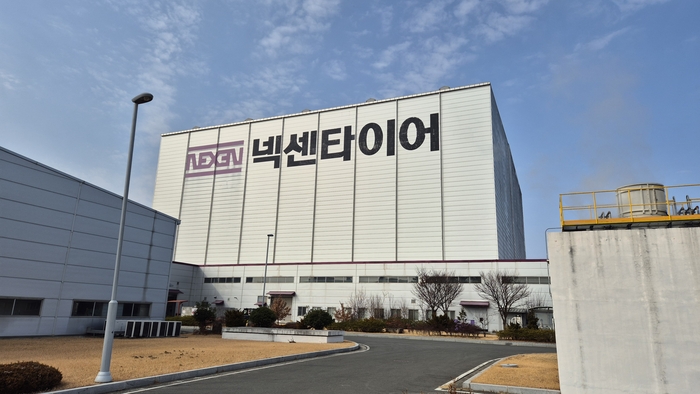
Nexen Tire Corporation manufactures all Nexen-branded tires internally across its own global production network. It is not a white-label producer for other companies and is not a division of any larger tire conglomerate like Michelin, Bridgestone, or Goodyear.
Nexen Tire is a subsidiary of Nexen Corporation, the South Korean holding company that also operates the Nexen Enterprise division focused on other business interests. Nexen Tire is the group’s flagship asset and most prominent global brand.
The company is publicly traded on the Korea Stock Exchange, meaning its shares are available to institutional and retail investors, and its financial results are published quarterly. As of 2025, it had annual revenues approaching $2 billion and a global workforce operating across its South Korean, Chinese, and Czech production facilities.
Where Are Nexen Tires Made?
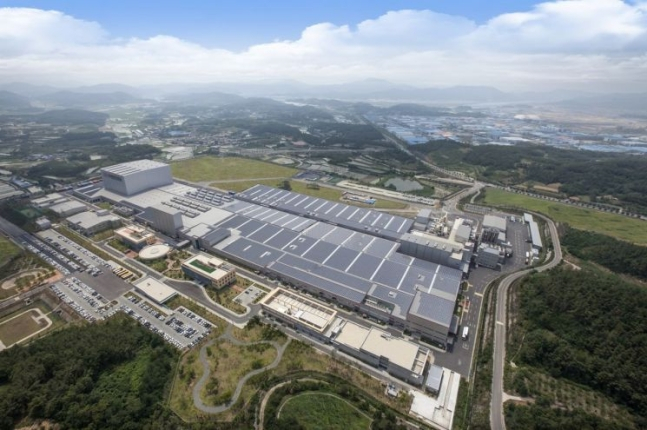
Nexen operates four major production facilities on three continents. The original Yangsan plant in South Korea is the company’s oldest facility and continues to handle a substantial share of global output. The Changnyeong plant, opened in 2012 and also in South Korea, is considered one of the most automated tire manufacturing plants in the world and focuses on high-value original equipment tires for premium automakers.
The European plant in Zatec, Czech Republic expanded in 2021 to a capacity of 11 million tires per year and serves the European market with locally manufactured product. The Qingdao, China facility handles production primarily for the Asian market.
Tires sold in North America are imported primarily from the South Korean plants. Nexen has no manufacturing facility in the United States, so every Nexen tire reaching an American buyer is shipped from Korea. The company’s Diamond Bar, California office handles sales, marketing, and technical support but does no manufacturing.
Nexen also opened a winter tire testing facility in Finland in 2025, a significant investment that signals the company is serious about competing in the technically demanding cold-weather segment alongside established Scandinavian and German winter tire specialists.
Is Nexen a Good Tire Brand? What You Need to Know
Nexen occupies a value-to-mid-range position in the global tire market. It is priced typically 20 to 30 percent below premium European and Japanese brands like Continental, Pirelli, and Yokohama, while offering performance that most everyday drivers will find entirely adequate for normal driving conditions.
The OE supply relationships with Porsche and BMW are meaningful credentials. A tire brand that meets the engineering tolerances required by premium German automakers is not a bottom-shelf product. Those OE contracts put Nexen in a different category than purely budget-positioned brands that compete only on price.
That said, there is an important distinction buyers should understand. The OE-spec tires Nexen supplies directly to automakers for new car fitment are built to cost targets set by those manufacturers, which sometimes means a softer or less durable compound than what Nexen sells as an aftermarket replacement tire. Drivers who had Nexen tires on a new car and were disappointed often find the aftermarket retail version to be a noticeably better product.
For all-season commuting, light highway driving, and general family car use, Nexen represents strong value for budget-conscious buyers. For performance driving, track use, or demanding winter conditions, moving up to a premium brand is worth the additional cost.
Nexen Tire History: From Korea’s First Tire Maker to a Global Brand
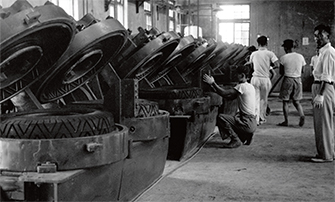
Nexen was established in 1942 as Heung-A Tire Company, one of the earliest tire manufacturers in Korea. In 1956, it became the first Korean tire manufacturer to receive official recognition, predating what would become a major Korean industrial sector.
The company renamed itself Woosung Tire in 1994, then completed its final rebrand to Nexen Tire in 2000. That rebrand coincided with a period of significant investment in production technology, including a partnership with Michelin that gave the company access to modern radial tire manufacturing techniques before the two companies went their separate ways.
In 2005, Nexen established Nexen Tire America to begin building its North American presence seriously. The U.S. market expansion has been gradual but consistent, growing through independent dealer relationships, e-commerce tire retailers, and OE supply contracts with automakers selling in North America.
By 2025, Nexen had achieved five consecutive years of record revenue, reflecting strong growth in Europe through the Czech plant and sustained demand from its Korean OE customers. The company targets continued expansion in the ultra-high performance and electric vehicle tire segments, which carry higher margins than the standard all-season products that make up most of its current volume.
Nexen vs. Hankook Tires: How Do They Compare?
Nexen and Hankook are both South Korean tire manufacturers competing directly in the mid-range global tier. Both were founded in the 1940s, both built their brands from domestic Korean customers before expanding globally, and both now supply OE tires to major international automakers.
Hankook is the larger company by revenue and has deeper penetration of the American OE market, with long-running supply contracts for Ford and General Motors vehicles. This gives Hankook stronger brand recognition among U.S. consumers who see their brand come on new cars from the factory.
Nexen generally undercuts Hankook slightly on retail pricing while offering comparable specification in most all-season and standard performance categories. In South Korea itself, both brands sit just below Kumho in market share rankings, with all three competing aggressively for the same domestic consumer base.
For North American buyers choosing between them, the practical difference is modest. Hankook carries broader availability through more retail channels. Nexen is the slightly cheaper choice with equivalent real-world performance for most driving situations.
What Cars Come with Nexen Tires from the Factory?
Nexen has secured original equipment supply agreements with a range of global automakers. The Porsche Cayenne is one of the most prominent fitments, with Nexen supplying specific performance tire grades engineered to Porsche’s exact dimensional and handling specifications.
The Kia EV9 electric SUV, one of the most important new electric vehicle launches from the Hyundai-Kia group, also comes fitted with Nexen tires in certain markets. BMW has used Nexen tires on several models as OE fitments, particularly in European configurations.
Nexen also supplies OE tires to Renault Korea, with a contract covering the new Grand Koleos SUV announced in late 2024. These OE relationships across German, Korean, and French automakers demonstrate that Nexen’s manufacturing quality meets the engineering requirements of some of the world’s most demanding vehicle programs. For other tire brand comparisons, see Where Are Falken Tires Made and Where Are Hankook Tires Made.
Frequently Asked Questions About Nexen Tires
Are Nexen tires made in China?
Nexen does operate a plant in Qingdao, China, but the tires sold in North America come from the South Korean plants in Yangsan and Changnyeong. The Chinese facility primarily serves Asian markets and does not supply the North American distribution channel.
Does Nexen make tires for other brands?
Nexen focuses on producing tires under its own brand name and does not function as a contract manufacturer producing tires sold under different labels. This distinguishes it from some Asian producers that do significant white-label work. Every Nexen-manufactured tire carries the Nexen name.
How long do Nexen tires last?
Nexen’s all-season tires typically carry treadwear ratings in the 500 to 640 range, which corresponds to approximately 50,000 to 65,000 miles of real-world use under normal driving conditions. High-performance summer tires in the Nexen lineup carry lower treadwear ratings and shorter expected service lives, which is standard across the performance tire category regardless of brand.

I am Jack Neel, a mechanical engineer, researcher, and writer. I created this website to share my knowledge about different brands and products with you. I research the manufacturers behind the brands and provide you with the information you need to make smart buying decisions.