
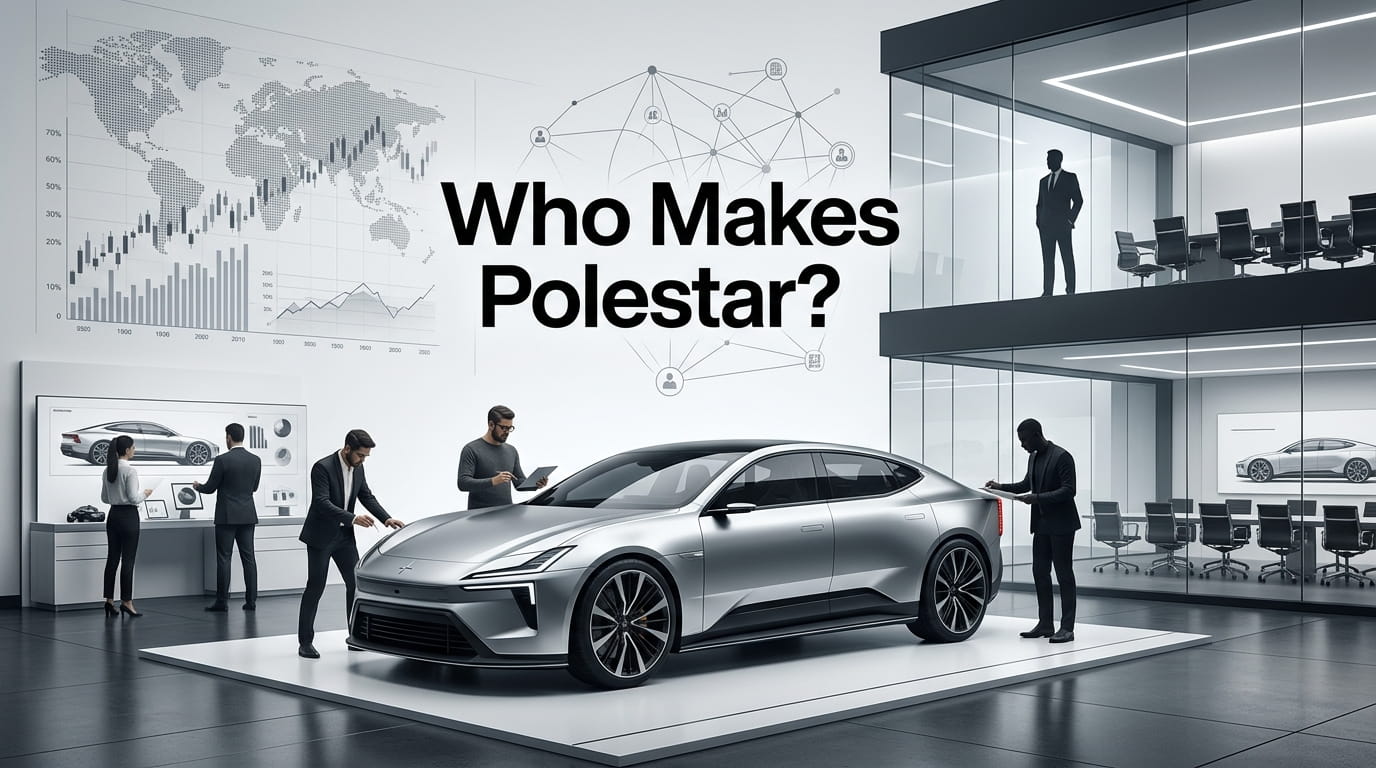
Polestar cars are made by Polestar Automotive, a Swedish electric vehicle company jointly owned by Volvo Cars and Geely Holding. Browse current models on the Polestar official US website.
Polestar is known for its minimalist Scandinavian design, its performance-focused electric vehicles, and a business model built around direct sales without traditional dealerships.
Polestar Automotive Holding UK PLC is publicly traded on the NASDAQ exchange under the ticker PSNY, with Volvo Cars and Geely Holding as its primary corporate shareholders and joint owners of the brand.
Knowing who makes Polestar helps buyers understand its relationship to Volvo, where the vehicles are actually assembled, and the corporate structure behind this growing EV brand.
This article covers Polestar’s founding, ownership, manufacturing locations, current lineup, and how it compares to Tesla and BMW i.
So let’s get started.
Table of Contents
Who Owns Polestar?
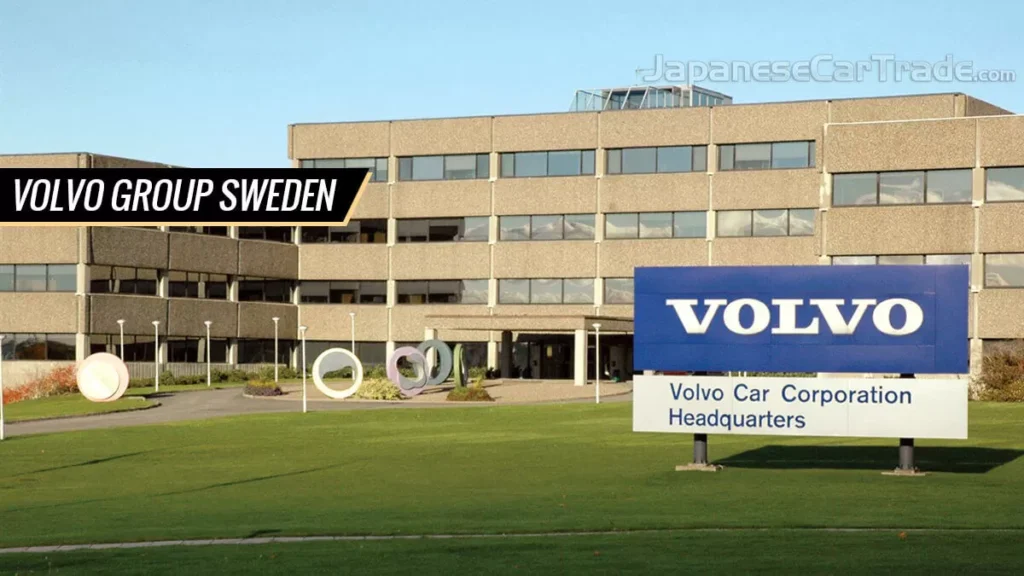
Polestar is jointly owned by Volvo Cars and Zhejiang Geely Holding Group, the Chinese conglomerate that also owns Volvo Cars itself.
Polestar listed on the NASDAQ in June 2022 through a merger with a Special Purpose Acquisition Company (SPAC). Despite the public listing, Volvo and Geely retain majority ownership and control of the company.
Polestar operates as an independent brand with its own CEO, design team, and product development, though it shares engineering platforms, manufacturing capacity, and supply chain resources with Volvo Cars.
When Was Polestar Founded?

Polestar began as Polestar Performance AB, a Swedish racing and performance tuning company founded in 1996 that became Volvo Cars’ official performance partner.
Volvo Cars acquired Polestar Performance in 2015 and used the brand to launch a line of high-performance Volvo-based vehicles. In 2017, Volvo and Geely spun Polestar out as an independent premium electric car company.
The first fully independent Polestar vehicle, the Polestar 1 plug-in hybrid grand tourer, was produced in limited numbers between 2019 and 2021. The Polestar 2 electric fastback followed in 2020 as the brand’s mass-market model.
Where Are Polestar Cars Made?
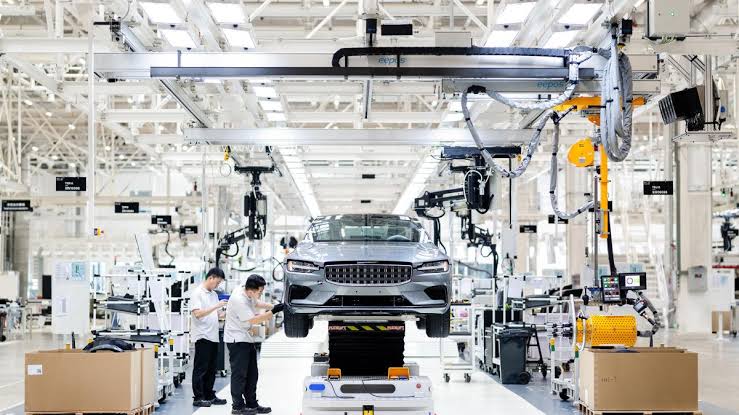
Polestar vehicles are manufactured at several locations depending on the model. The Polestar 2 is assembled at the Geely Luqiao plant in Chengdu, China. The Polestar 4 is produced at a Geely facility in Hangzhou, China.
The Polestar 3 electric SUV is manufactured at two locations: the Volvo Cars plant in Ridgeville, South Carolina, USA, and a facility in Chengdu, China. The South Carolina-assembled Polestar 3 serves the North American market.
Polestar uses Volvo’s manufacturing infrastructure and has no standalone factories of its own. This asset-light approach reduces capital requirements but ties production to Volvo and Geely’s manufacturing network.
What Models Does Polestar Currently Offer?
Polestar currently sells three models in North America. The Polestar 2 is a premium electric fastback sedan and the brand’s entry-level model, competing with the Tesla Model 3 and BMW i4.
The Polestar 3 is a large electric SUV built on the same platform as the Volvo EX90, offering a similar powertrain in a distinctive Polestar design. The Polestar 4 is a sleek SUV coupe notable for its absence of a traditional rear window, instead using a wide-angle rear camera.
Polestar 5 and Polestar 6 have been announced as future models. The Polestar 5 will be a performance electric grand tourer, while the Polestar 6 will be an open-top electric roadster.
Polestar vs Tesla vs BMW i: Who Makes Each?
All three compete in the premium electric vehicle market but come from very different companies. Polestar is jointly owned by Volvo Cars and Geely, with a Swedish design identity. Tesla is a publicly traded American company controlled by Elon Musk. BMW’s i series is made by BMW AG, a German company controlled by the Quandt family.
Tesla dominates this segment by volume and technology brand power. BMW brings traditional luxury brand prestige. Polestar differentiates on design minimalism, sustainability credentials, and a Scandinavian aesthetic that sets it apart from both.
Polestar is significantly smaller than both Tesla and BMW in terms of sales volume, but it has carved out a distinct niche among buyers who find Tesla’s brand polarizing and BMW’s EVs too conventional in design.
What Is Next for Polestar?
Polestar has been undertaking significant cost reduction efforts to reach profitability, including workforce reductions and streamlining its operational structure.
The brand is expanding its model range with the Polestar 5 and 6 to cover the high-performance and open-air segments, aiming to build a fuller lineup that competes across more EV categories.
Polestar is also expanding its US presence through increased retail touchpoints and a larger service network as it grows its North American customer base beyond the early adopter segment.
Frequently Asked Questions About Who Makes Polestar
Is Polestar the same as Volvo?
Polestar and Volvo are related but separate brands. Volvo Cars co-owns Polestar and the two share manufacturing facilities and engineering platforms. However, they have distinct designs, model lineups, and brand identities. Polestar is specifically focused on performance electric vehicles with a minimalist design philosophy.
Is the Polestar 3 made in the USA?
Yes. The Polestar 3 sold in North America is assembled at Volvo’s plant in Ridgeville, South Carolina. This is the same facility that produces the Volvo EX90. Some Polestar 3 models are also made in China for other global markets.
Is Polestar a Chinese car?
Polestar is a Swedish brand with Chinese ultimate ownership through Geely’s controlling stake in both Polestar and Volvo Cars. Its design and engineering are led from Gothenburg, Sweden. Some Polestar models are made in China, while the Polestar 3 for North America is assembled in South Carolina.
Is Polestar profitable?
As of 2025 and 2026, Polestar has not reached profitability and continues to report operating losses. The company has been reducing costs and streamlining operations. Its long-term path to profitability depends on scaling sales volume across its growing model lineup.

I am Jack Neel, a mechanical engineer, researcher, and writer. I created this website to share my knowledge about different brands and products with you. I research the manufacturers behind the brands and provide you with the information you need to make smart buying decisions.