
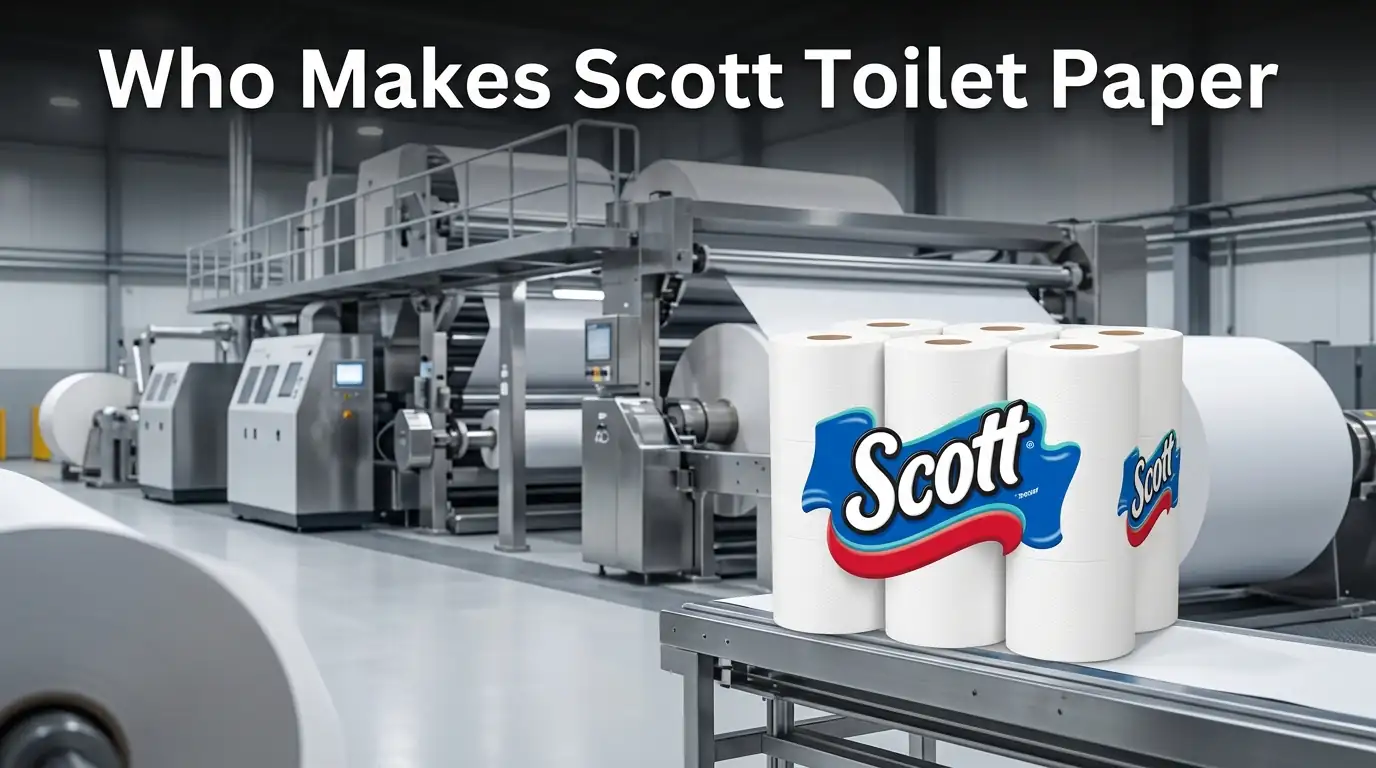
Scott toilet paper is made by Kimberly Clark, the same company that owns Cottonelle, Kleenex, and Huggies.
Scott Paper Company was founded in 1879 in Philadelphia by brothers Irvin and Clarence Scott, and the company is widely credited as one of the first to sell toilet paper on a roll in the United States, decades before Kimberly Clark ever acquired it.
Here is a genuinely current twist. In November 2025, Kimberly Clark agreed to acquire Kenvue, the maker of Tylenol, Band Aid, and Neutrogena, in a deal worth about 48.7 billion dollars expected to close in the second half of 2026, meaning the company behind your roll of Scott toilet paper is about to become part of an even bigger consumer health empire.
In this article we will cover who makes Scott toilet paper, when Scott Paper Company was founded, where it is manufactured, what makes it different, why Kimberly Clark sells both Scott and Cottonelle, and whether Scott is worth buying.
Table of Contents
Who Makes Scott Toilet Paper?

Scott toilet paper is manufactured and owned directly by Kimberly Clark, a multinational personal care and paper products company.
Kimberly Clark acquired Scott Paper Company in 1995 in one of the largest mergers in the history of the paper industry, combining two of the biggest tissue makers in the country under one roof.
Since the merger, Scott has continued operating as its own distinct brand within Kimberly Clark’s much larger portfolio of paper and personal care products.
Kimberly Clark has kept Scott’s branding and packaging largely intact since the merger, choosing to run it as a parallel product line rather than folding it into Cottonelle.
When Was Scott Paper Company Founded?
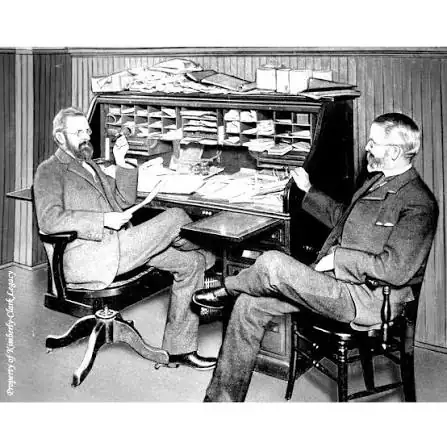
Scott Paper Company was founded in 1879 in Philadelphia, Pennsylvania, by brothers Irvin and Clarence Scott.
The company is often credited with helping popularize toilet paper sold on a roll, at a time when most Americans still used cruder alternatives for bathroom hygiene.
Scott’s early innovations in tissue paper manufacturing helped set standards that much of the modern toilet paper industry still follows more than a century later.
Scott grew into one of the dominant American paper companies over the following century before Kimberly Clark acquired it in 1995.
That acquisition, according to Wikipedia, ended Scott’s run as an independent public company after well over a hundred years in business.
Where Is Scott Toilet Paper Made?

Scott toilet paper is manufactured at Kimberly Clark paper mills located across the United States.
Kimberly Clark operates a large network of domestic production facilities, allowing it to manufacture both Scott and Cottonelle without depending on outside contract manufacturers.
This direct manufacturing control is one of the key differences between name brand companies like Kimberly Clark and private label programs that rely entirely on third party suppliers.
That scale also lets Kimberly Clark absorb shifts in raw material costs more predictably than smaller regional manufacturers competing in the same space.
What Makes Scott Toilet Paper Different?
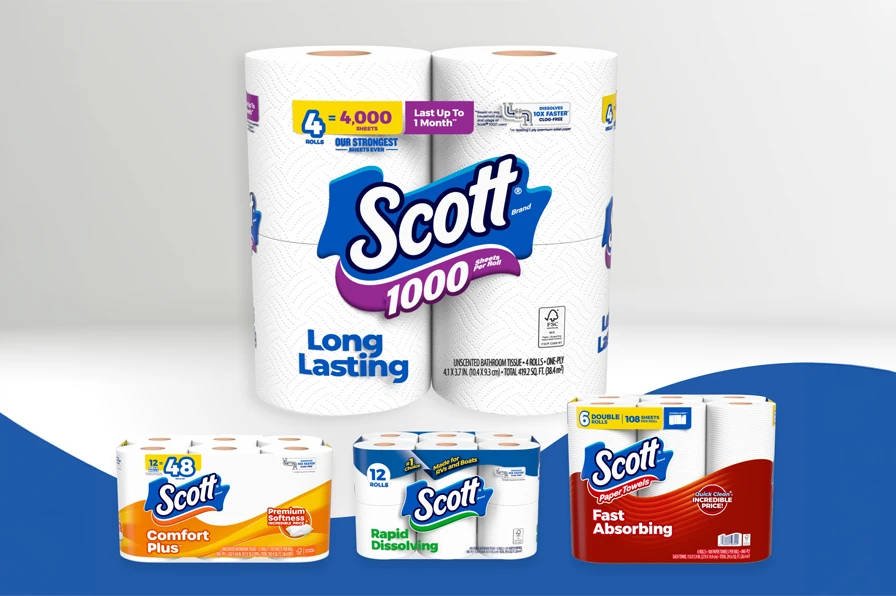
Scott has traditionally positioned itself around value and efficiency, with thinner, denser rolls designed to deliver more sheets per roll than plusher competitors.
The Scott 1000 line in particular is marketed around getting significantly more usable sheets per roll compared to typical toilet paper, appealing to budget minded households.
Some Scott 1000 rolls advertise well over a thousand sheets in a single roll, which is dramatically more than most standard consumer toilet paper products offer.
This no frills positioning has made Scott a long running favorite for buyers who prioritize value over softness.
Businesses and landlords also frequently choose Scott for rental properties and commercial restrooms specifically because of its efficient, high sheet count design.
Scott vs Cottonelle: Why Does Kimberly Clark Sell Both?
Kimberly Clark owns both Scott and Cottonelle, two toilet paper brands that compete directly with each other on the same store shelves.
This multi brand strategy lets Kimberly Clark capture different segments of the market, with Scott targeting value conscious shoppers and Cottonelle marketed more toward comfort and texture.
Consumer goods giants use this same playbook across many categories, since owning multiple competing brands captures far more total market share than betting everything on just one.
Rather than losing budget shoppers to a rival company entirely, Kimberly Clark keeps that spending inside its own portfolio by offering both options, a pattern also discussed in our general guide to who makes toilet paper.
Is Scott Toilet Paper Worth Buying?
Scott toilet paper is generally well regarded for households that want maximum value per roll rather than a plush, cushioned feel.
It tends to cost less than Cottonelle or Charmin while still coming from a major, quality controlled manufacturer rather than an unknown private label supplier.
Households that go through toilet paper quickly often find that Scott’s higher sheet count per roll translates into real savings over a year of regular use.
For shoppers who prioritize practicality and fewer shopping trips, Scott’s own product lineup remains one of the more efficient options on the market.
Frequently Asked Questions
Who makes Scott toilet paper?
Scott toilet paper is made by Kimberly Clark, which acquired Scott Paper Company in 1995.
When was Scott toilet paper invented?
Scott Paper Company was founded in 1879 and is widely credited as one of the first companies to sell toilet paper on a roll in the United States.
Is Scott the same company as Cottonelle?
Scott and Cottonelle are both owned by Kimberly Clark but remain separate, competing brands rather than the same product sold under two names.
Where is Scott toilet paper manufactured?
Scott toilet paper is manufactured at Kimberly Clark paper mills located across the United States.

I am Jack Neel, a mechanical engineer, researcher, and writer. I created this website to share my knowledge about different brands and products with you. I research the manufacturers behind the brands and provide you with the information you need to make smart buying decisions.