
Comcast is a publicly traded company controlled by Chairman and CEO Brian Roberts, who holds effective control through Class B supervoting shares despite owning only about 1 percent of total shares outstanding.
Comcast is one of the largest telecommunications and media companies in the world, providing cable television, internet, and phone service while also owning NBCUniversal, which includes NBC, Universal Pictures, and Peacock.
Brian Roberts is the son of Comcast co founder Ralph Roberts, and he holds all 9,444,375 shares of Comcast Class B stock through a limited liability company where he serves as managing member.
So how does a stake of roughly 1 percent translate into effective control over one of the largest media companies in America?
This guide covers Comcast’s ownership structure, the Roberts family’s voting control, how the company grew through major acquisitions, and whether Comcast service is worth the cost in 2026.
So lets get started.
Table of Contents
Brian Roberts Voting Control Explained
Comcast’s SEC filings confirm that Roberts’ Class B shares carry a nondilutable one third of the combined voting power of both Comcast share classes, regardless of how many new Class A shares the company issues.
This structure means Roberts maintains effective control over major corporate decisions even though institutional investors collectively own the vast majority of Comcast’s total equity value.
Comcast Founding And Roberts Family History
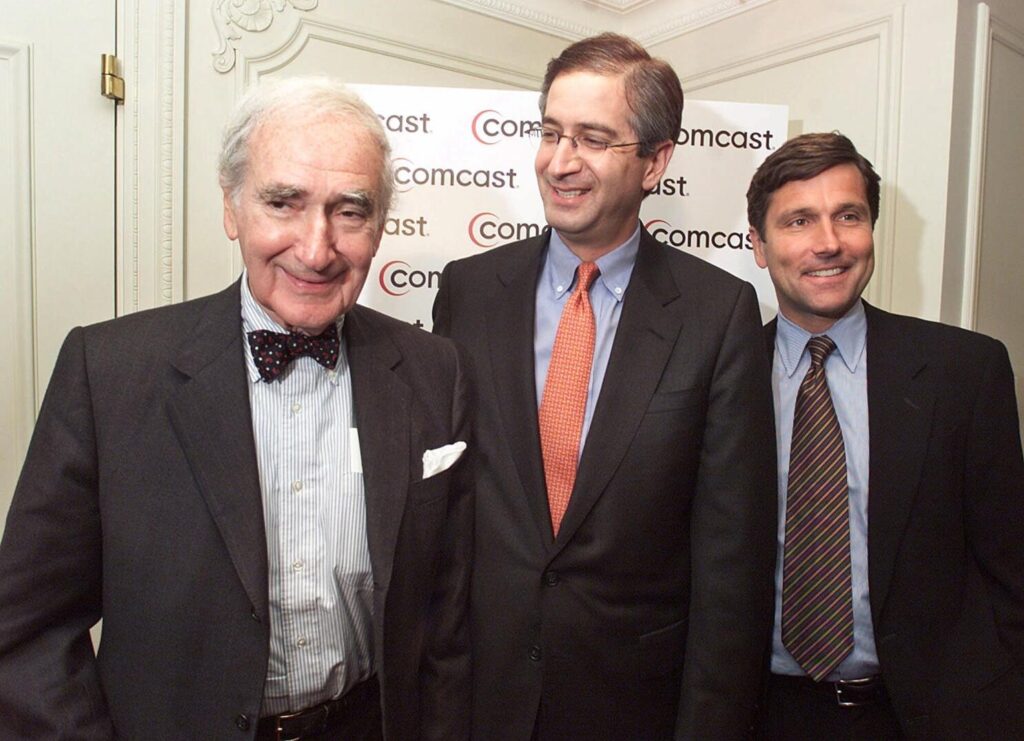
Comcast was founded in 1963 by Ralph Roberts, Daniel Aaron, and Julian Brodsky as a small cable television company based in Tupelo, Mississippi, before relocating its headquarters to Philadelphia.
Brian Roberts joined the family business early in his career and became Comcast CEO in 2002, continuing the Roberts family’s direct leadership of the company for more than six decades.
Largest Institutional Shareholders Of Comcast
Institutional shareholders own approximately 81 percent of Comcast’s Class A common stock, with Vanguard Group, BlackRock, and State Street among the largest holders through their respective index funds.
Despite this large institutional ownership, these shareholders hold limited practical influence over company direction because of Roberts’ guaranteed voting power through Class B shares.
The NBCUniversal Acquisition
Comcast acquired a controlling stake in NBCUniversal from General Electric in 2011, then bought out the remaining stake from General Electric in 2013, giving Comcast full ownership of NBC, Universal Pictures, and Universal theme parks.
Reporting on the acquisition described it as a major bet that traditional cable providers needed to own content production, not just distribution, to compete in a changing media landscape.
Comcast Governance And Shareholder Criticism
Shareholder advocacy groups have periodically criticized Comcast’s governance structure, arguing that Roberts’ guaranteed voting control limits accountability to the broader shareholder base.
These criticisms have not led to structural change, since the Class B share arrangement was established specifically to ensure the Roberts family retains control regardless of outside shareholder pressure.
Comcast Versus Other Cable And Media Companies
Comcast’s combination of cable distribution and content production through NBCUniversal sets it apart from pure distribution companies, giving it a business model closer to Disney than to a company like CBS parent Paramount.
Unlike Disney, which uses a standard single class share structure, Comcast’s dual class arrangement more closely resembles governance structures used by Meta and other founder controlled companies.
Is Comcast Worth The Cost
Comcast’s Xfinity internet and cable services are widely used, though customer satisfaction surveys consistently rank the company among the lowest rated telecom providers for value and customer service.
Common complaints include price increases after promotional periods end, equipment rental fees, and long customer service wait times reported by many subscribers.
Consumer Reports surveys have repeatedly ranked Comcast Xfinity below competitors in overall customer satisfaction, citing pricing transparency and service reliability as recurring pain points for subscribers.
For areas with limited broadband competition, Comcast often remains the most practical choice for high speed internet, even though many customers report frustration with pricing and customer service compared to smaller regional providers.
Frequently Asked Questions About Who Owns Comcast
Who owns Comcast in 2026?
Comcast is controlled by Chairman and CEO Brian Roberts, who holds effective voting control through Class B supervoting shares despite owning only about 1 percent of total shares.
Who founded Comcast?
Comcast was founded in 1963 by Ralph Roberts, Daniel Aaron, and Julian Brodsky, with Ralph’s son Brian Roberts later becoming CEO in 2002.
Does Comcast own NBC?
Yes, Comcast owns NBCUniversal, including NBC, Universal Pictures, and Universal theme parks, after acquiring full control from General Electric in 2013.
How much of Comcast does Brian Roberts own?
Brian Roberts owns roughly 1 percent of total Comcast shares but maintains effective control through Class B shares that carry a guaranteed one third of total voting power.
For more on how another major media company handles ownership, see who owns CBS.

I am Jack Neel, a mechanical engineer, researcher, and writer. I created this website to share my knowledge about different brands and products with you. I research the manufacturers behind the brands and provide you with the information you need to make smart buying decisions.