
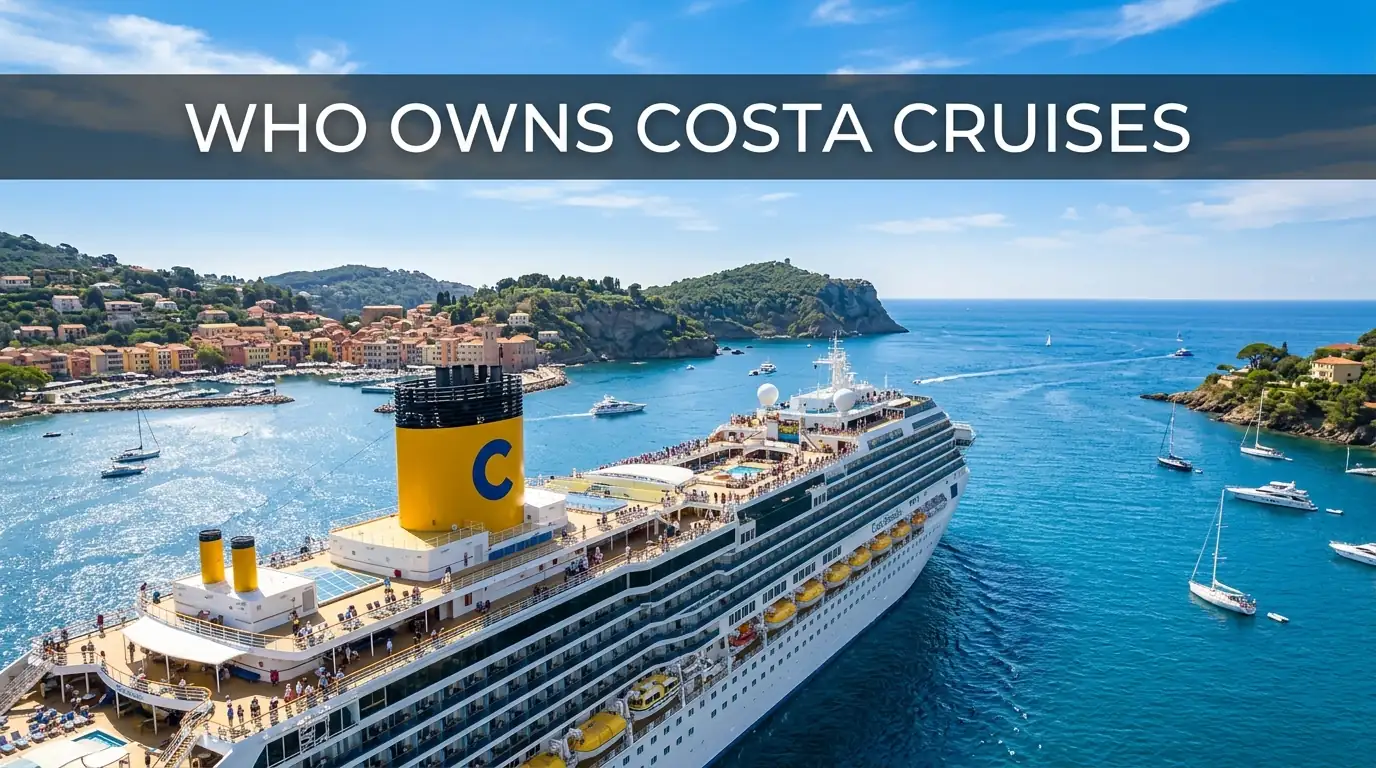
Costa Cruises is owned by Carnival Corporation Ltd., the largest cruise ship operator in the world.
Costa operates as one of eight cruise brands under this single parent company, which trades publicly on the New York Stock Exchange under the ticker symbol CCL.
Costa Cruises is known as the flagship Italian style cruise line of the group, built around Genoese roots, European itineraries, and a distinctly Mediterranean approach to food, design, and onboard entertainment.
The brand remains the most recognized Italian owned cruise operator in the world, even though full financial control now sits with an American headquartered parent company.
Carnival Corporation is a genuine giant of global tourism, operating more than 90 ships across eight brands and employing well over 100,000 people worldwide.
Its portfolio spans everything from budget friendly family cruising to ultra luxury small ship voyages, with Costa serving as the primary Italian and Southern European entry point into that portfolio.
What many travelers do not realize is that Costa traces its roots back to 1854, long before it ever carried a single passenger, and that its 2012 Costa Concordia disaster reshaped safety rules across the entire cruise industry.
That history still shapes how the brand operates today, even as it sails a modern fleet including LNG powered ships.
This guide breaks down exactly who owns Costa Cruises, who founded and now leads the company, how ownership changed over time, and where the ships sail today.
It also covers the size of the Costa fleet, what the brand is known for, and how it compares with its main Italian rival, MSC Cruises.
Let’s take a closer look.
Table of Contents
What Is Costa Cruises?
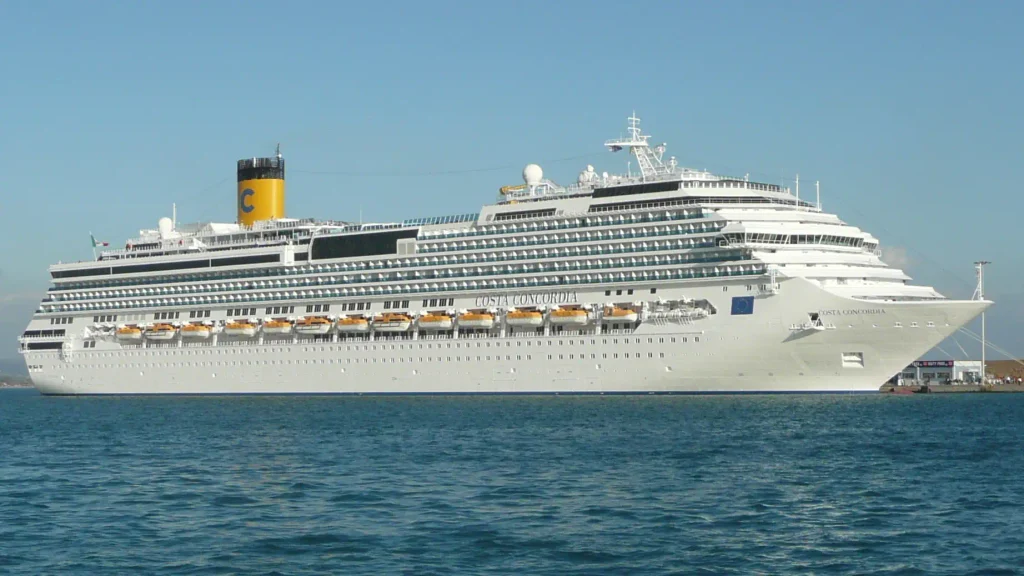
Costa Cruises, formally Costa Crociere S.p.A., is an Italian cruise line headquartered in Genoa, Italy.
The company traces its origins to 1854, when Giacomo Costa founded an olive oil trading business in Genoa that later expanded into shipping cargo across the Mediterranean, according to Wikipedia.
The Costa family entered passenger cruising in 1948, launching scheduled voyages to South America aboard the ship Anna C.
Over the following decades Costa grew into Europe’s largest cruise brand, known for combining Italian design, cuisine, and hospitality with mainstream, accessible pricing.
Today Costa operates an all Italian flagged fleet and remains one of the most recognized cruise names across Europe, South America, and Asia.
Who Owns Costa Cruises?
Costa Cruises is wholly owned by Carnival Corporation Ltd., the Bermuda incorporated parent company that also owns Carnival Cruise Line, Princess Cruises, and several other brands.
Costa is not independently controlled by the Costa family today, despite the family name remaining on every ship in the fleet.
Instead, Costa operates as a fully integrated operating brand, with strategy and financial oversight set at the Carnival Corporation level.
Day to day leadership at Costa is handled by its own president, who reports to Carnival Corporation’s group chief executive.
Publicly traded parent company (NYSE: CCL)
Chairman, largest individual shareholder
President and CEO, Carnival Corporation
Wholly owned operating brand
President, Costa Cruises
Is It Publicly Traded or Privately Owned?
Costa Cruises itself is not separately listed on any stock exchange.
Its parent company, Carnival Corporation, is publicly traded on the New York Stock Exchange under the ticker CCL and is a component of the S&P 500 index.
For decades Carnival operated as a dual listed structure, with a separate Carnival plc entity trading in London alongside Carnival Corporation in New York.
That changed in 2026, when Carnival completed a unification of its two listed entities into one company, Carnival Corporation Ltd., incorporated in Bermuda.
Because Costa sits fully inside that corporate structure, any change to Carnival’s ownership or listing status applies directly to Costa as well.
Who Are the Largest Shareholders of Carnival Corporation?
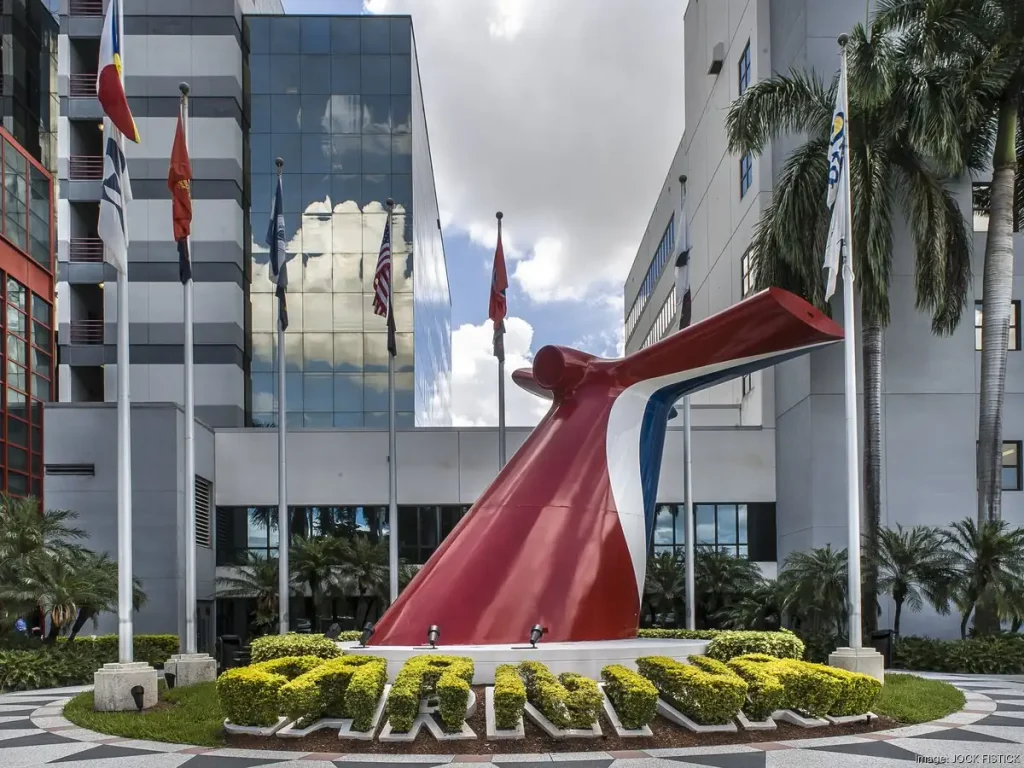
Carnival Corporation’s ownership is dominated by large institutional asset managers, alongside the Arison family’s individual stake.
According to recent shareholder filings, Vanguard entities collectively hold roughly 20 percent of Carnival Corporation shares across several funds.
Micky Arison holds close to 7 percent of shares individually, making him the largest single named shareholder outside of institutional funds.
BlackRock Advisors and State Street Corporation also hold major stakes, each in the mid single digit percentage range.
| Shareholder | Approximate Stake |
| Vanguard Group entities | Approximately 20 percent combined |
| Micky Arison | Approximately 7 percent |
| BlackRock Advisors | Approximately 5.5 percent |
| State Street Corporation | Approximately 4.3 percent |
| Top 10 shareholders combined | Approximately 52 percent of shares |
These figures shift over time as funds buy and sell shares, so exact percentages should always be checked against current SEC filings for investment purposes.
Who Founded Costa Cruises?
Costa Cruises traces its founding to Giacomo Costa, an Italian merchant who established an olive oil trading company in Genoa in 1854.
The Costa family business moved into cargo shipping in the 1920s under Giacomo’s sons, purchasing its first vessels to transport goods across the Mediterranean.
After the Second World War, the family shifted focus toward passenger travel, and in 1948 launched full passenger service to South America aboard the ship Anna C.
The Costa family continued to own and expand the line for decades afterward, before eventually selling their controlling stake in the 1990s.
Who Leads Costa Cruises Today?
Mario Zanetti serves as President of Costa Cruises, a role he has held since March 2021.
Zanetti joined Costa in 1999 and spent much of his early career in revenue management before becoming President of Costa Asia in 2017.
He now oversees Costa’s operations globally, with a stated focus on strengthening the brand’s leadership across Europe, South America, and Asia.
Zanetti reports directly to Josh Weinstein, President and CEO of Carnival Corporation, who oversees all eight brands in the corporate portfolio.
How Has Ownership Changed Over Time?
Costa’s ownership structure changed significantly over the second half of the twentieth century and into the 2000s.
The Costa family retained control of the line for well over a century, guiding it from a cargo shipping business into one of Europe’s leading passenger cruise brands.
In March 1997, Carnival Corporation and the British travel group Airtours jointly purchased Costa for about 300 million dollars, split evenly between the two buyers.
In 2000, Carnival Corporation took full control of Costa Crociere by buying out Airtours’ 50 percent stake for approximately 525 million dollars, making Costa a wholly owned Carnival brand.
In January 2012, the ship Costa Concordia ran aground and partially capsized off the Italian island of Giglio, killing 32 people in one of the deadliest cruise disasters in modern history.
The disaster led to major reforms across the global cruise industry, including mandatory passenger safety drills before departure rather than within the first 24 hours of a voyage, along with tighter bridge procedures and stricter oversight from maritime regulators, as reported by Seatrade Cruise News.
What Cruise Lines Does Carnival Corporation Own?
Carnival Corporation owns eight major cruise brands in total, with Costa Cruises serving as its primary Italian and Southern European brand.
Alongside Costa, the portfolio includes Carnival Cruise Line, Princess Cruises, Holland America Line, Seabourn, AIDA Cruises, Cunard Line, and P&O Cruises.
These brands are positioned differently across the market, from Carnival’s casual North American cruising to AIDA’s German focused fleet and Costa’s Mediterranean, Italian style voyages.
This multi brand structure makes Carnival Corporation the largest cruise company on earth by both fleet size and passengers carried, well ahead of rivals Royal Caribbean Group and MSC Cruises.
Costa Cruises’ Fleet
Costa Cruises operates a fleet of Italian flagged ships, with the lineup set to reach eight vessels in 2026 following the planned departure of Costa Fortuna.
The current fleet includes Costa Toscana, Costa Smeralda, Costa Diadema, Costa Deliziosa, Costa Serena, Costa Fascinosa, Costa Favolosa, and Costa Pacifica.
Costa Smeralda, which entered service in 2019, and Costa Toscana, delivered in 2022, are the brand’s newest and largest ships, and both are powered by liquefied natural gas rather than traditional marine fuel.
Costa has also transferred several older ships to sister brand Carnival Cruise Line in recent years as part of a broader fleet renewal strategy across the corporation.
Where Does Costa Cruises Sail?
Costa Cruises sails primarily throughout the Mediterranean, calling at ports across Italy, Spain, France, and Greece.
The brand also operates seasonal itineraries in Northern Europe, the Middle East, and the Caribbean, along with a long standing presence in South America and a growing footprint in Asia.
Costa’s core passenger base remains heavily European, particularly Italian, French, German, and Spanish travelers, which shapes its onboard language, cuisine, and entertainment offerings.
What Is Costa Cruises Known For?
Costa is known for delivering an authentically Italian cruise experience, built around regional Italian cuisine, wine, and design across its fleet.
Onboard entertainment often reflects Mediterranean and European tastes, including live music, dance, and social events aimed at a largely European passenger mix.
The brand markets itself as a mainstream, family accessible cruise line rather than a luxury operator, similar in positioning to Carnival Cruise Line in the North American market.
Costa is also known for its Costa Concordia history, which remains one of the most referenced maritime disasters in modern cruise industry safety discussions.
How Does Costa Compare With Other Cruise Lines?
Costa’s closest direct competitor is MSC Cruises, another Italian rooted brand that also emphasizes Mediterranean itineraries and European style hospitality.
MSC Cruises remains privately owned by the Aponte family and has grown into a considerably larger fleet than Costa, with newer and generally bigger ships.
Costa tends to lean into a more traditionally Italian identity, while MSC has positioned itself as a broader, more internationally focused mainstream brand in recent years.
Within its own corporate family, Costa sits alongside AIDA Cruises as Carnival Corporation’s answer to the European market, with AIDA focused primarily on German speaking travelers.
Is Costa Cruises Really Good or Really Worth It?
Costa Cruises is generally well regarded for value among European travelers seeking an accessible, culturally immersive Mediterranean vacation.
Frequent praise centers on authentic Italian dining, convenient European homeports, and competitive pricing relative to other mainstream lines.
Common criticism from English speaking travelers focuses on a strongly European onboard atmosphere, limited English language entertainment on some sailings, and lingering brand caution tied to the Costa Concordia disaster.
Review platforms generally show Costa performing in line with other mainstream, mass market cruise brands, with satisfaction varying by nationality and itinerary.
- Authentic Italian cuisine and onboard design
- Strong value pricing for Mediterranean itineraries
- Modern LNG powered ships including Costa Smeralda and Costa Toscana
- Predominantly European onboard atmosphere and languages
- Smaller fleet than main rival MSC Cruises
- Brand still associated with the 2012 Costa Concordia disaster
Customer Service and Official Contact Information
Travelers with booking questions can reach Costa Cruises directly through its official regional websites, since contact details vary by country.
Guests in North America can find current phone numbers and support hours through the official Costa Cruises website for their region.
Guests can also manage bookings, check in for cruises, and contact support through the official CostaCruises.com website.
Costa Cruises is fully owned by publicly traded Carnival Corporation Ltd., led by President Mario Zanetti and CEO Josh Weinstein, making it a corporately governed Italian brand rather than a family controlled company.
For background on how other Mediterranean and premium cruise brands are structured, see WhoMakeThis’s guide to who owns MSC Cruises and the related breakdown of who owns Cunard.
Frequently Asked Questions About Costa Cruises
Is Costa Cruises still owned by the Costa family?
No, the Costa family sold its controlling stake in the 1990s, and Costa Cruises has been wholly owned by Carnival Corporation since 2000.
Is Costa Cruises an Italian company?
Costa Cruises remains headquartered in Genoa, Italy and operates an all Italian flagged fleet, even though its parent company, Carnival Corporation, is based outside Italy.
What happened with the Costa Concordia?
The Costa Concordia ran aground and partially capsized off the Italian island of Giglio in January 2012, killing 32 people, and the disaster led to major cruise safety reforms worldwide.
How does Costa Cruises compare with MSC Cruises?
Both are Italian rooted, Mediterranean focused brands, but MSC Cruises is privately owned by the Aponte family and operates a considerably larger fleet than Costa.

I am Jack Neel, a mechanical engineer, researcher, and writer. I created this website to share my knowledge about different brands and products with you. I research the manufacturers behind the brands and provide you with the information you need to make smart buying decisions.