
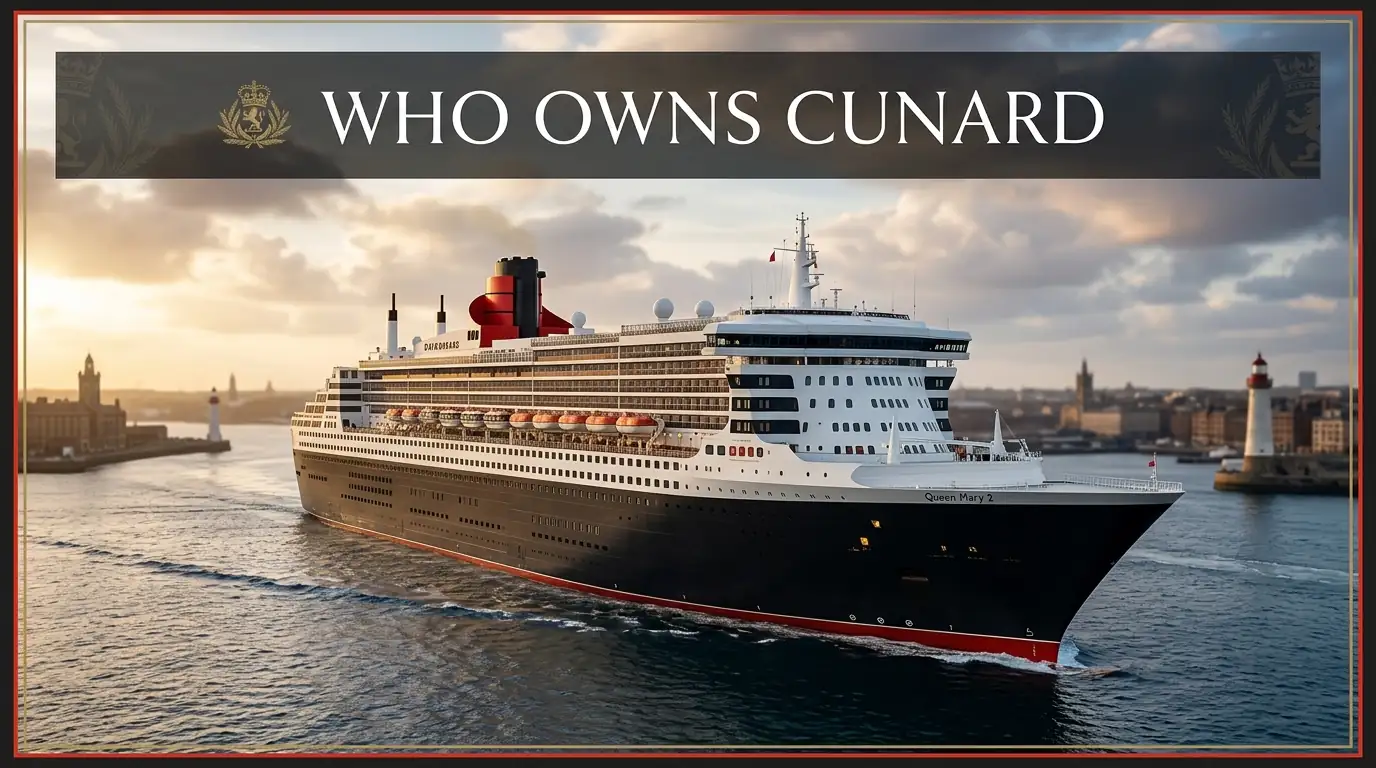
Cunard is owned by Carnival Corporation Ltd., the world’s largest cruise operator, which acquired the historic British line in 1998 and now runs it through its UK subsidiary, Carnival UK.
Cunard is one of the oldest ocean liner companies still sailing today. Founded in 1840, it built its reputation on scheduled transatlantic crossings between Southampton and New York.
The line is famous for its formal, elegant “White Star Service” style of cruising. Queen Mary 2 remains the only ocean liner in the world still offering regular transatlantic crossings on a fixed schedule.
Carnival Corporation Ltd. is a massive global operator. It controls eight cruise brands and more than ninety ships, and it completed a corporate unification in May 2026 that folded its old dual listed structure into a single Bermuda registered company.
Cunard shares many operational resources with sister brands Princess Cruises and Holland America Line, yet it remains a distinct, British flagged premium product with its own leadership and identity. Its long history includes the RMS Lusitania, RMS Queen Mary and RMS Queen Elizabeth, and it once competed directly with White Star Line, the company behind the Titanic.
This guide covers who really owns Cunard today, how ownership changed across nearly two centuries, who leads the brand now, what its current fleet looks like, where it sails, how it compares with rival cruise lines, and whether it is genuinely worth booking. Let’s take a closer look.
Table of Contents
What Is Cunard?
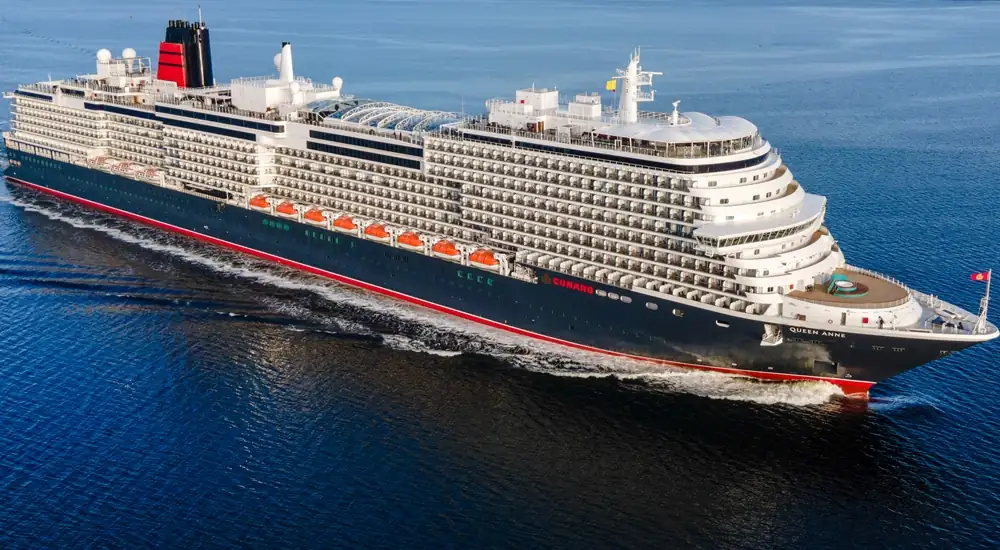
Cunard is a British premium cruise line best known for scheduled ocean crossings and formal, traditional voyages rather than typical resort style cruising.
It operates a small, luxury focused fleet of four ships. The line is headquartered at Carnival House in Southampton, England, and markets itself around British maritime heritage dating back to 1840.
Unlike most modern cruise brands, Cunard still emphasizes formal nights, classic ballroom style entertainment, afternoon tea service, and a tiered class system inspired by its ocean liner past.
Who Owns Cunard?
Cunard is owned by Carnival Corporation Ltd., the Bermuda registered parent company that also owns Carnival Cruise Line, Princess Cruises, Holland America Line, Costa Cruises, AIDA Cruises, P&O Cruises and Seabourn.
Carnival Corporation has owned Cunard since 1998, when it purchased a majority stake from Kvaerner, the Norwegian industrial group that had briefly controlled the line.
Day to day, Cunard is operated through Carnival UK Ltd., the British subsidiary that also runs P&O Cruises. Cunard keeps its own brand identity, ships, president and marketing team despite sitting inside the larger Carnival portfolio.
The corporate structure below shows how Cunard fits inside Carnival’s ownership chain.
Ultimate Parent Company (NYSE: CCL)
British Operating Subsidiary
Premium Ocean Liner Brand
Sister Brand Under Carnival UK
Is Cunard Publicly Traded or Privately Owned?
Cunard itself is not publicly traded. It is a wholly owned brand of Carnival Corporation Ltd., a publicly traded company listed on the New York Stock Exchange under the ticker CCL.
Until May 2026, Carnival operated under a dual listed structure, with linked shares trading in both New York and London. That structure was unified into a single Bermuda registered company, Carnival Corporation Ltd., simplifying the shareholder base into one class of stock.
Investors cannot buy Cunard stock directly. They can only gain exposure to Cunard by owning shares of its parent, Carnival Corporation.
Who Are the Largest Shareholders of Carnival Corporation?
Carnival Corporation’s ownership is dominated by large institutional asset managers, alongside a meaningful stake held by the Arison family, which founded the modern Carnival business.
| Shareholder | Approximate Stake |
|---|---|
| The Vanguard Group | ~20% |
| Micky Arison (Chairman, Arison family) | ~7% |
| BlackRock, Inc. | ~5.5% |
| State Street Corporation | ~4.3% |
| Top 10 Combined Shareholders | ~52% |
Institutional investors collectively hold the majority of Carnival’s shares, which is typical for a large, established public company. Ownership percentages shift with each quarterly SEC filing, so figures should be treated as approximate.
Who Founded Cunard?
Cunard was founded in 1840 by Samuel Cunard, a Nova Scotia born shipping entrepreneur, along with British partners Sir George Burns and Robert Napier.
The company was originally named the British and North American Royal Mail Steam Packet Company. It won a British government contract to carry mail across the Atlantic by steamship.
Samuel Cunard’s original venture set the template for reliable, scheduled ocean crossings, a tradition Cunard still points to today when marketing Queen Mary 2’s transatlantic service.
Who Leads Cunard Today?
Cunard’s current president is Katie McAlister, a longtime Carnival UK marketing executive who was appointed to lead the brand.
McAlister reports within the Carnival UK structure that also oversees P&O Cruises, and she is responsible for Cunard’s brand strategy, guest experience and commercial performance.
At the top of the parent company, Carnival Corporation Ltd. is led by its chief executive officer, with Micky Arison continuing to serve as chairman of the board.
How Has Ownership Changed Over Time?
Cunard’s ownership has passed through several hands since 1840, moving from an independent Victorian shipping firm to a brand inside a modern global cruise corporation.
Samuel Cunard, George Burns and Robert Napier launch the British and North American Royal Mail Steam Packet Company, later renamed Cunard Line.
Cunard merges with rival White Star Line to form Cunard White Star, later reverting to the Cunard name alone.
British conglomerate Trafalgar House buys Cunard, bringing it under new industrial ownership.
Norwegian industrial group Kvaerner acquires Trafalgar House, taking Cunard with it.
Carnival Corporation buys a majority stake from Kvaerner in 1998 and completes full ownership of Cunard in 1999.
Cunard launches its newest ship, Queen Anne, the first Cunard vessel built in over a decade.
Carnival Corporation and Carnival plc unify into a single Bermuda registered company, Carnival Corporation Ltd., simplifying Cunard’s parent ownership structure.
What Cruise Lines Does Carnival Corporation Own?
Carnival Corporation Ltd. owns eight cruise line brands, giving it the largest fleet in the global cruise industry.
Its portfolio spans budget friendly brands like Carnival Cruise Line, premium brands like Princess Cruises and Holland America Line, luxury brand Seabourn, and regional brands including AIDA Cruises, Costa Cruises and P&O Cruises alongside Cunard.
Cunard’s Fleet
Cunard currently operates four ships, making it a small but distinctive fleet compared with mass market rivals.
Queen Mary 2, launched in 2003, is the flagship and the only true ocean liner still in scheduled transatlantic service anywhere in the world.
Queen Victoria entered service in 2007 and Queen Elizabeth followed in 2010, both built for a mix of world cruising and shorter voyages.
Queen Anne, the newest ship, debuted in 2024 and was the first new Cunard vessel in more than a decade, refreshing the fleet with updated dining and cabin options while keeping Cunard’s traditional formal style.
Where Does Cunard Sail?
Cunard is best known for transatlantic crossings between Southampton, England and New York, sailed on a fixed seasonal schedule by Queen Mary 2.
Beyond the Atlantic, the fleet sails to the Caribbean, the Mediterranean, Northern Europe and Norway’s fjords.
Cunard also runs extended world voyages that circle the globe over several months, a tradition that connects back to its ocean liner heritage.
What Is Cunard Known For?
Cunard is best known for being the last cruise line still operating scheduled transatlantic ocean crossings, a service tradition dating back to 1840.
The brand is also recognized for its formal, elegant onboard style, including black tie evenings, ballroom dancing and traditional afternoon tea, all part of what Cunard calls White Star Service.
Historically, Cunard is tied to some of the most famous ships ever built, including RMS Lusitania, RMS Queen Mary and RMS Queen Elizabeth, along with a long rivalry with the White Star Line, the company remembered for the Titanic.
How Does Cunard Compare With Other Cruise Lines?
Within Carnival’s own portfolio, Cunard sits above sister brands Princess Cruises and Holland America Line in formality and price, targeting a smaller, more traditional guest base.
Princess Cruises focuses on mainstream premium cruising with a large fleet and family friendly amenities, while Holland America Line leans toward classic, relaxed voyages popular with older travelers.
Cunard is smaller and more formal than both, closer in positioning to luxury lines, though it remains distinct from full luxury brands like Seabourn, which Carnival also owns, because Cunard still sells multiple cabin tiers rather than an all inclusive single class experience.
Historically, Cunard’s closest rival was the White Star Line, and today it is often compared with other heritage focused operators for its emphasis on classic ocean travel rather than resort style entertainment.
Is Cunard Really Good or Really Worth It?
Cunard is generally well regarded for its distinctive, formal style of cruising, though it is not the right fit for every traveler, especially those who prefer casual, activity heavy modern ships.
- Only line offering scheduled transatlantic crossings on a true ocean liner
- Strong reputation for service quality and traditional hospitality
- Distinctive British heritage and formal onboard atmosphere
- Small fleet of just four ships limits itinerary choice
- Formal dress codes may not suit casual cruisers
- Generally priced higher than mainstream Carnival family brands
Cunard is worth it for travelers who want a formal, heritage rich ocean voyage rather than a typical resort style cruise.
Customer Service and Official Contact Information
Cunard handles bookings, onboard questions and general customer service through its official website and regional contact centers.
Guests can find current phone numbers, live chat support and travel agent contacts directly on Cunard’s official site, since support numbers vary by country and can change.
Cunard’s corporate headquarters address is Carnival House, 100 Harbour Parade, Southampton, England, home to its Carnival UK operating team.
For the most accurate details on who owns other major cruise brands, see our guides on who owns Costa Cruises and who owns Princess Cruises, two more brands inside the Carnival Corporation family.
You can also visit Cunard’s official website for current itineraries, fares and booking details. Background on the brand’s long history is available on Wikipedia’s Cunard Line page, and reporting on current leadership can be found via Seatrade Cruise News.
Frequently Asked Questions About Cunard
Who owns Cunard?
Cunard is owned by Carnival Corporation Ltd., the world’s largest cruise operator, which has controlled the brand since acquiring it from Kvaerner in 1998 and 1999.
Is Cunard part of Carnival Cruise Line?
Cunard is not part of Carnival Cruise Line itself. Both are separate brands that share the same parent company, Carnival Corporation Ltd.
Cunard is run through Carnival UK, while Carnival Cruise Line is a separate operating division targeting a more casual, mainstream market.
How many ships does Cunard have?
Cunard operates four ships, Queen Mary 2, Queen Victoria, Queen Elizabeth and Queen Anne, making it one of the smaller fleets among major cruise brands.
Who founded Cunard Line?
Cunard was founded in 1840 by Samuel Cunard, along with Sir George Burns and Robert Napier, originally as the British and North American Royal Mail Steam Packet Company.

I am Jack Neel, a mechanical engineer, researcher, and writer. I created this website to share my knowledge about different brands and products with you. I research the manufacturers behind the brands and provide you with the information you need to make smart buying decisions.