
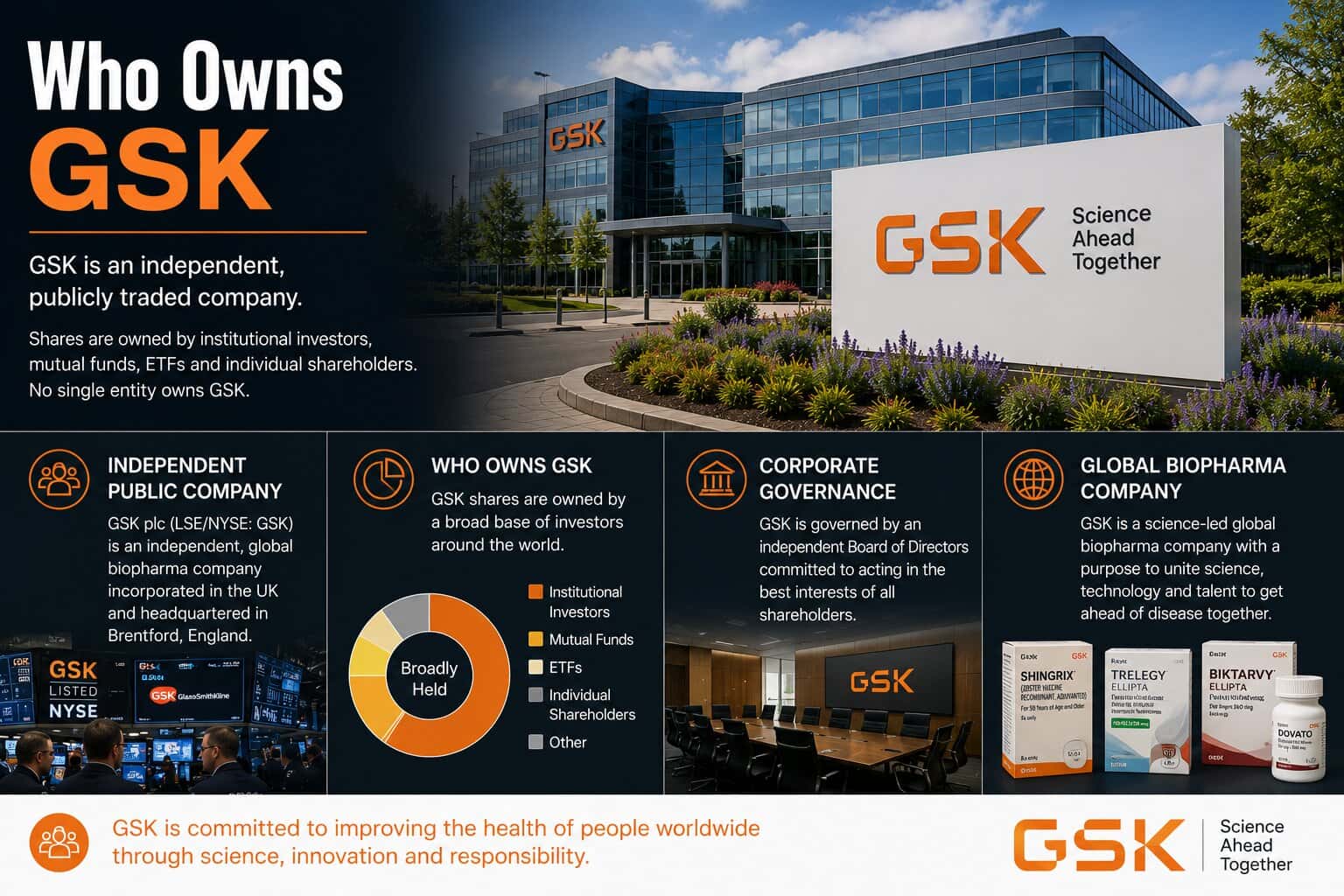
GSK is a publicly traded British multinational pharmaceutical and biotechnology company with no single controlling owner, listed on the London Stock Exchange under the ticker GSK and on the New York Stock Exchange as an ADR under GSK.
GSK was established in 2000 through the merger of Glaxo Wellcome and SmithKline Beecham, and shortened its corporate name from GlaxoSmithKline to GSK in 2022 following the spinoff of its consumer health business into a separately listed company called Haleon.
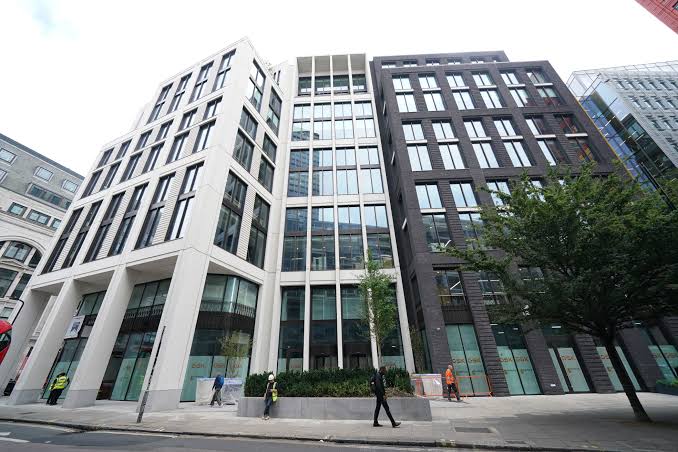
GSK is headquartered in London, England, employs approximately 65,000 people in about 70 countries, and is led by CEO Luke Miels, who succeeded Dame Emma Walmsley effective January 1, 2026.
Knowing who owns GSK helps explain how one of the world’s oldest pharmaceutical heritage companies governs its strategy of focusing exclusively on vaccines and specialty medicines after divesting its consumer health business.
This article covers who owns GSK, what the company does, its history, how it compares to a rival, and key facts about the business.
So let’s get started.
Table of Contents
Who Owns GSK?
GSK is publicly traded with no single controlling owner, and ownership is distributed among millions of institutional and individual investors globally.
Large institutional investors including BlackRock and Vanguard hold significant share blocks, giving them meaningful influence over governance decisions including executive compensation and capital allocation through proxy voting.
GSK’s board is chaired by Sir Jonathan Symonds, with CEO Luke Miels leading commercial and strategic operations after taking over from Dame Emma Walmsley, who served as CEO from 2017 to the end of 2025.
GSK is the tenth-largest pharmaceutical company in the world by earnings, generating 42.4 billion dollars in revenues in 2025, as confirmed in GSK’s company profile.
What Does GSK Do?
GSK researches, develops, manufactures, and markets vaccines and specialty medicines across infectious diseases, HIV, respiratory, immunology, inflammation, and oncology.
Its vaccines portfolio includes Shingrix, the world’s most effective shingles vaccine, and Arexvy, the first RSV vaccine approved for adults aged 60 and older, approved by the FDA in 2023.
In oncology, Jemperli (dostarlimab) is one of GSK’s flagship specialty medicines, approved for endometrial cancer and other solid tumors with mismatch repair deficiency, representing the company’s growing immuno-oncology presence.
Zofran (ondansetron), originally developed by GSK for chemotherapy-induced nausea, is now widely available as a generic, though GSK’s branded specialty medicines continue to generate the majority of its current revenues, as outlined on GSK’s official about page.
What Is the History of GSK?
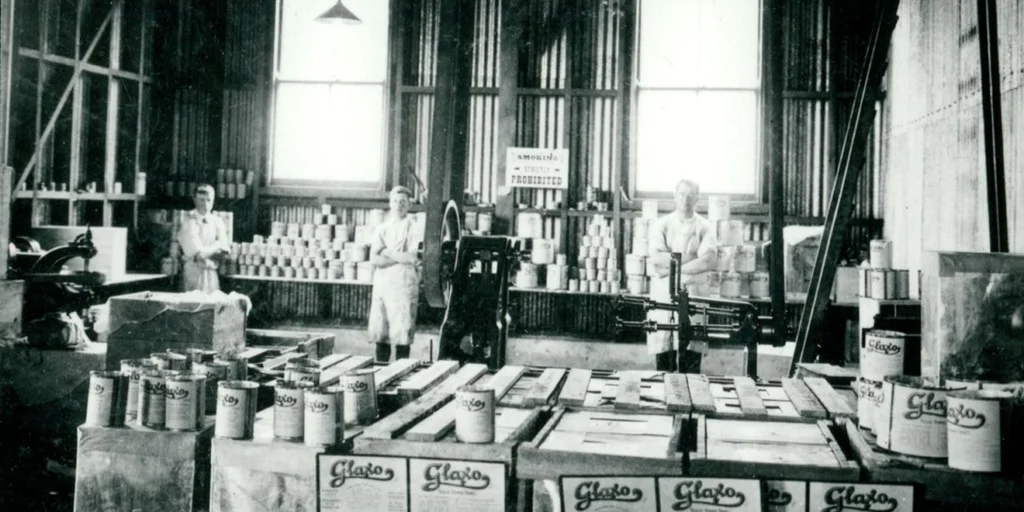
GSK traces its origins to several early pharmaceutical companies including Glaxo, founded in New Zealand in 1904 as a dried milk company before pivoting to pharmaceuticals, and Smith Kline and French, founded in Philadelphia in 1830.
Glaxo Wellcome was formed in 1995 when Glaxo acquired Wellcome, and SmithKline Beecham was formed in 1989 when SmithKline Beckman merged with Beecham Group.
The two companies merged on December 27, 2000, to form GlaxoSmithKline, creating one of the world’s largest pharmaceutical companies at the time of formation.
In 2022, GSK spun off its consumer health business, which included brands such as Sensodyne, Panadol, and Centrum, into Haleon plc, a separately listed consumer health company, refocusing GSK exclusively on biopharmaceuticals and vaccines.
How Big Is GSK?
GSK employs approximately 65,000 people in about 70 countries and operates manufacturing and research facilities across the United Kingdom, United States, Belgium, and China.
The company generated 42.4 billion dollars in revenues in 2025 with net earnings of 9.32 billion dollars, making it the tenth-largest pharmaceutical company globally by earnings.
Specialty medicines now represent close to 40% of GSK’s total sales and are expected to exceed 50% of revenue by 2031, driven by launches in oncology, respiratory, and HIV.
In June 2026, GSK announced its biggest ever acquisition, a 10.6 billion dollar deal for an American cancer drug firm, reflecting its continued push to build its oncology portfolio as a primary growth engine.
GSK vs AstraZeneca: How Do They Compare?
GSK and AstraZeneca are the two largest British pharmaceutical companies, both listed on the London Stock Exchange, and are often compared as the twin pillars of UK biopharmaceutical leadership.
AstraZeneca has significantly outpaced GSK in share price growth over the past decade, driven by its oncology-first strategy under Pascal Soriot, making it the most valuable company on the London Stock Exchange.
GSK’s strength lies in its vaccines franchise, particularly Shingrix and Arexvy, and its growing specialty medicines portfolio in HIV, respiratory, and oncology under the refocused post-Haleon strategy.
Both are major COVID-19 pandemic contributors, with AstraZeneca having developed the Oxford vaccine and GSK having developed adjuvant technologies used in multiple COVID vaccine programs.
Frequently Asked Questions About GSK
Who owns GSK?
GSK is publicly traded on the London Stock Exchange and NYSE with no single controlling owner. Largest shareholders are major institutional investors. CEO is Luke Miels, who took over from Dame Emma Walmsley at the start of 2026.
What does GSK stand for?
GSK is an abbreviation of its former full name GlaxoSmithKline. The company officially shortened its name to GSK in 2022 when it spun off its consumer health business into the separately listed Haleon plc.
Where is GSK headquartered?
GSK is headquartered in London, England. The company has major research and manufacturing operations in the United Kingdom, United States, Belgium, and China.
What is GSK best known for?
GSK is best known for Shingrix, the world’s leading shingles vaccine, Arexvy, the first RSV vaccine for older adults, and its HIV medicines including Dovato and Cabenuva. Its oncology product Jemperli is a growing specialty medicine in endometrial cancer treatment.

I am Jack Neel, a mechanical engineer, researcher, and writer. I created this website to share my knowledge about different brands and products with you. I research the manufacturers behind the brands and provide you with the information you need to make smart buying decisions.