
OpenAI is controlled by the OpenAI Foundation, a nonprofit that holds a 26 percent equity stake and appoints the board overseeing OpenAI Group PBC, the for profit business that actually builds and sells ChatGPT.
OpenAI built its reputation as the company behind ChatGPT, the AI assistant that sparked mainstream interest in generative artificial intelligence starting in late 2022.
Sam Altman and a group of cofounders including Elon Musk launched OpenAI in December 2015 as a nonprofit research lab dedicated to safe artificial general intelligence development.
So how did a nonprofit research lab end up worth hundreds of billions of dollars with Microsoft as a major shareholder.
This guide will explore OpenAI founding story, its October 2025 corporate restructuring, Microsoft actual ownership stake, and how the company compares to rivals like Anthropic.
So let us get started.
Table of Contents
Who Owns OpenAI Right Now
The OpenAI Foundation, a nonprofit entity, retains governing control over OpenAI Group PBC, the public benefit corporation that operates the business day to day. Company details are listed on the official OpenAI structure page.
The Foundation holds a 26 percent equity stake in OpenAI Group, while Microsoft holds roughly 27 percent, and employees along with other investors hold the remaining 47 percent.
This split structure, finalized in an October 2025 recapitalization, replaced OpenAI earlier and more unusual capped profit model.
The Founding Story Behind OpenAI
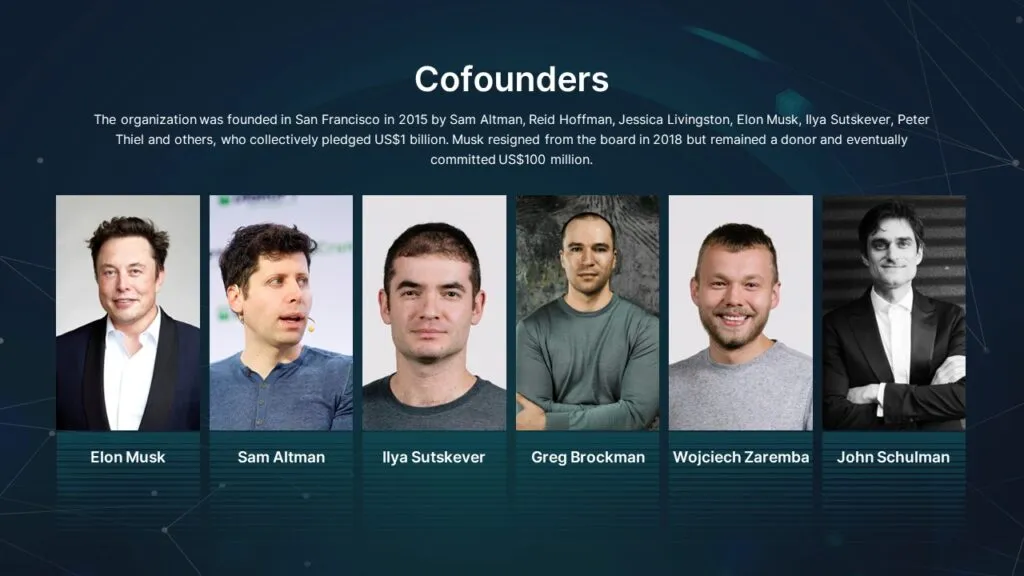
Sam Altman, Elon Musk, Greg Brockman, Ilya Sutskever, and several other researchers founded OpenAI in December 2015, initially structuring it as a pure nonprofit.
Musk departed OpenAI board in 2018 over disagreements about company direction, though he remained a vocal commentator on its later corporate restructuring.
OpenAI introduced a capped profit subsidiary in 2019 to attract the massive capital needed for AI research, a structure that eventually gave way to the full public benefit corporation model in 2025, according to Wikipedia.
How The October 2025 Restructuring Changed OpenAI
OpenAI completed a major recapitalization on October 28, 2025, converting its operating business into OpenAI Group PBC, a Delaware public benefit corporation.
That shift gave Microsoft a clearly defined equity stake for the first time, while preserving nonprofit oversight through the OpenAI Foundation, according to TechCrunch reporting on the deal.
The restructuring also positioned OpenAI closer to a possible future public listing, something that would have been far more complicated under its earlier capped profit structure.
Microsoft Changing Relationship With OpenAI
Microsoft has invested roughly 13 billion dollars in OpenAI since 2019, a relationship that helped fund the massive computing infrastructure needed to train ChatGPT underlying models.
In April 2026, OpenAI and Microsoft ended their prior exclusive cloud partnership and revenue sharing arrangement, giving OpenAI more freedom to work with other cloud infrastructure providers.
Despite that shift, Microsoft remains OpenAI single largest company shareholder, with a stake valued at approximately 135 billion dollars. Our guide to who owns Microsoft covers that company own shareholder base in more detail.
OpenAI Product Lineup Beyond ChatGPT
Beyond ChatGPT, OpenAI sells its underlying models directly to developers and businesses through an API, powering countless third party apps and services built on top of its technology.
OpenAI also develops Sora, a video generation tool, and DALL E, an image generation model, expanding its product lineup well beyond text based chat.
This wide product portfolio helps OpenAI generate revenue across consumer subscriptions, enterprise API access, and licensing deals, reducing its reliance on any single product line.
OpenAI Compared To Anthropic And Other AI Labs
OpenAI chief rival Anthropic, the company behind Claude, has taken a different path, remaining privately held while still attracting massive investment from both Amazon and Google. Our guide to who owns Claude AI covers that comparison in detail.
Unlike OpenAI, which has already completed its shift to a for profit structure, Anthropic remains structured as a public benefit corporation without OpenAI more complex nonprofit governed arrangement.
Is OpenAI Really Good Or Really Worth It
OpenAI earns strong praise across the technology industry for consistently pushing the pace of AI development forward, with ChatGPT remaining the most widely used AI assistant in the world.
Common criticism of OpenAI centers on its departure from its original nonprofit mission, along with ongoing debate about whether its safety practices have kept pace with its rapid commercial growth.
Employees and researchers frequently cite OpenAI compensation and research resources as among the most competitive in the AI industry, helping the company attract top talent despite the criticism.
For businesses and developers who want access to leading edge AI models, OpenAI products remain some of the most capable and widely supported options on the market.
For those who prioritize a company built more explicitly around safety first principles from the start, comparing OpenAI against Anthropic is worth doing before choosing a platform.
Sam Altman continues serving as chief executive of OpenAI, remaining the company most public facing leader through both the ChatGPT boom and the complicated 2025 corporate restructuring.
OpenAI board also includes several independent directors appointed by the Foundation specifically to provide oversight on safety related decisions, a structure meant to balance rapid commercial growth against the company original founding mission.
That balance between mission driven oversight and commercial ambition remains one of the most closely watched aspects of OpenAI ongoing evolution as it approaches a possible future stock market debut.
Analysts expect any future OpenAI public offering to draw enormous investor interest given the company current valuation and central role in the broader AI industry.
Until then, the company remains one of the largest privately held businesses on record.
Frequently Asked Questions About OpenAI
Is OpenAI Still A Nonprofit?
The OpenAI Foundation remains a nonprofit and retains governing control, but the operating business, OpenAI Group PBC, now functions as a for profit public benefit corporation.
How Much Of OpenAI Does Microsoft Own?
Microsoft holds roughly 27 percent of OpenAI Group PBC on an as converted diluted basis, an investment valued at approximately 135 billion dollars.
Who Founded OpenAI?
Sam Altman, Elon Musk, Greg Brockman, Ilya Sutskever, and several other researchers founded OpenAI in December 2015.
Is OpenAI A Public Company?
Not yet. OpenAI remains privately held as of this writing, though its 2025 restructuring has fueled speculation about a possible future public listing.

I am Jack Neel, a mechanical engineer, researcher, and writer. I created this website to share my knowledge about different brands and products with you. I research the manufacturers behind the brands and provide you with the information you need to make smart buying decisions.