
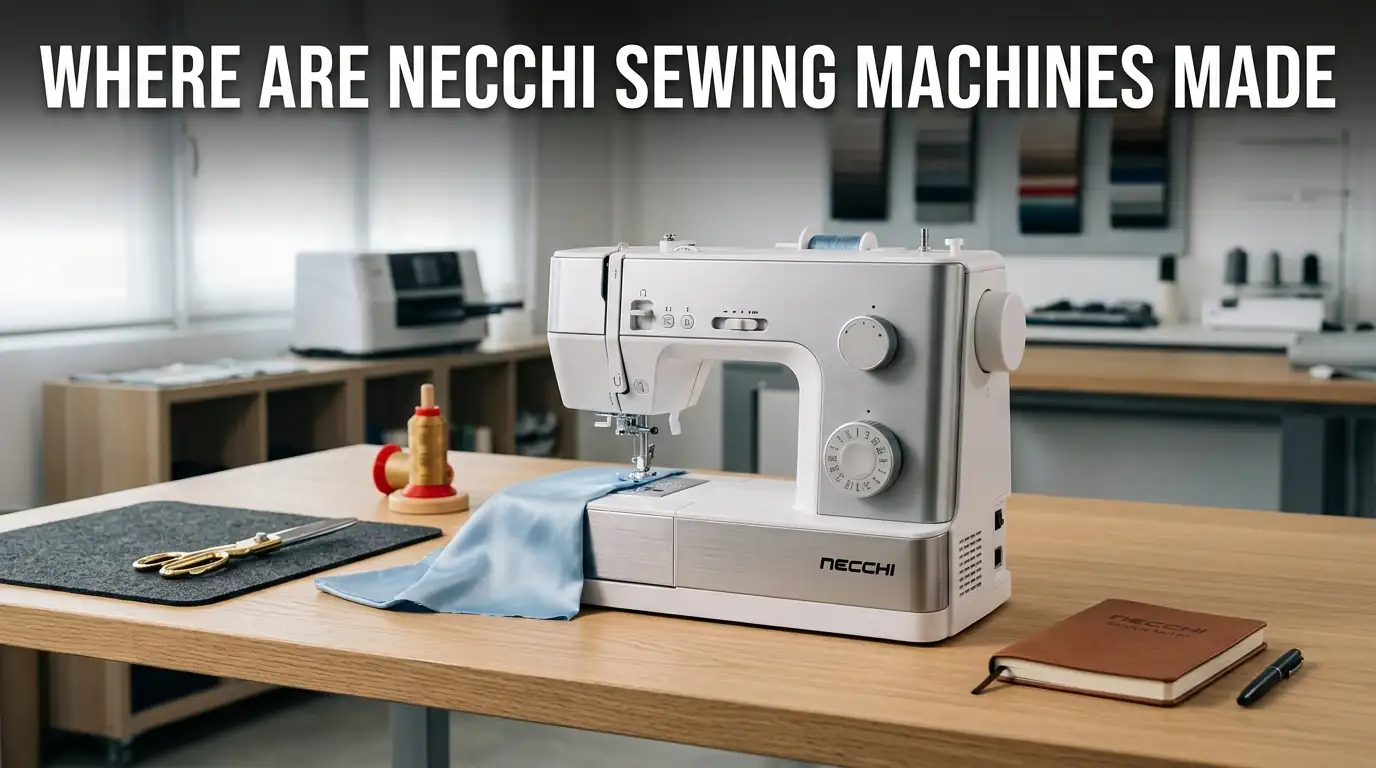
Necchi sewing machines sold today are made in China and other parts of Asia, though multiple industry sources report the modern Necchi brand is closely associated with Janome, a Japanese company.
Necchi is known as an Italian heritage sewing machine brand, with a heritage stretching back to the 1920s in Pavia, Italy, and a product range that once covered home and industrial machines built entirely in its own Italian factory.
Janome’s global manufacturing operations are documented on Wikipedia, and industry sources link the current Necchi brand to this same manufacturing network rather than to a standalone Italian factory.
Knowing where Necchi sewing machines are made helps buyers understand why a vintage Necchi from the 1950s through the 1970s looks and performs so differently from a new model sold under the same name today.
This article covers Necchi’s founding in Pavia, its shift away from Italian production, where Necchi sewing machines are made today, its current product range, and how it compares to Singer and Sailrite.
So let’s get started.
Table of Contents
Necchi’s Origins in Pavia, Italy
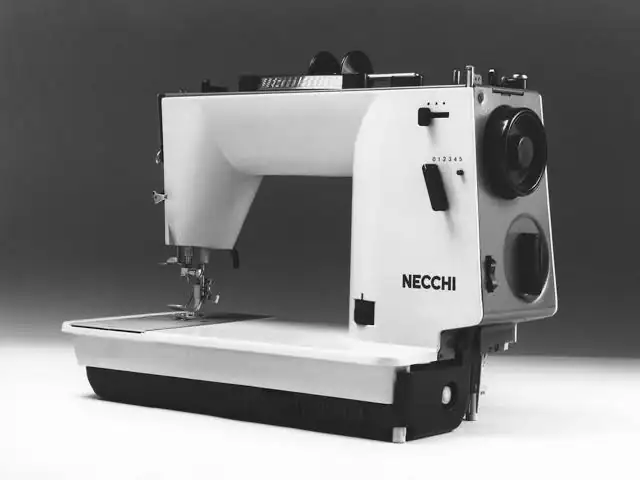
Necchi began as a foundry business run by Ambrogio Necchi in Pavia during the 1880s.
His son Vittorio Necchi built the company’s first sewing machine in 1919 and opened a dedicated factory in 1924.
By 1930 the Pavia plant was producing more than 19,000 machines a year, and Necchi exported to dozens of countries across Europe and the Americas.
The company reached its peak in the 1950s with award winning models like the Supernova, which won Italy’s Compasso d’Oro design prize.
At its height in the mid 1940s, Necchi employed roughly 4,500 workers and shipped about 1,000 machines a day from Pavia, according to brand history accounts.
Who Owns Necchi Today
Vittorio Necchi died in 1975, and the company left family ownership soon after.
Over the following decades the Necchi brand and trademark changed hands several times as competition from Japanese manufacturers eroded the original company’s market share.
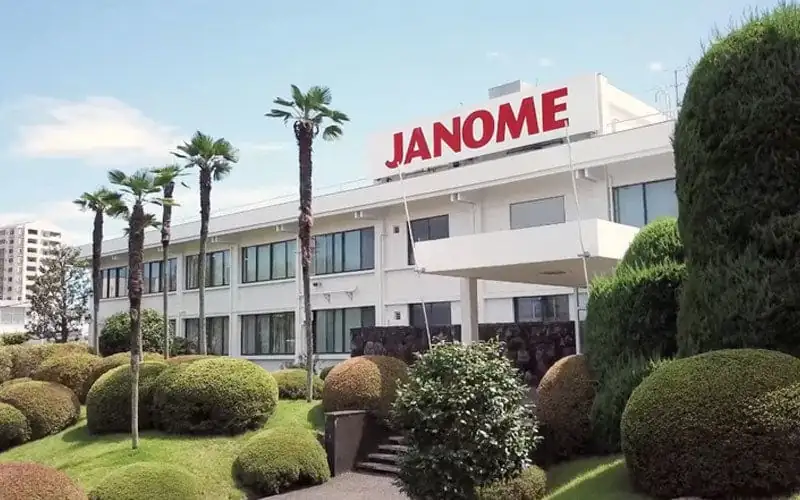
According to multiple sewing machine history sources, the rights to the Necchi name have more recently been associated with Janome, the Japanese sewing machine maker also known for owning the Swiss brand Elna.
Necchi’s own official brand history page does not publish a clear statement about its current parent company or manufacturing partner, which makes independent verification difficult for shoppers researching the brand today.
What is clear is that Necchi now functions as a licensed brand name rather than an independently manufacturing Italian company, similar to how several once storied sewing machine brands operate in the current market.
Current Manufacturing Locations and Factories
Necchi does not operate its own factory in Pavia or anywhere else in Italy anymore.
Sewing machine history researchers report that Necchi production moved out of Italy starting around 1980, first to Japan and then to other parts of Asia including Taiwan.
Most current Necchi consumer machines are assembled in China, which is also where the large majority of budget and mid range sewing machines from many competing brands are built today.
This is standard practice across the sewing machine industry. Brands such as Singer, Brother, and Janome also manufacture most of their entry level and mid tier machines in Asian facilities rather than in their country of origin.
Because Necchi licenses its name rather than running its own plants, exact factory locations can shift between model years and are rarely published for the public.
Brand Origin vs Where Machines Are Actually Made
It helps to separate two different questions: where a brand started, and where its products are physically built today.
Necchi started in Italy, and that heritage is real and well documented.
But heritage is not the same as current manufacturing. A brand founded in one country can license its name to a company based somewhere else entirely, and that appears to be what happened with Necchi.
This pattern is common across consumer goods, not just sewing machines. A recognizable name can outlive its original factory by decades while ownership and production quietly move elsewhere.
Vintage Necchi vs Modern Necchi: Model Tier Differences
Vintage Necchi machines, generally anything built before the late 1970s, were made almost entirely from cast metal and assembled in Italy.
These older machines are known for heavy, all metal bodies, straightforward mechanical stitch selection, and a reputation for lasting many decades with basic maintenance.
Modern Necchi machines, by contrast, use more plastic in the housing and internal parts, similar to most computerized machines sold under any brand today.
Entry level modern Necchi models are generally aimed at beginners and casual sewists, while higher tier models add computerized stitch selection and, in some lines, basic embroidery functions.
| Feature | Vintage Necchi (pre 1980) | Modern Necchi |
|---|---|---|
| Construction | All metal body and gears | Mix of metal and plastic components |
| Country of manufacture | Italy | China and other parts of Asia |
| Typical buyer | Collectors, experienced sewists | Beginners, casual home sewists |
| Parts availability | Limited, mostly secondary market | Depends on retailer and model |
Neither tier is objectively better for every sewist. The right choice depends on whether you value vintage mechanical durability or modern convenience features.
Is Necchi a Good Sewing Machine Brand?
Necchi’s reputation is really two separate reputations depending on which era of machine you mean.
Vintage Necchi machines from the Italian manufacturing era have a strong, well earned reputation. Sewists and collectors frequently describe these models as smooth running and capable of lasting 40 years or more with proper care.
Modern Necchi machines have a much thinner track record. Because distribution and support have been limited in some markets, fewer reviewers and long term owners have documented how well current models hold up.
On the positive side, current Necchi machines are generally sold at accessible price points and can be a reasonable entry into sewing for beginners who are not chasing a specific premium brand.
On the downside, buyers have reported that finding authorized service, replacement parts, or manuals for newer Necchi machines can be harder than with brands that have a larger dealer network in their region.
Necchi vs Other Sewing Machine Brands
Necchi is often compared to other brands with long histories that have also shifted where their machines are built, including brands owned by SVP Worldwide, the parent company of Singer, Husqvarna Viking, and Pfaff.
Singer, one of the most recognized names in sewing machines, moved most of its production out of the United States decades ago and now manufactures the bulk of its consumer machines overseas as well. You can read our full breakdown of where Singer sewing machines are made for a closer look at that brand’s current factories.
Janome, the company most often associated with the modern Necchi name, also owns the Swiss brand Elna and continues to design and support its own machines directly, which gives it a somewhat more transparent structure than Necchi.
Sailrite is a different case entirely, built around heavy duty machines for canvas and upholstery work rather than general home sewing. If you work with heavier materials, it is worth reading how Sailrite sewing machines are made to see how that brand compares.
No single brand in this comparison is a universal winner. The better fit depends on your budget, the type of sewing you do, and how much you value vintage construction versus current features and warranty support.
Common Necchi Problems and Troubleshooting
Troubleshooting a Necchi machine depends heavily on its age, so the fixes below are general starting points rather than model specific instructions.
Skipped stitches are one of the most common complaints, and they are often caused by a bent or dull needle, an incorrect needle type for the fabric, or improper threading.
The basic fix is to replace the needle with a fresh one matched to your fabric weight and rethread the machine carefully, following the top thread path exactly.
Tension problems, where stitches look loose or overly tight, usually stem from thread that has slipped out of the tension disks or a bobbin that is inserted incorrectly.
Rechecking the threading path and bobbin orientation resolves most tension issues without needing a technician.
Jammed or noisy machines, especially on older Necchi models, are frequently caused by lint and old oil buildup in the bobbin case and feed dog area.
Regular cleaning with a small brush and proper machine oil, following your manual’s guidance, prevents most buildup related jams.
Vintage Necchi machines can also develop worn belts, hardened grease, or timing issues after decades of storage, and these problems typically need a qualified sewing machine technician rather than a home fix.
If a modern Necchi machine displays an error code, will not power on, or has an electronic fault, that is a sign to contact the retailer or an authorized repair shop rather than attempting a DIY repair, since parts and specifications vary by model.
Buying Guide: New and Vintage Necchi Machines
If you want a new Necchi machine, buy from a retailer that clearly states the model’s included warranty and where you can get it serviced locally.
Compare the stitch count, buttonhole style, and whether the machine includes a free arm before comparing price, since these features affect everyday usability more than the price tag alone.
If you are drawn to vintage Necchi machines, ask for detailed photos of the motor, wiring, and belt before buying, or inspect the machine in person, since electrical components degrade with age.
A vintage Necchi in good mechanical condition can usually be serviced by an experienced sewing machine repair shop, even one that does not specialize in the brand, because the core mechanics resemble other classic machines from the same era.
Whichever era you choose, test sew on scrap fabric before starting a big project, and confirm that replacement needles, bobbins, and presser feet are still readily available for that specific model.
Frequently Asked Questions About Necchi Sewing Machines
Is Necchi still made in Italy?
No. Necchi’s original factory in Pavia, Italy closed decades ago, and current Necchi branded sewing machines are manufactured in Asia, primarily China. Only vintage Necchi machines built before roughly 1980 were actually made in Italy, so any newer model carrying the name was built elsewhere.
Who owns Necchi now?
The Necchi trademark has changed hands multiple times since founder Vittorio Necchi died in 1975. Several sewing machine history sources link the current Necchi brand to Janome, though Necchi’s own website does not publish a clear, current statement about its parent company or manufacturing partner.
Are vintage Necchi sewing machines good?
Yes, vintage Necchi machines generally have a strong reputation. Built with all metal construction during Necchi’s Italian manufacturing era, many of these machines are still running smoothly 40 or more years later with basic maintenance, which is why they remain popular with collectors and sewists today.
Is Necchi a good brand today?
Modern Necchi machines can be a reasonable, affordable option for beginners, but they have a thinner reputation than the vintage line because of limited distribution and service support in some regions. Research the specific model, dealer warranty, and local repair availability before buying a new one.
So, where are Necchi sewing machines made? Today’s Necchi machines are built in Asia, mainly China, under a brand that traces back to Pavia, Italy but no longer manufactures there. Vintage Necchi machines from the mid twentieth century were genuinely Italian made and remain well regarded for their durability. If you want that original Italian engineering, look for a well maintained vintage model. If you want a budget friendly modern machine and do not mind overseas manufacturing, a new Necchi can still work, as long as you confirm warranty support and parts availability before you buy.

I am Jack Neel, a mechanical engineer, researcher, and writer. I created this website to share my knowledge about different brands and products with you. I research the manufacturers behind the brands and provide you with the information you need to make smart buying decisions.