
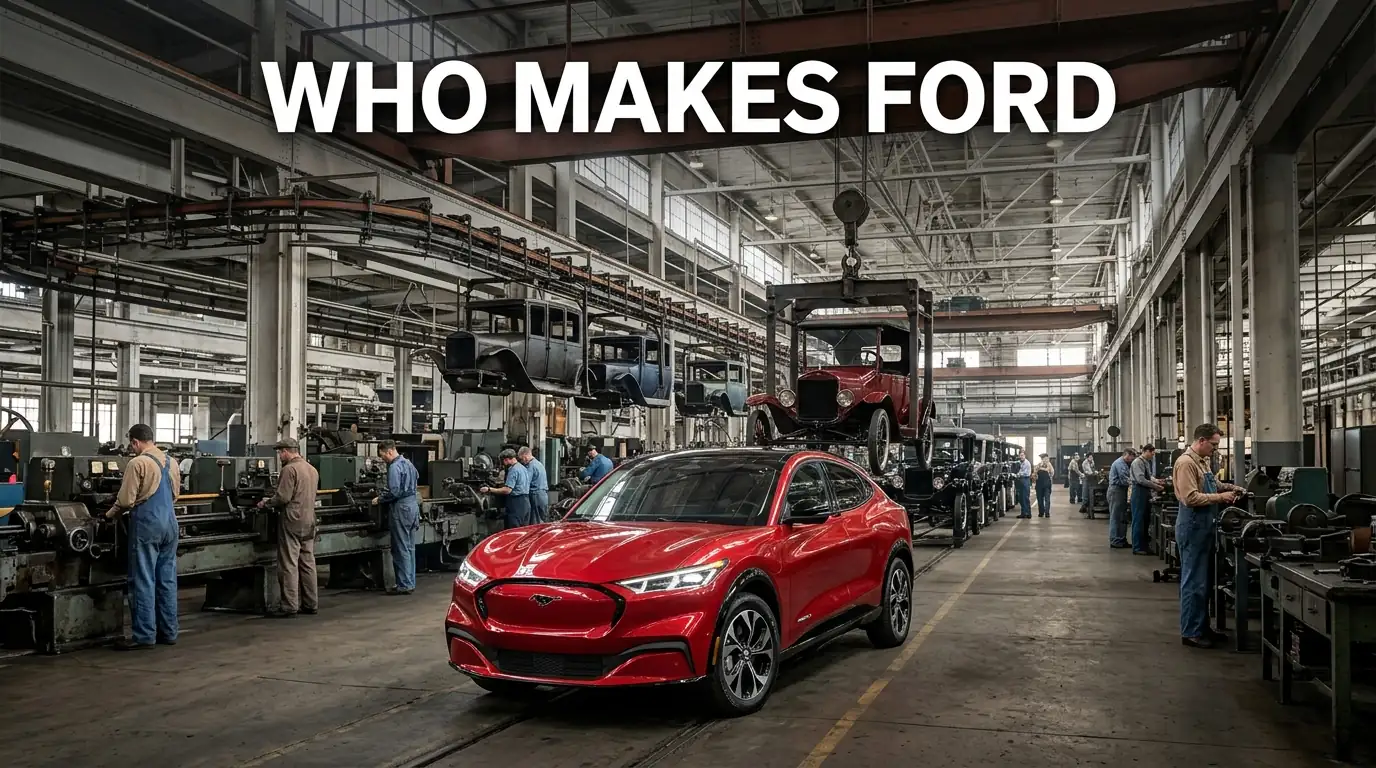
Ford Motor Company is a publicly traded American automaker, not a business controlled outright by one private owner.
It is headquartered in Dearborn, Michigan, and it remains one of the largest vehicle manufacturers in the world more than a century after its founding.
The Ford family still holds meaningful voting influence today, even though it owns only a small slice of the company’s overall equity.
Under CEO Jim Farley, Ford has spent 2025 and 2026 rethinking its electric vehicle strategy while its truck and commercial vehicle businesses continue to perform strongly.
So who really makes Ford vehicles, who owns and controls the company, and how is it performing financially today? Here is a complete breakdown of Ford ownership, leadership and history.
Table of Contents
Who Makes Ford Vehicles?
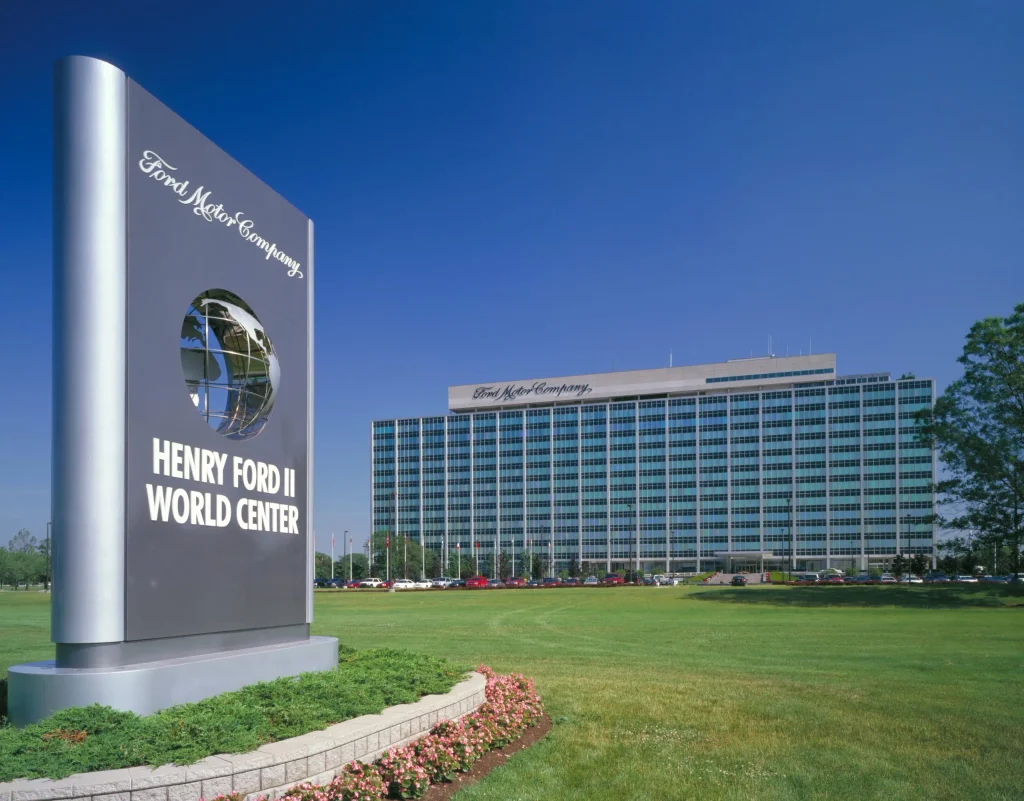
Ford vehicles are made by Ford Motor Company, a publicly traded American manufacturer headquartered in Dearborn, Michigan.
Ford builds most of its vehicles at its own wholly owned assembly plants across the United States, Mexico, Canada and other countries.
The company trades on the New York Stock Exchange under the ticker symbol F, and it is a component of the S&P 500 index.
Ford is organized into three main operating units, Ford Blue for gas and hybrid vehicles, Ford Model e for electric vehicles, and Ford Pro for commercial and fleet customers.
| Company Overview | Details |
| Company name | Ford Motor Company |
| Industry | Automobile manufacturing |
| Founded | June 16, 1903 |
| Founder | Henry Ford |
| Headquarters | Dearborn, Michigan, United States |
| Current owner | Public shareholders (NYSE listed), Ford family holds special voting shares |
| CEO | Jim Farley |
| Stock ticker | F |
| Stock exchange | New York Stock Exchange |
| Country | United States |
| Main business | Cars, trucks, SUVs and commercial vehicles |
Is Ford Owned by the Ford Family?

The Ford family does not own a majority of Ford Motor Company’s equity, but it retains significant voting control through a special class of stock.
Ford operates a dual class share structure with Class B shares that carry extra voting power, held largely by descendants of Henry Ford.
According to the company’s own filings, the Ford family holds roughly 2 percent of total equity but around 40 percent of total voting power because of this arrangement.
This structure has existed since Ford went public in 1956, and it allows the family to influence major decisions such as board elections and leadership changes.
The rest of Ford’s common stock, listed as Class F shares under the ticker F, trades freely and is held by institutional investors, pension funds, index funds and individual shareholders.
Who Founded Ford?
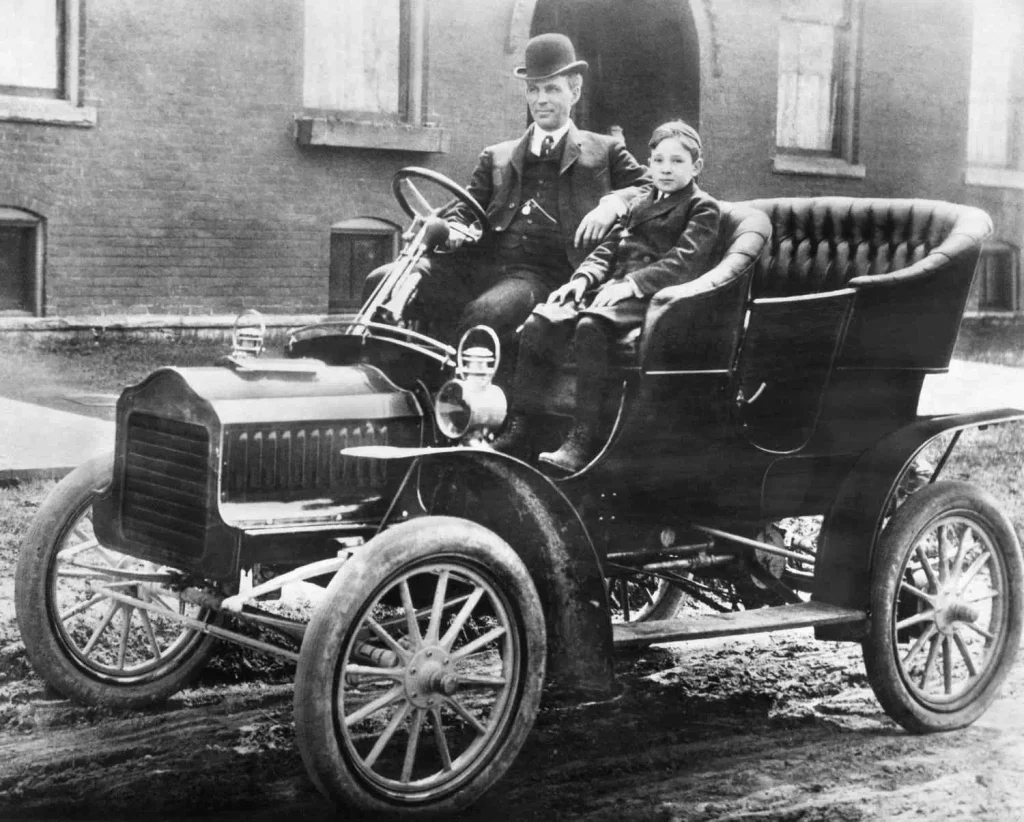
Ford Motor Company was founded by Henry Ford on June 16, 1903, in Detroit, Michigan.
Henry Ford had already attempted two earlier automobile ventures that failed before securing backing from a group of investors for this third company.
Ford became famous for perfecting the moving assembly line, which dramatically cut the time and cost needed to build a car.
The Model T, introduced in 1908, became one of the best selling and most influential vehicles in automotive history, putting car ownership within reach of ordinary American families.
Henry Ford led the company for decades, and his family has remained connected to Ford’s leadership and ownership structure ever since.
What Is Ford’s Corporate Structure Today?
Ford organizes its business into three main units: Ford Blue for gasoline and hybrid vehicles, Ford Model e for electric vehicles, and Ford Pro for commercial and fleet customers.
Ford Blue includes long running favorites such as the F Series pickup trucks, Mustang and Bronco, and it remained solidly profitable through 2025.
Ford Pro focuses on vans, trucks and services for business and government fleets, and it has become one of Ford’s most consistently profitable divisions.
Ford Model e covers the company’s battery electric vehicle lineup, and it has posted significant losses as Ford works to make electric vehicle production profitable at scale.
For comparison with another automaker that reorganized its brand portfolio over time, see our guide to who makes Ram trucks.
About 2 percent equity, about 40 percent voting power
NYSE listed common stock
Gasoline and hybrid vehicles
Electric vehicles
Commercial and fleet vehicles
How Much Is Ford Worth?
Ford Motor Company had a market capitalization of about 55.8 billion dollars as of early September 2026, based on a share price near 14 dollars.
Market capitalization reflects what investors are currently willing to pay for all of Ford’s outstanding shares, and it moves daily with the stock price.
Ford’s valuation had grown by roughly 19 percent over the prior year, even as the company navigated a difficult transition in its electric vehicle business.
This figure is separate from Ford’s balance sheet assets and its Ford Credit financing arm, which carries its own substantial debt used to fund customer and dealer financing.
How Much Revenue Does Ford Make?
Ford reported record full year revenue of 187.3 billion dollars for 2025, even though the company posted a net loss of about 8.2 billion dollars for the year.
The net loss stemmed largely from continued heavy investment and write downs tied to Ford’s electric vehicle strategy under the Ford Model e division.
Ford Pro, the commercial vehicle unit, generated about 66 billion dollars in revenue with strong double digit profit margins, driven by record Transit van volume and the best Super Duty pickup year since 2004.
Ford Blue brought in about 101 billion dollars in revenue with solid profitability, even as overall wholesale volumes dipped slightly.
Ford Model e posted a full year loss of about 4.8 billion dollars, an improvement from the prior year but still a significant drag on total results.
CEO Jim Farley has stated that Ford made difficult but necessary strategic decisions in 2025, and the company has set a target of reaching an 8 percent adjusted profit margin by 2029.
| Financial Snapshot | Figure |
| Market capitalization | About $55.8 billion (September 2026) |
| Full year 2025 revenue | $187.3 billion (record) |
| Full year 2025 net result | Net loss of about $8.2 billion |
| Ford Pro revenue | About $66 billion, double digit margins |
| Ford Blue revenue | About $101 billion |
| Ford Model e result | About $4.8 billion full year loss |
| Operating cash flow | About $21.3 billion for 2025 |
Ford Milestones Through the Years
The timeline below highlights the key events that shaped Ford Motor Company into the automaker it is today.
Henry Ford establishes Ford Motor Company in Detroit, Michigan.
Ford introduces the Model T, later mass produced using the moving assembly line.
Ford lists on the New York Stock Exchange with a dual class share structure preserving family voting control.
Jim Farley becomes President and Chief Executive Officer in October 2020.
Ford splits operations into Ford Blue, Ford Model e and Ford Pro.
Ford posts record annual revenue of $187.3 billion alongside a net loss driven by electric vehicle investment.
Who Is the CEO of Ford?
Jim Farley has served as President and Chief Executive Officer of Ford Motor Company since October 2020.
Farley joined Ford in 2007 after a long career at Toyota, and he held several senior roles at Ford before becoming chief executive.
Under Farley’s leadership, Ford has pushed forward with cost cutting programs, reorganized its business units, and shifted electric vehicle plans in response to slower than expected demand.
Farley reports to Ford’s board of directors, which is chaired by Bill Ford, a great grandson of founder Henry Ford, keeping a direct family connection in the company’s governance today.
Is Ford Shifting Away From Electric Vehicles?
Ford has scaled back several planned electric vehicle programs while continuing to invest in hybrids and its most profitable gas powered trucks.
In late 2025, Ford recorded substantial write downs on its electric vehicle investments as part of a broader strategic reset.
The company canceled or delayed a number of previously announced electric models, choosing instead to prioritize internal combustion and hybrid vehicles where demand and profitability were stronger.
Ford Pro and Ford Blue remained solidly profitable through 2025, which helped offset ongoing losses in the Ford Model e electric division.
Ford has said it still plans to sell electric vehicles going forward, but on a slower and more selective timeline than it originally announced earlier in the decade.
Is Ford Really Good or Really Worth It?
Ford remains one of the best selling and most trusted vehicle brands in America, particularly in trucks, though customer service reviews online are decidedly mixed.
Ford’s F Series trucks have been the best selling vehicle line in the United States for decades, a track record that speaks to strong brand loyalty and product reputation.
On Trustpilot, Ford’s customer service reviews skew low, a pattern that is common across large automakers where reviews often reflect dealership or warranty disputes rather than the vehicles themselves.
Ford Pro’s commercial vehicles, including the Transit van and Super Duty trucks, have earned strong marks from fleet buyers for durability and uptime.
The company’s financial turbulence around its EV division has also raised some investor concern, even though its core gas and hybrid vehicle business remains highly profitable.
- Best selling truck lineup in America for decades
- Strong, profitable commercial vehicle business through Ford Pro
- Wide dealer and service network across the United States
- Over a century of engineering and manufacturing experience
- Continued losses in the electric vehicle division
- Mixed customer service reviews on independent review sites
- Shifting EV strategy can confuse buyers planning a purchase
- Recall frequency has drawn scrutiny in recent years
Frequently Asked Questions About Ford
Who owns Ford Motor Company?
Ford is a publicly traded company owned by its shareholders, with the Ford family retaining about 40 percent of voting power through special Class B shares.
Common shares trade on the New York Stock Exchange under the ticker F.
Who is the current CEO of Ford?
Jim Farley has been President and CEO of Ford Motor Company since October 2020.
He previously worked at Toyota before joining Ford in 2007.
Where are Ford vehicles made?
Ford manufactures vehicles at wholly owned assembly plants across the United States, Mexico, Canada and several other countries.
Popular models such as the F 150 are built primarily at American plants in Michigan and Missouri.
Does Ford still make electric vehicles?
Yes, Ford continues to sell electric vehicles through its Ford Model e division, though it has slowed and scaled back some planned EV programs.
The company is focusing more heavily on hybrids and gas powered trucks while it works to make its EV lineup profitable.
For a closer look at another major automaker’s corporate structure, see our guide to who makes Mazda.
Additional background on Ford’s history is available on Wikipedia, and current models and pricing can be found on the official Ford Motor Company website.

I am Jack Neel, a mechanical engineer, researcher, and writer. I created this website to share my knowledge about different brands and products with you. I research the manufacturers behind the brands and provide you with the information you need to make smart buying decisions.