
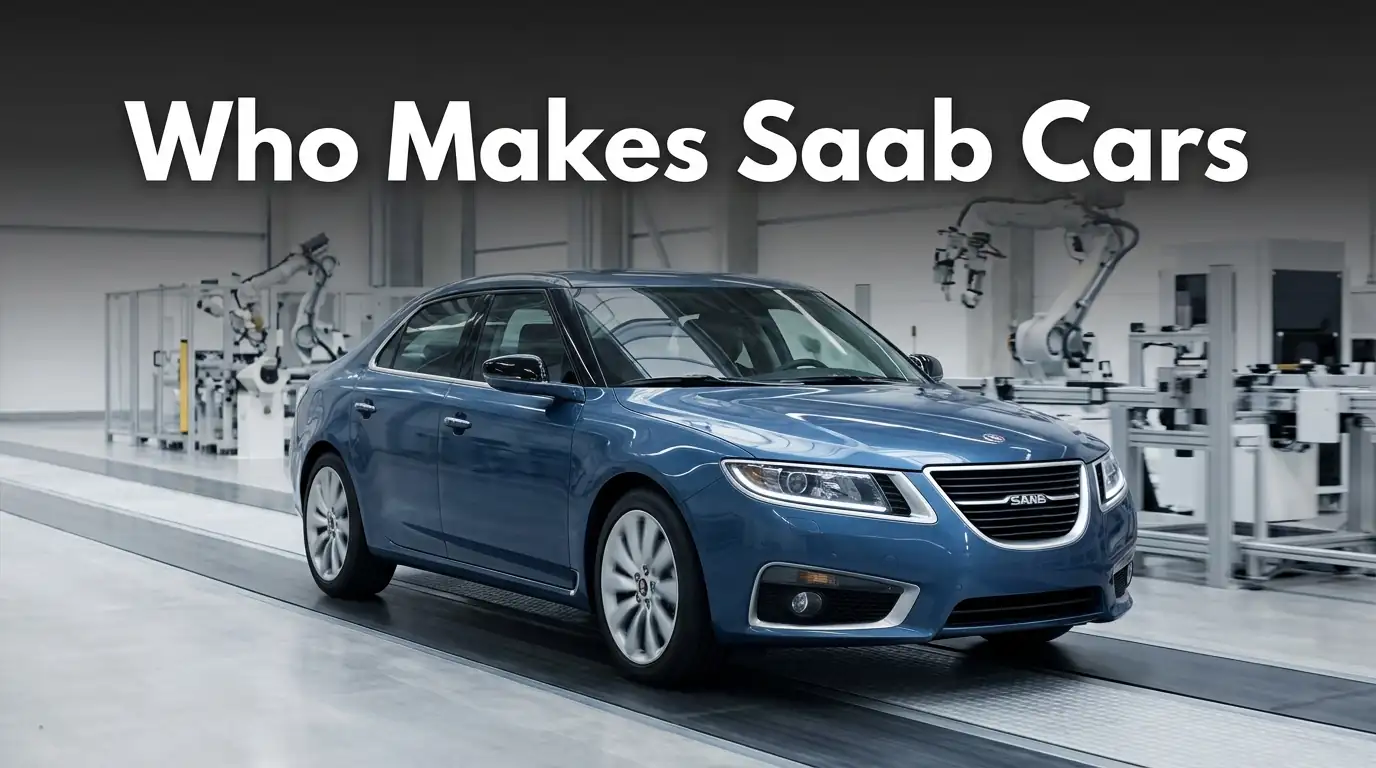
Saab cars are no longer actively made by anyone. Saab Automobile went bankrupt in 2011, and the company that later acquired its factory and designs, NEVS, effectively shut down in December 2024.
The Saab name itself belongs to Saab AB, the Swedish aerospace and defense company that spun off the car business decades ago and reclaimed the trademark in 2014.
For anyone who grew up admiring the turbocharged 900 or the quirky 9 5 wagon, the full ownership story is more tangled than a simple bankruptcy notice.
This guide walks through who owned Saab at every stage, why General Motors could not save it, what NEVS tried to do, and whether the brand has any realistic path back to production.
Table of Contents
Who Owns Saab Today?
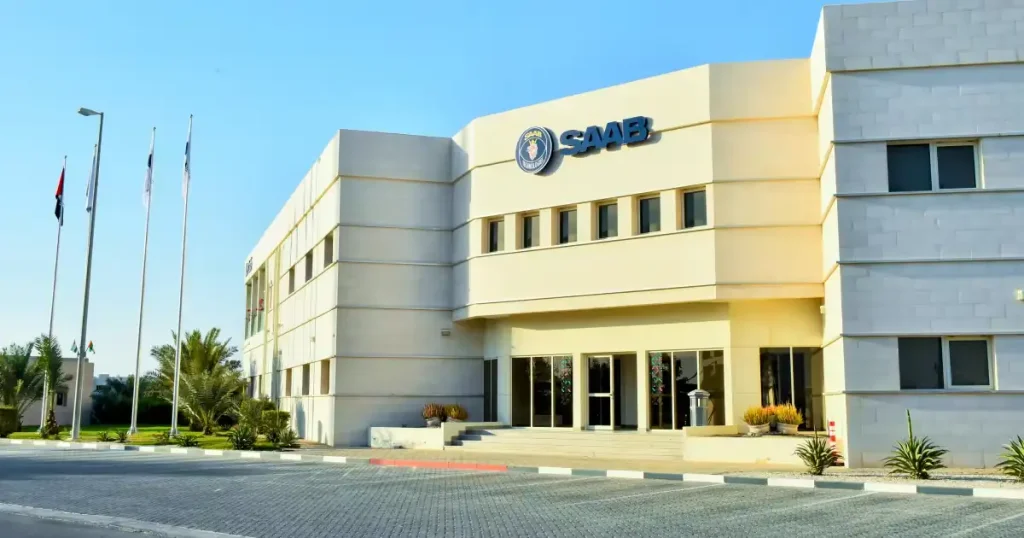
No company currently manufactures Saab automobiles. The carmaking arm, Saab Automobile AB, ceased to exist after its 2011 bankruptcy and later ownership changes.
National Electric Vehicle Sweden, known as NEVS, purchased the bankrupt company’s factory and vehicle designs in 2012 but was legally barred from using the Saab name.
NEVS itself was majority controlled by China Evergrande New Energy Vehicle Group starting in January 2019, and it quietly entered what reports described as hibernation mode in 2023.
By December 2024, NEVS had laid off its remaining employees, ending any realistic chance of production resuming under that ownership structure.
Meanwhile the Saab trademark, logo, and griffin emblem remain the property of Saab AB, a publicly listed Swedish defense and aerospace group that still builds the Gripen fighter jet and has nothing to do with passenger cars today.
| Company Overview | Details |
| Original company | Saab Automobile AB |
| Founded | 1945, Trollhattan, Sweden |
| Status | Bankrupt since December 2011, not producing vehicles |
| Last owner of assets | NEVS (National Electric Vehicle Sweden), inactive since 2024 |
| Trademark owner | Saab AB, aerospace and defense company |
| Headquarters of Saab AB | Linkoping, Sweden |
| Former parent (1990 to 2010) | General Motors |
| Stock ticker of Saab AB | SAAB B, Nasdaq Stockholm |
| Country | Sweden |
| Official Website | saabgroup.com |
The History of Saab Automobile
Saab began as an aircraft manufacturer, Svenska Aeroplan AB, founded in Trollhattan, Sweden, in 1937 to build fighter planes for the Swedish air force.
When demand for military aircraft slowed after World War II, Saab engineers applied their aerodynamic knowledge to a new project: an affordable passenger car.
The result was the Saab 92, introduced in 1949, a small front wheel drive car with an aircraft inspired teardrop shape that became the template for decades of Saab design.
Through the 1960s and 1970s Saab built a reputation for engineering quirks borrowed from aviation, including turbocharging on the 99 Turbo in 1978, one of the first mainstream turbo production cars.
In 1968 Saab merged with truck maker Scania to form Saab Scania AB, a combined industrial group that lasted until the car division was separated again in the late 1980s.
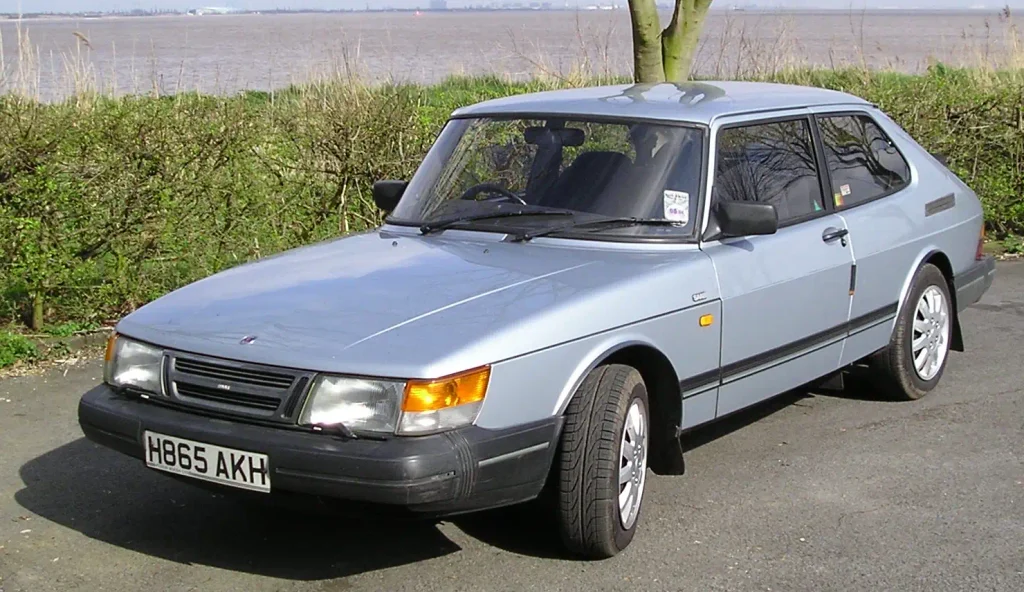
The Saab 900, launched in 1978, became the brand’s best selling and most beloved model, prized for its safety engineering and offbeat cabin layout.
General Motors and the Saab Years
General Motors first bought into Saab in 1990, acquiring a 50 percent stake in the automobile division as the Swedish company searched for capital to fund new models.
GM took full ownership of Saab Automobile in 2000, folding it into its Premium Automotive Group alongside Cadillac, Saab, and other upscale brands.
Under GM, Saab shared platforms with Opel and Subaru to cut costs, a move that diluted some of the brand’s distinct engineering character according to longtime enthusiasts.
The 2008 financial crisis hit GM hard, and the automaker filed for its own bankruptcy reorganization in 2009, putting every non core brand, including Saab, up for sale.
GM initially struck a deal to sell Saab to Dutch supercar maker Spyker Cars, led by entrepreneur Victor Muller, and the sale finally closed in February 2010.
The Spyker Takeover and Bankruptcy
Spyker Cars renamed itself Swedish Automobile after buying Saab, hoping to revive the brand with fresh investment and new model plans.
Cash quickly became a problem. Suppliers halted parts shipments in 2011 because Saab could not pay its bills, forcing repeated production stoppages at the Trollhattan plant.
Attempts to bring in new investors, including Chinese automaker groups, fell apart when General Motors objected because it still held technology licensing rights tied to shared GM platforms.
On December 19, 2011, Saab Automobile filed for bankruptcy, ending more than six decades of continuous car production under the Saab name.
NEVS and the Fight Over the Saab Name
In 2012, a Swedish Chinese consortium called National Electric Vehicle Sweden, or NEVS, bought the bankrupt company’s Trollhattan factory, tooling, and vehicle designs.
NEVS planned to build electric versions of the Saab 9 3 platform and initially used the Saab name on early prototypes and low volume production.
Saab AB, the original aerospace parent that had licensed its name to the car business for decades, revoked that license in 2014, arguing NEVS had not met agreed conditions.
NEVS was forced to drop the Saab badge entirely and continued afterward simply as NEVS, though it kept manufacturing a small number of 9 3 based electric sedans for the Chinese market.
Ownership of NEVS itself shifted again in January 2019 when China Evergrande New Energy Vehicle Group acquired majority control of the company.
Evergrande’s own well documented financial troubles eventually caught up with NEVS, which slid into what industry press called hibernation mode by 2023.
Owns Saab Trademark, Nasdaq Stockholm SAAB B
Bankrupt December 2011, No Longer Exists
Bought Factory and Designs in 2012, Inactive Since 2024
Majority Owner of NEVS Since January 2019
Bought Trollhattan Factory Site in 2023
Saab Automobile Timeline
The clearest way to understand Saab ownership is to walk through the key dates in order, from aircraft maker to bankrupt automaker to dormant trademark.
Saab’s aircraft engineers in Trollhattan begin designing a passenger car project.
The first production Saab car goes on sale, styled with aircraft inspired aerodynamics.
General Motors acquires half of Saab Automobile to fund new product development.
General Motors takes complete control of Saab Automobile.
GM sells Saab to Dutch niche automaker Spyker Cars, led by Victor Muller.
Saab Automobile files for bankruptcy on December 19 after running out of cash.
National Electric Vehicle Sweden purchases the factory, tooling, and designs.
Saab AB withdraws the trademark license, forcing NEVS to drop the Saab badge.
NEVS lays off its remaining employees in December, ending production entirely.
What Happened to the Trollhattan Factory?
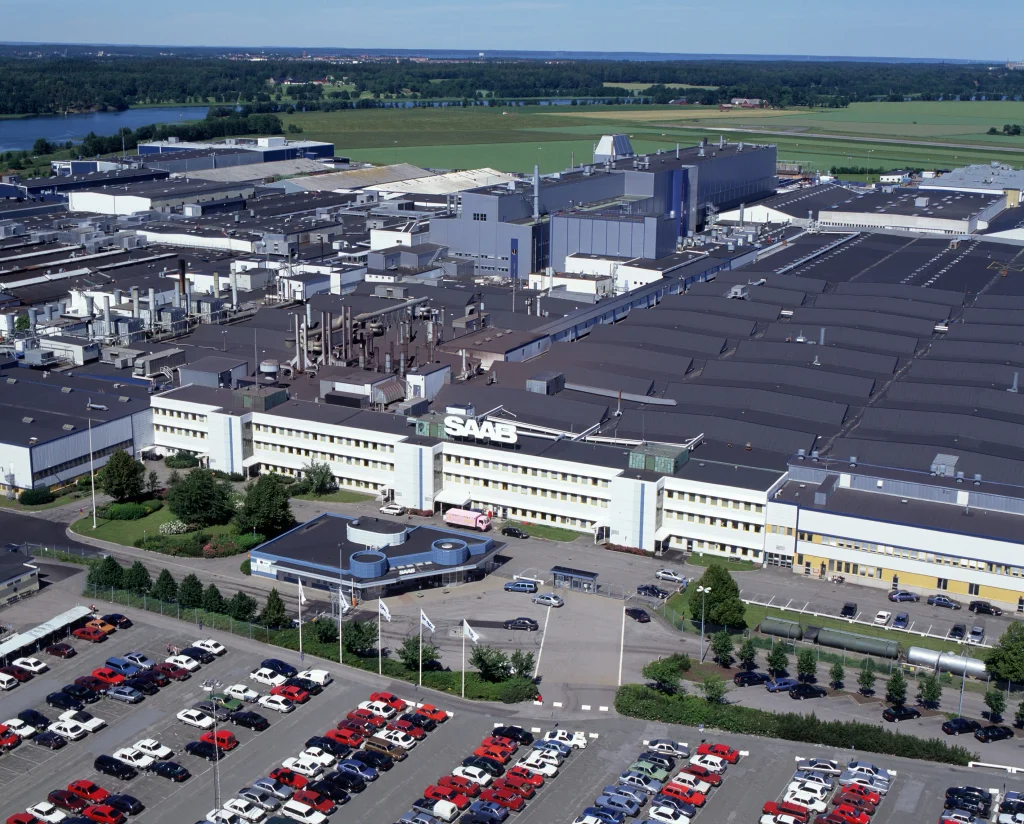
The historic Saab factory in Trollhattan changed hands multiple times after NEVS scaled back operations there.
In May 2023, NEVS sold 80 percent of the site to Stenhaga Invest AB, a holding company controlled by Swedish investor Svante Andersson.
Stenhaga acquired the remaining stake by November 2023, becoming sole owner of the physical plant that once built every Saab from the 1940s onward.
A separate deal with EV Electra, an Emirati startup, to build electric vehicles using leftover Saab designs at Trollhattan ultimately collapsed in late 2023.
Today the factory site is used for general industrial purposes rather than automobile assembly, closing the book on Trollhattan as a car manufacturing hub.
Is Saab Coming Back? Could the Brand Return?
A full scale Saab revival looks very unlikely under current conditions, though the trademark itself remains intact and could theoretically be relicensed.
Saab AB has shown no public interest in returning to passenger car manufacturing, focusing instead on defense contracts and the Gripen fighter jet program.
NEVS, the company that held the manufacturing assets, no longer has the funding or workforce needed to restart production after its 2024 shutdown.
Several smaller ventures have floated ideas about reviving Saab branded electric vehicles over the years, but none have secured the capital or the trademark rights to move forward.
For now, Saab exists mainly as a nostalgic badge on used cars from the 1990s and 2000s rather than as an active vehicle manufacturer.
Is Owning a Used Saab Really Worth It?
Owning a used Saab can be rewarding for enthusiasts who value its quirky engineering, though parts and service support have become genuinely harder to find since the 2011 bankruptcy.
Independent specialist shops and online parts networks have largely replaced official dealer support, which keeps many older Saabs running but requires more owner research.
Because production ended more than a decade ago, resale values on clean examples like the 900 Turbo and 9 3 Viggen have actually strengthened among collectors in recent years.
- Distinctive aircraft inspired styling and cabin layout
- Strong safety engineering reputation from Saab’s aviation roots
- Growing collector interest for turbocharged models like the 900 and 9 3 Viggen
- Active enthusiast community and specialist parts networks
- No factory warranty or official dealer network remains
- Some parts require sourcing through specialists rather than dealerships
- Electronics and turbo components can be costly to repair on older units
- No new models are being produced, so the lineup is permanently frozen
How Saab Compares to Other GM Era Brands
Saab was one of several brands General Motors owned and later shed during its 2009 restructuring, alongside Pontiac, Saturn, and Hummer.
Unlike Saab, brands that stayed inside GM, such as Cadillac, continued receiving investment and now anchor GM’s electric vehicle strategy.
Buick also survived the GM restructuring and remains an active brand today, largely because of its strong sales performance in China.
Saab’s fate shows how quickly a century old manufacturer can disappear once a parent company withdraws capital during a financial downturn.
Where to Verify the Saab Ownership Story
For readers who want the primary sources behind this history, several well documented references cover Saab’s bankruptcy and its aftermath in detail.
Wikipedia’s Saab Automobile entry documents the company’s founding, its GM years, and the 2011 bankruptcy filing in full.
Motor Authority’s coverage of NEVS shutting down confirms the final end of Saab related manufacturing in December 2024.
Saab AB, the current trademark holder, publishes its corporate structure and defense business details on its official corporate website.
Frequently Asked Questions About Saab
Is Saab still in business?
No. Saab Automobile went bankrupt in December 2011, and NEVS, the company that later bought its factory, shut down entirely in December 2024.
Who owns the Saab name now?
Saab AB, a Swedish aerospace and defense company that builds the Gripen fighter jet, owns the Saab trademark and reclaimed it from NEVS in 2014.
Can you still buy parts for a Saab?
Yes, through independent specialists and salvage networks, since official dealer support ended after the 2011 bankruptcy and there is no factory parts program.
Will Saab ever make cars again?
It is very unlikely in the near term. Saab AB has shown no interest in returning to car manufacturing, and NEVS no longer has the funding or facilities to resume production.

I am Jack Neel, a mechanical engineer, researcher, and writer. I created this website to share my knowledge about different brands and products with you. I research the manufacturers behind the brands and provide you with the information you need to make smart buying decisions.