
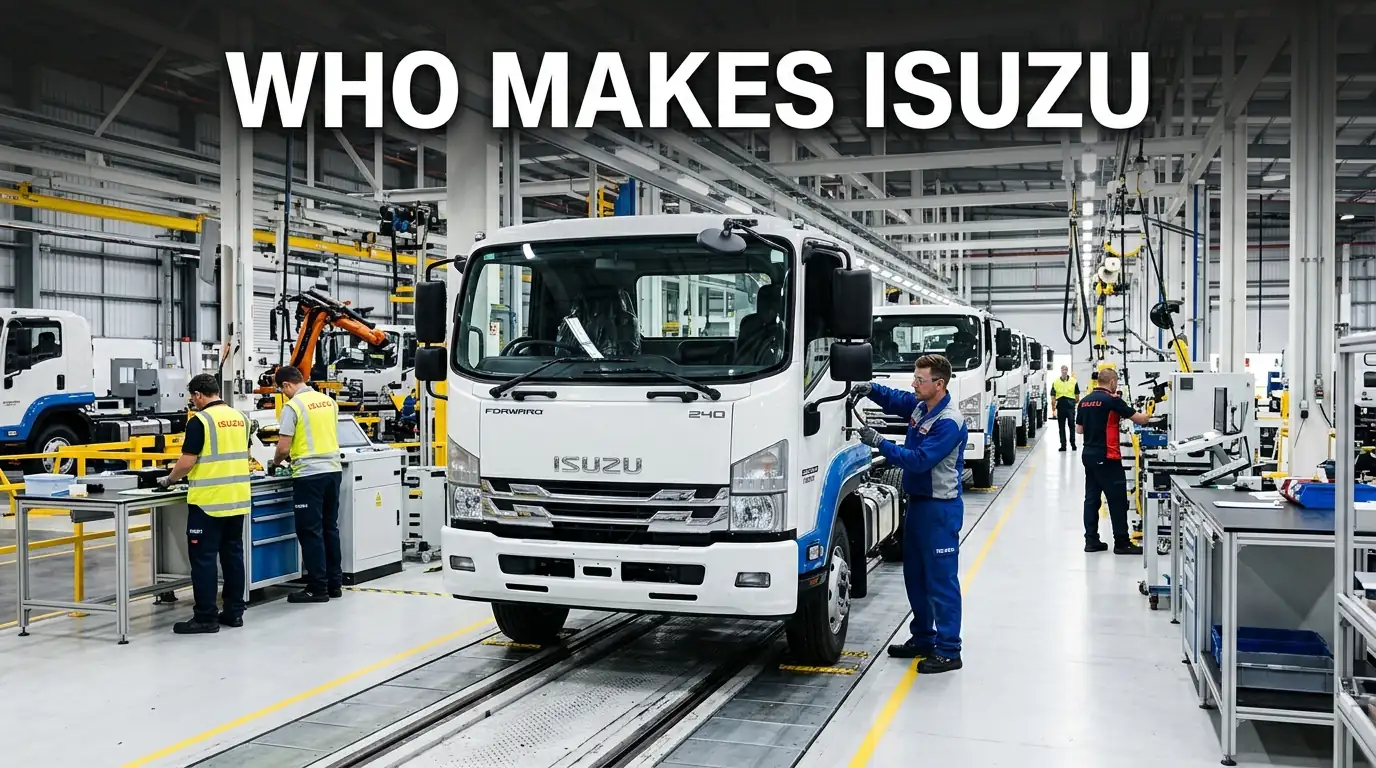
Isuzu Motors Limited is a publicly traded Japanese company, not a business owned by one single person or family.
It is headquartered in Yokohama, Japan, and it builds trucks, buses and diesel engines that are used all over the world.
Isuzu has close business ties with Mitsubishi Corporation, one of its largest shareholders, along with a long history of technical cooperation with General Motors in earlier decades.
In the United States, Isuzu no longer sells passenger cars, though its commercial trucks remain a familiar sight on American roads.
So who actually makes Isuzu vehicles today, who owns the company, and why did it leave the American car market? Here is a full breakdown of Isuzu ownership, leadership, history and current operations.
Table of Contents
Who Makes Isuzu?

Isuzu vehicles are made by Isuzu Motors Limited, a publicly traded Japanese manufacturer headquartered in Yokohama.
There is no single owner or founding family behind the brand today.
Isuzu shares are held by a broad mix of institutional investors, corporate partners and individual shareholders, and the company trades on the Tokyo Stock Exchange under ticker code 7202.
Isuzu manufactures its own commercial trucks, buses and diesel engines through wholly owned plants in Japan and a global network of joint venture assembly operations.
| Company Overview | Details |
| Company name | Isuzu Motors Limited |
| Industry | Commercial vehicles and diesel engines |
| Founded | 1916 (as Tokyo Ishikawajima Shipbuilding and Engineering), Isuzu name adopted 1934 |
| Headquarters | Yokohama Gate Tower, Nishi ku, Yokohama, Japan |
| Current owner | Public shareholders (Tokyo Stock Exchange listed) |
| Largest corporate shareholder | Mitsubishi Corporation |
| President and CEO | Masahiro Yamaguchi (since April 2026) |
| Stock ticker | 7202 |
| Stock exchange | Tokyo Stock Exchange |
| Country | Japan |
| Main business | Trucks, buses and diesel engines |
Is Isuzu Owned by Toyota or Mitsubishi?
Isuzu is not owned by Toyota, and while Mitsubishi Corporation is a major shareholder, it does not own a controlling stake either.
Toyota purchased a small 5.9 percent shareholding in Isuzu back in November 2006 as part of a technology sharing arrangement covering diesel engines and pickup trucks.
That partnership largely wound down, and Toyota sold off its Isuzu shares in August 2018.
Mitsubishi Corporation, the trading company rather than Mitsubishi Motors, became Isuzu’s largest shareholder in October 2006 after converting preferred shares into common stock, at one point holding roughly 15.65 percent of the company.
That relationship remains a significant part of Isuzu’s ownership structure today, though it is a minority position rather than outright control.
The remaining shares are spread across banks, insurance companies, pension funds and individual investors typical of a large publicly traded Japanese manufacturer.
Who Founded Isuzu?
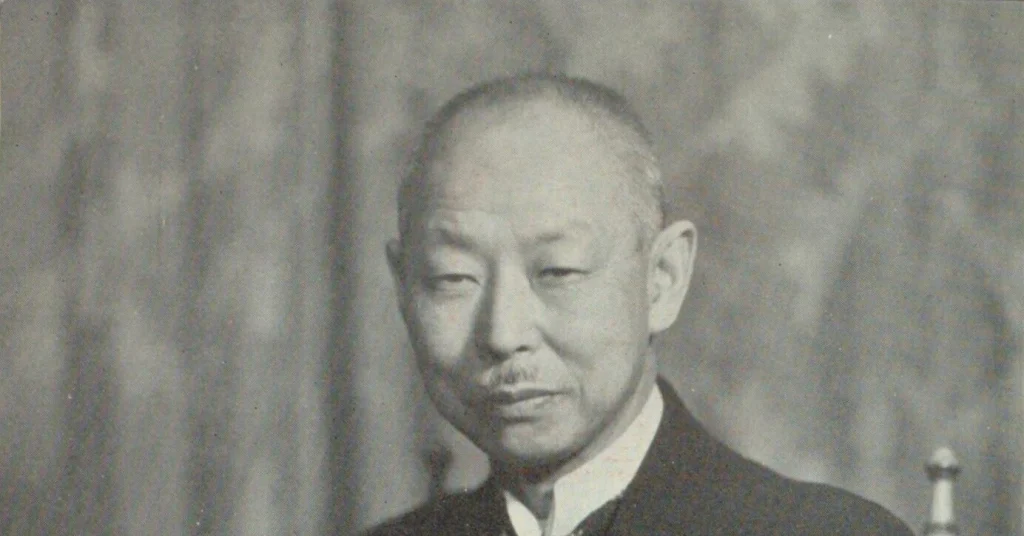
Isuzu traces its roots to 1916, when Tokyo Ishikawajima Shipbuilding and Engineering Co. began producing automobiles in Japan.
The company built its first truck in 1918 in partnership with Wolseley Motors of the United Kingdom.
The Isuzu name itself was adopted in 1934, named after the Isuzu River near Ise Grand Shrine, one of Japan’s most sacred sites.
Isuzu Motors Limited was formally established as an independent company in 1937.
Rather than being the creation of one founder, Isuzu grew out of Japan’s early twentieth century push to build a domestic shipbuilding and heavy engineering industry.
What Happened to Isuzu Cars in the United States?
Isuzu stopped selling passenger cars and SUVs in the United States on January 31, 2009, after struggling to justify new investment in an aging lineup.
At its peak, Isuzu sold popular models in America such as the Trooper SUV, the Rodeo, the Amigo and the VehiCROSS.
Declining sales volumes made it difficult for Isuzu to fund the redesigns needed to stay competitive against larger rivals.
Isuzu also had a long running joint venture history with General Motors, which once held a significant equity stake in Isuzu before selling it off in stages during the 2000s.
Importantly, the 2009 exit only affected passenger vehicles.
Isuzu’s commercial truck and diesel engine business in the United States continued operating without interruption.
What Does Isuzu Sell in America Today?
Isuzu still sells medium duty commercial trucks in the United States through Isuzu Commercial Truck of America, based in Anaheim, California.
These trucks are widely used for delivery fleets, moving vans, box trucks and other work vehicle applications across the country.
Isuzu also supplies diesel engines to other manufacturers for use in generators, construction equipment and marine applications.
Globally, outside the United States, Isuzu remains one of the largest producers of pickup trucks through the popular D Max model, sold across Asia, Australia, Africa, Europe and Latin America.
For readers curious how other Japanese and Asian manufacturers structure their ownership, our guide to who makes Mitsubishi covers a closely related corporate history.
How Is Isuzu Structured Globally?
Isuzu Motors Limited operates a global network of regional subsidiaries and joint venture assembly plants that produce trucks and engines under local partnerships.
In North America, Isuzu Commercial Truck of America handles sales and distribution of medium duty trucks.
In Asia, Isuzu partners with local manufacturers in Thailand, Indonesia and India, where it holds some of its largest single markets for pickup trucks.
Isuzu also maintains a diesel engine division that supplies powertrains to other vehicle makers and industrial equipment manufacturers worldwide.
Mitsubishi Corporation and other investors
Tokyo Stock Exchange investors
United States sales and distribution
Thailand, Indonesia, India joint ventures
Powertrain supply worldwide
How Much Is Isuzu Worth?
Isuzu Motors is a large industrial company with a market capitalization in the multi billion dollar range, reflecting its position as one of the world’s biggest commercial truck makers.
Isuzu reports its financial results in Japanese yen, and its annual revenue regularly exceeds two trillion yen, which converts to well over ten billion dollars depending on exchange rates.
The company’s value comes largely from its global truck and diesel engine business rather than passenger vehicle sales.
Isuzu publishes detailed annual financial statements through its investor relations pages, in line with Tokyo Stock Exchange disclosure requirements.
Because Isuzu sells primarily commercial vehicles rather than consumer cars, its revenue tends to track closely with global construction, logistics and freight activity.
Isuzu Milestones Through the Years
The timeline below highlights the events that shaped Isuzu into the commercial vehicle manufacturer it is today.
Tokyo Ishikawajima Shipbuilding and Engineering begins automobile production in Japan.
The company takes the Isuzu name, after the river near Ise Grand Shrine.
Isuzu Motors Limited is formally incorporated as an independent manufacturer.
Mitsubishi Corporation becomes the largest shareholder while Toyota also takes a minority stake.
Isuzu stops selling passenger cars and SUVs in the United States on January 31, 2009.
Toyota exits its Isuzu shareholding in August 2018.
Masahiro Yamaguchi becomes President and CEO effective April 2026.
Who Is the CEO of Isuzu?
Masahiro Yamaguchi became President and Chief Executive Officer of Isuzu Motors effective April 1, 2026, taking over from previous leadership as part of a planned executive reorganization.
The change was announced by Isuzu in February 2026 alongside a broader reshuffle of representative directors and executive officers.
Like most leaders of large publicly traded manufacturers, Yamaguchi manages operations and strategy but does not personally own the company.
Isuzu’s board of directors, elected by shareholders, oversees management on behalf of the investors who actually hold the company’s stock.
Is Isuzu Really Good or Really Worth It?
Isuzu has a strong reputation for durability and low running costs in the commercial truck segment, though its narrow product lineup in the United States limits appeal to everyday car buyers.
Owner and fleet feedback collected on ConsumerAffairs frequently highlights Isuzu’s diesel engine reliability and long service life as major strengths.
Fleet buyers often cite Isuzu’s low cost of ownership and strong resale value as reasons they choose the brand for delivery and logistics work.
On the downside, Isuzu no longer offers passenger cars or SUVs in America, so shoppers looking for a family vehicle simply cannot buy a new one.
Isuzu also has a smaller dealer network in the United States compared to full line automakers like Ford or Toyota, which can mean longer waits for specialized parts or service in some regions.
- Reputation for durable, long lasting diesel engines
- Strong resale value on commercial trucks
- Low total cost of ownership for fleet operators
- Global scale with decades of engineering experience
- No passenger cars or SUVs sold in the United States
- Smaller US dealer network than full line automakers
- Limited brand recognition among everyday consumers
- Parts availability can vary by region
Frequently Asked Questions About Isuzu
Does Isuzu still make cars for the United States?
No, Isuzu stopped selling passenger cars and SUVs in the United States on January 31, 2009.
The company continues to sell medium duty commercial trucks in America through Isuzu Commercial Truck of America.
Is Isuzu owned by Toyota?
No, Toyota does not own Isuzu today.
Toyota briefly held a 5.9 percent stake starting in 2006 but sold it off completely in August 2018.
Who is Isuzu’s largest shareholder?
Mitsubishi Corporation is one of Isuzu’s largest shareholders, a position it has held since converting preferred shares into common stock in 2006.
Isuzu remains a publicly traded company with no single controlling owner.
What does Isuzu make besides trucks?
Isuzu also manufactures diesel engines used in generators, construction equipment, agricultural machinery and marine applications.
This diesel engine business is a major and steady part of Isuzu’s global revenue outside of vehicle sales.
For more on how other established automakers structure their global ownership, see our guide to who makes Mazda.
More background on Isuzu’s corporate history is available on Wikipedia, and current models and specifications can be found on the official Isuzu Motors global website.

I am Jack Neel, a mechanical engineer, researcher, and writer. I created this website to share my knowledge about different brands and products with you. I research the manufacturers behind the brands and provide you with the information you need to make smart buying decisions.