
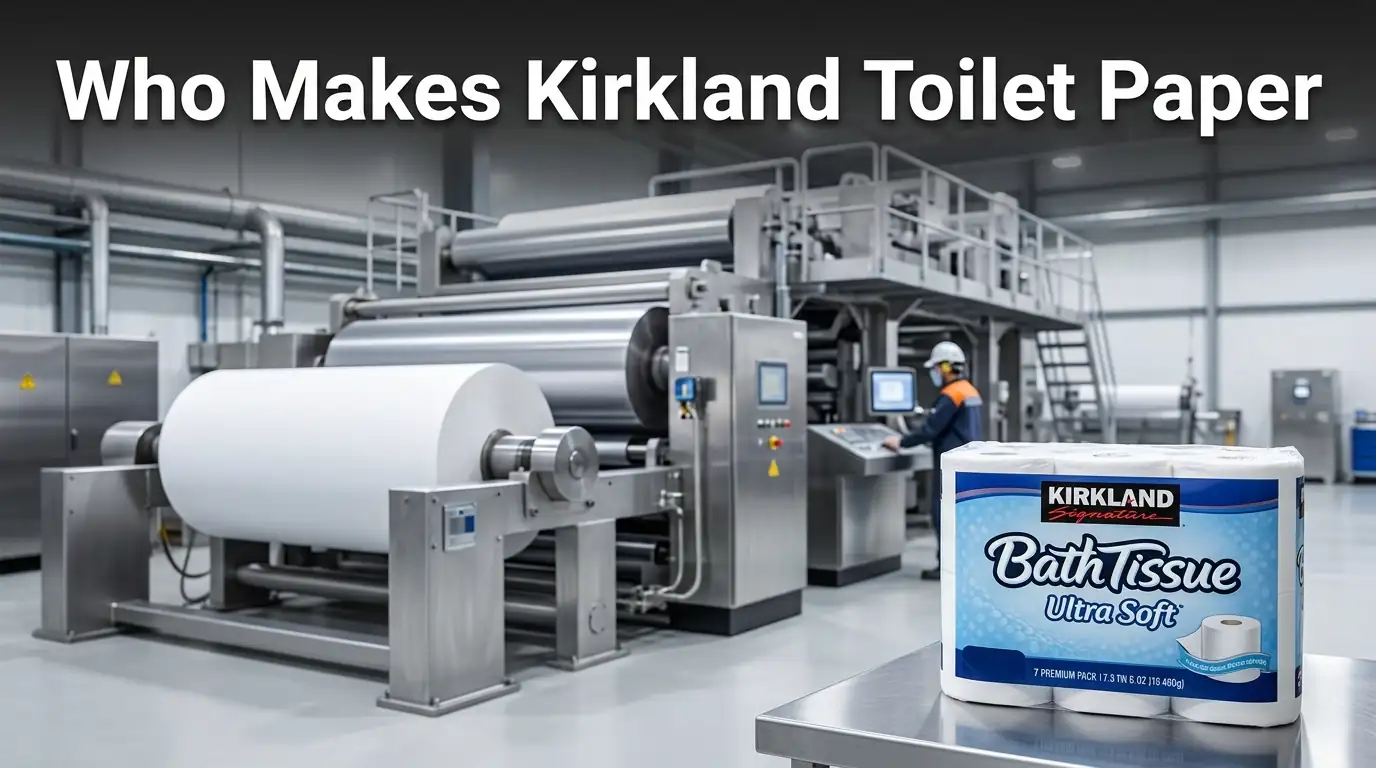
Kirkland Toilet Paper is not made by Costco itself. It is manufactured under contract by major paper companies, most commonly Georgia Pacific and Sofidel, then packaged and sold exclusively under Costco’s private Kirkland Signature label.
Kirkland Signature launched in 1995 as Costco’s store brand and now covers everything from batteries to clothing, with toilet paper being one of its highest volume grocery items.
What surprises a lot of shoppers is that Costco has never officially named its exact toilet paper suppliers, a point covered in more depth in our general look at where toilet paper is made.
That means the same handful of massive paper companies that make well known brands on other store shelves are likely behind the roll sitting in your Costco cart right now.
In this article we will cover who actually makes Kirkland toilet paper, when Costco started selling it, where it is manufactured, what makes it different from other store brands, how it compares to Charmin and Angel Soft, and whether it is worth buying.
Table of Contents
Who Makes Kirkland Toilet Paper?
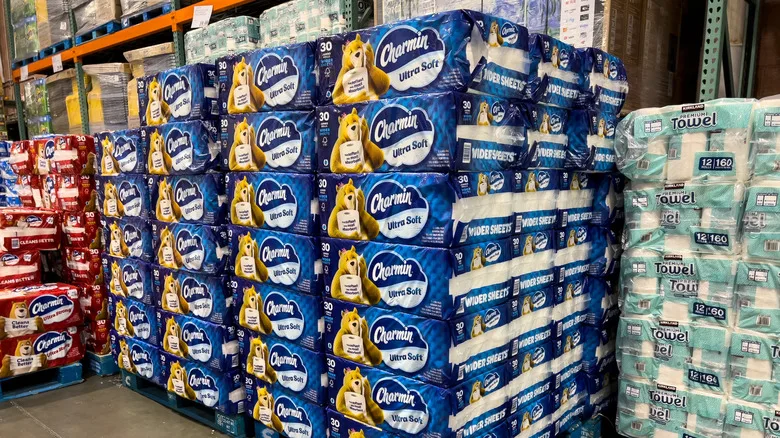
Kirkland Signature toilet paper is produced for Costco by third party paper manufacturers rather than by Costco itself.
The two companies most frequently identified as Kirkland toilet paper producers are Georgia Pacific, the same company behind Angel Soft and Quilted Northern, and Sofidel, an Italian tissue paper giant that also produces private label rolls for other major retailers.
Costco does not publicly confirm which supplier makes any given batch, and it can rotate manufacturers by region or over time, which is standard practice across the private label paper industry.
This arrangement, according to CNN, lets Costco negotiate lower prices from large scale manufacturers while keeping its own name off the production side entirely.
When Did Kirkland Signature Start Selling Toilet Paper?
Costco introduced the Kirkland Signature brand in 1995, naming it after the city of Kirkland, Washington, where Costco was headquartered at the time.
Toilet paper and other paper products were among the earliest Kirkland Signature grocery items, joining a lineup that quickly expanded into food, supplements, and household goods.
Three decades later, Kirkland Signature has grown into one of the most successful private label programs in American retail, generating tens of billions of dollars in annual sales across all product categories.
Toilet paper remains one of the brand’s most purchased items simply because it is a product every household buys repeatedly.
Where Is Kirkland Toilet Paper Made?
Kirkland toilet paper is manufactured in paper mills located across the United States rather than at any single dedicated Costco facility.
Georgia Pacific operates multiple tissue mills domestically, while Sofidel also runs paper production plants in the United States after expanding its American manufacturing footprint over the past two decades.
Because Costco sources from more than one manufacturer, the exact mill that produced a specific package can vary depending on where and when it was purchased.
What Makes Kirkland Toilet Paper Different?
Kirkland toilet paper is typically sold in large multi roll packs, reflecting Costco’s bulk warehouse shopping model rather than the smaller packs found at a typical grocery store.
Many shoppers report that Kirkland toilet paper feels comparable in softness and thickness to name brand two ply tissue, which is part of why it has built a loyal following despite carrying a lower price per roll.
Because it is produced by the same manufacturers behind several well known brands, the underlying paper quality is often very close to what you would find on a name brand shelf.
Kirkland vs Charmin vs Angel Soft: How Do They Compare?
Kirkland, Charmin, and Angel Soft all compete for the same bathroom tissue shelf space, but each comes from a different corner of the paper industry.
Charmin is owned and manufactured directly by Procter and Gamble, giving it a single, consistent manufacturer behind every roll.
Angel Soft is made by Georgia Pacific, the very same company that is one of the leading producers behind Kirkland toilet paper, which means the two brands can share more in common than most shoppers realize.
Kirkland stands apart mainly on price and pack size, offering warehouse club value rather than the smaller, more frequently discounted packs typical of Charmin and Angel Soft at regular grocery stores.
Is Kirkland Toilet Paper Worth Buying?
For most Costco members, Kirkland toilet paper is considered a strong value because it delivers name brand quality paper at a noticeably lower cost per roll.
The large pack sizes mean less frequent shopping trips, which appeals to bigger households that go through toilet paper quickly.
The main tradeoff is that you need a Costco membership to buy it and enough storage space at home for the bulky multi pack format.
For anyone who already shops at Costco regularly, switching to Kirkland toilet paper is one of the easier ways to cut a recurring household expense without sacrificing much in quality.
Because Costco rotates suppliers and formulas over time, it is worth trying a pack yourself rather than relying only on years old reviews, since paper quality across the private label industry can shift from one production run to the next.
Frequently Asked Questions
Who makes Kirkland toilet paper?
Kirkland toilet paper is made under contract for Costco, most commonly by Georgia Pacific and Sofidel, two of the largest paper manufacturers in the world.
Is Kirkland toilet paper the same as Costco toilet paper?
Yes. Kirkland Signature is Costco’s store brand, so any toilet paper sold under the Costco name at its warehouses is Kirkland Signature toilet paper.
Is Kirkland toilet paper septic safe?
Kirkland toilet paper is generally marketed as safe for standard septic systems, though homeowners with sensitive systems should always check the specific package labeling.
Why is Kirkland toilet paper cheaper than name brands?
Kirkland toilet paper is cheaper mainly because Costco buys in enormous bulk volume directly from manufacturers and skips the marketing and advertising costs that name brands build into their pricing.

I am Jack Neel, a mechanical engineer, researcher, and writer. I created this website to share my knowledge about different brands and products with you. I research the manufacturers behind the brands and provide you with the information you need to make smart buying decisions.