

Nobody personally owns the Maryland Terrapins baseball team, and that surprises a lot of fans who are used to thinking about pro sports franchises.
Maryland baseball is a college program, run by a public university, not a private business with shareholders or a billionaire owner.
This article breaks down exactly who governs the team, how the money flows, who the current head coach is, and what the Big Ten move and the new NIL era mean for the Terrapins going forward.
We also look at the honest financial picture, since Maryland athletics has faced real budget pressure in recent seasons.
So who actually calls the shots for Maryland baseball, and is the program worth the investment the university keeps making in it? Let us dig in.
Table of Contents
Quick Facts About Maryland Terrapins Baseball
| Field | Detail |
| Program | Maryland Terrapins Baseball |
| Governing Institution | University of Maryland, College Park (public university) |
| Athletic Director | James E. Smith |
| Head Coach | Matt Swope |
| Conference | Big Ten Conference (joined 2014, first season 2015) |
| Founded | 1893 |
| Home Stadium | Shipley Field at Bob Turtle Smith Stadium |
| Ownership Type | Public University Athletic Department / Board of Regents |
Why College Teams Like Maryland Baseball Do Not Have A Private Owner
When people search for who owns a franchise like the Baltimore Orioles, they usually find a named owner or ownership group because that is a professional, for profit business.
Maryland Terrapins baseball works completely differently. It is a varsity program inside the athletic department of a public state university, so it is governed rather than owned in any commercial sense.
The team, its facilities, its brand, and its revenue all belong to the university and, by extension, to the State of Maryland taxpayers and the University System of Maryland.
That structure is common across nearly every NCAA Division I program, from the smallest club sport to marquee programs like Maryland football and basketball.
The University System of Maryland Board of Regents Sits At The Top
The final layer of authority for Maryland baseball is not a person at all, it is a governing board.
The University System of Maryland Board of Regents oversees policy, budgets, and major institutional decisions for College Park and every other school in the system.
Below the Board of Regents sits the university president, currently Darryll J. Pines, who then delegates day to day athletics operations to the Director of Athletics.
Maryland Baseball Governance Structure
University President
Director of Athletics
Head Baseball Coach
Recruiting and Player Development
Roster of Terrapins Baseball Players
Who Is Maryland Athletics Director James E. Smith
James E. Smith took over as Maryland Director of Athletics on July 15, 2025, arriving from a business strategy role with the Atlanta Braves.
He now oversees every varsity sport at Maryland, including baseball, and reports directly to the university president and, ultimately, to the Board of Regents.
Smith replaced longtime athletic director Damon Evans and inherited a department navigating tight budgets alongside the new revenue sharing era in college sports.
Who Is The Current Maryland Baseball Head Coach
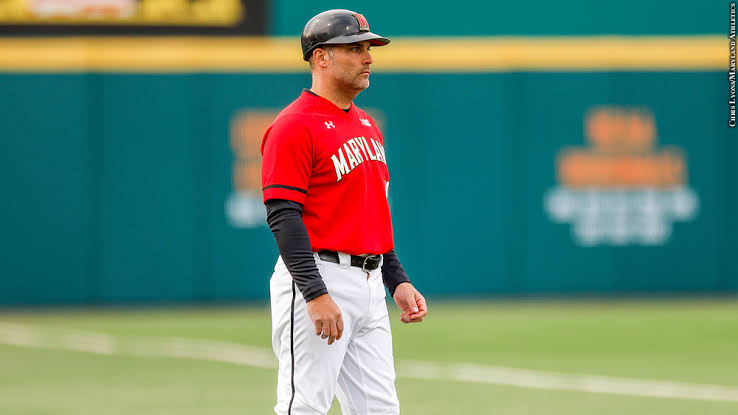
Matt Swope is the current head coach of Maryland Terrapins baseball, named to the role on June 12, 2023.
Swope is a Maryland native and a 2003 University of Maryland graduate who started at outfield for the Terrapins from 1999 through 2002.
Before becoming head coach he worked his way up through the program as director of operations, assistant coach, and associate head coach.
In his first season leading the team in 2024, Swope posted a 34 and 22 record, the best debut season for a Maryland baseball head coach in program history.
Program History And The Move From The ACC To The Big Ten
Maryland baseball dates back to 1893, making it one of the older college programs in the country.
The program spent decades in the Atlantic Coast Conference before Maryland left for the Big Ten Conference, a move announced in 2014 and effective for the 2014 to 2015 athletic year.
Baseball officially began Big Ten competition with the 2015 season, right as the program was enjoying its best on field stretch in decades.
Maryland Baseball Program Timeline
Maryland fields its first varsity baseball team.
Maryland reaches the Super Regional round for the first time and the university announces its move from the ACC to the Big Ten.
Maryland baseball begins full competition in the Big Ten Conference and posts back to back 40 win seasons.
Matt Swope is named head coach and Maryland wins its first Big Ten Tournament championship, defeating Iowa.
James E. Smith becomes athletic director as Maryland begins direct revenue sharing with athletes under the House settlement.
How The House Settlement And NIL Changed Funding For Maryland Baseball
The 2025 approval of the House versus NCAA settlement changed how every athletic department in the country pays its athletes, and Maryland is no exception.
Maryland Athletics committed to sharing the maximum allowed amount, about 20.5 million dollars, directly with athletes starting in year one, with most of it directed to football and basketball.
That leaves baseball and other Olympic sports competing for a smaller slice of new money, funded largely through scholarship support, ticket sales, donor giving, and the One Maryland NIL collective.
Athletic department leaders publicly projected new expenses exceeding 25 million dollars a year starting in the summer of 2025, a significant new cost layered on top of an already tight budget.
Is Maryland Doing A Good Job Running The Terrapins Baseball Program: Is The Investment Really Worth It
On the positive side, Maryland baseball has clearly improved since joining the Big Ten. The program earned NCAA tournament bids in 2014 and 2015 after a 43 year drought, won its first ever conference tournament title in 2023, and Matt Swope delivered the best first year record of any coach in program history in 2024.
The university has also kept Shipley Field at Bob Turtle Smith Stadium in service for more than 60 years, giving the program a consistent home base rather than constant facility upheaval.
On the negative side, Maryland athletics as a whole has struggled financially compared to many Big Ten peers, and 247Sports reporting has ranked Maryland toward the bottom of the conference in overall athletics revenue.
Baseball, as a non revenue sport, is especially exposed to that gap, since new House settlement payments prioritize football and basketball first.
So is the investment worth it? Competitively, yes, the on field results since 2014 justify continued support. Financially, the program depends heavily on donor generosity and NIL collective fundraising to stay competitive, which is a real and ongoing risk.
Could Budget Pressure Push Maryland Terrapins Baseball Out Of The Big Ten In 2026
There is no credible reporting suggesting Maryland is leaving the Big Ten in 2026, and conference realignment for an established member like Maryland is extremely unlikely in the near term.
The real story is financial pressure rather than realignment. Maryland athletics has publicly acknowledged tight margins, and the new 25 million dollar annual cost from revenue sharing adds strain across every sport that is not football or men’s basketball.
For baseball specifically, that pressure shows up as reliance on donor support and the One Maryland collective rather than any threat to Big Ten membership itself.
Fans should watch athletic department budget updates and Big Ten revenue distribution figures for the clearest signal of how sustainable this funding model is over the next few seasons.
How Maryland Baseball Compares To Other Big Ten Programs
Compared with Big Ten baseball powers, Maryland is a mid tier program with one conference tournament title, a moderately sized home stadium, and a coach still building a national reputation.
The Terrapins have produced 38 Major League Baseball players across program history, showing the pipeline has real talent even without the largest budget in the league.
For a broader look at how governance and ownership work across very different kinds of sports organizations, see our breakdown of who owns the NFL, which shows just how differently professional leagues are structured compared to a public university program like Maryland.
What Fans Should Actually Watch In 2026
Three things matter most for Maryland baseball heading into 2026: Matt Swope’s ability to keep building on his 2024 breakthrough, how much NIL and donor money reaches baseball specifically, and whether James E. Smith’s administration stabilizes the athletic department budget.
None of that changes who technically owns the program. It remains a public university asset governed by the Board of Regents, not a franchise for sale.
For context on how a legacy Maryland pro franchise handles ownership and sourcing, check out our guide on the Baltimore Orioles ownership group, a useful contrast to the public governance model used by Maryland baseball.
Frequently Asked Questions About Maryland Terrapins Baseball Ownership
Who technically owns Maryland Terrapins baseball
The University of Maryland, College Park owns and operates the program, under the oversight of the University System of Maryland Board of Regents, as confirmed on the university’s official athletics site, umterps.com.
Who is the head coach of Maryland baseball right now
Matt Swope has been head coach since June 2023 and remains in that role for the 2026 season.
What conference does Maryland baseball play in
Maryland has competed in the Big Ten Conference since the 2015 season, after leaving the Atlantic Coast Conference in 2014, according to Wikipedia.
How is Maryland baseball funded today
Funding comes from university athletic department budgets, ticket sales, donor giving, and NIL collective support through One Maryland, alongside a limited share of new House settlement revenue sharing dollars.

I am Jack Neel, a mechanical engineer, researcher, and writer. I created this website to share my knowledge about different brands and products with you. I research the manufacturers behind the brands and provide you with the information you need to make smart buying decisions.