
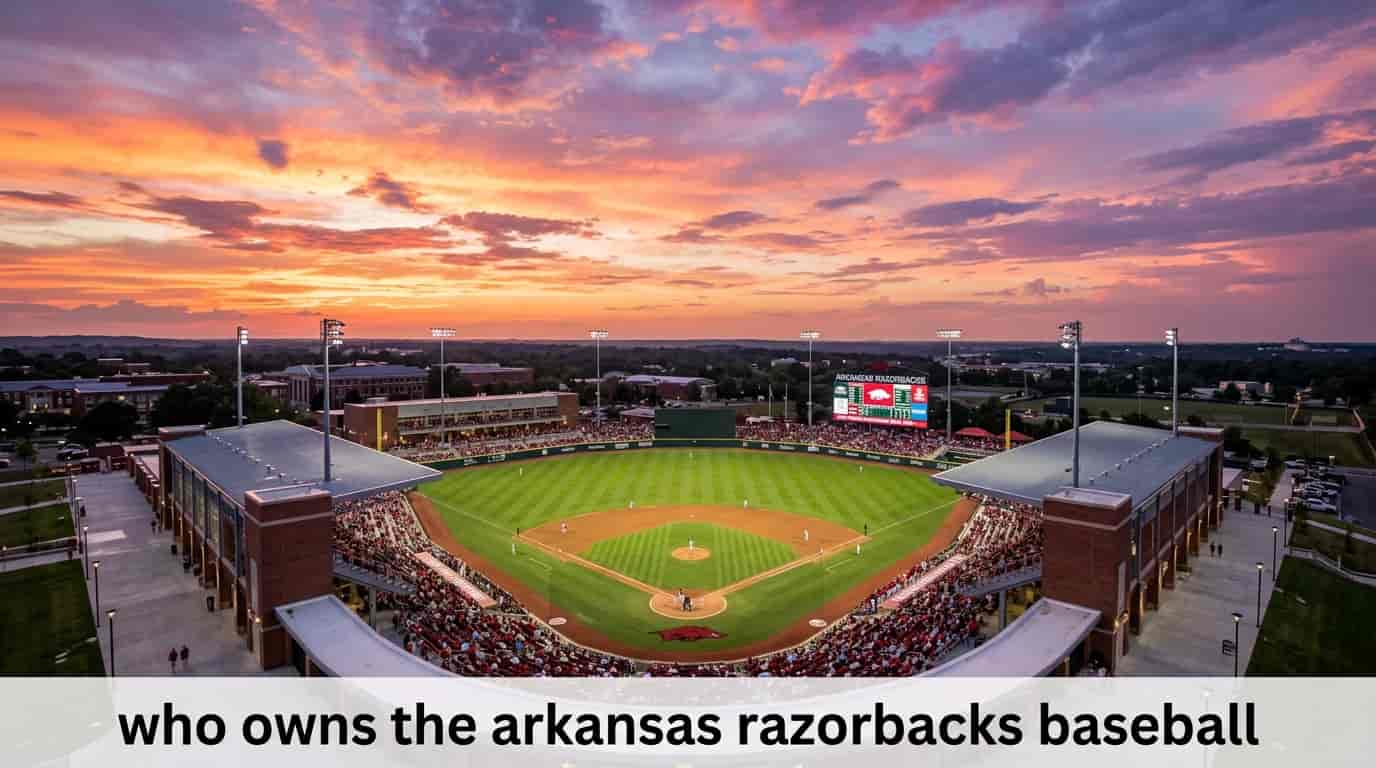
The Arkansas Razorbacks draw more fans to a college baseball diamond than almost any program in the country, so it is fair to ask who actually owns the operation behind that success.
Unlike a professional franchise, Arkansas Razorbacks baseball has no private owner and no ownership group buying and selling shares.
This article explains who governs the program, from the state Board of Trustees down to the coaching staff, and how that structure pays the bills.
We will also cover the current athletic director, the head coach, the home stadium, and how new NIL and revenue sharing rules are changing college athletics funding in 2026.
So if you assumed a wealthy businessman signs the checks for Baum Walker Stadium, the real answer might surprise you.
Table of Contents
Who Actually Owns Arkansas Razorbacks Baseball
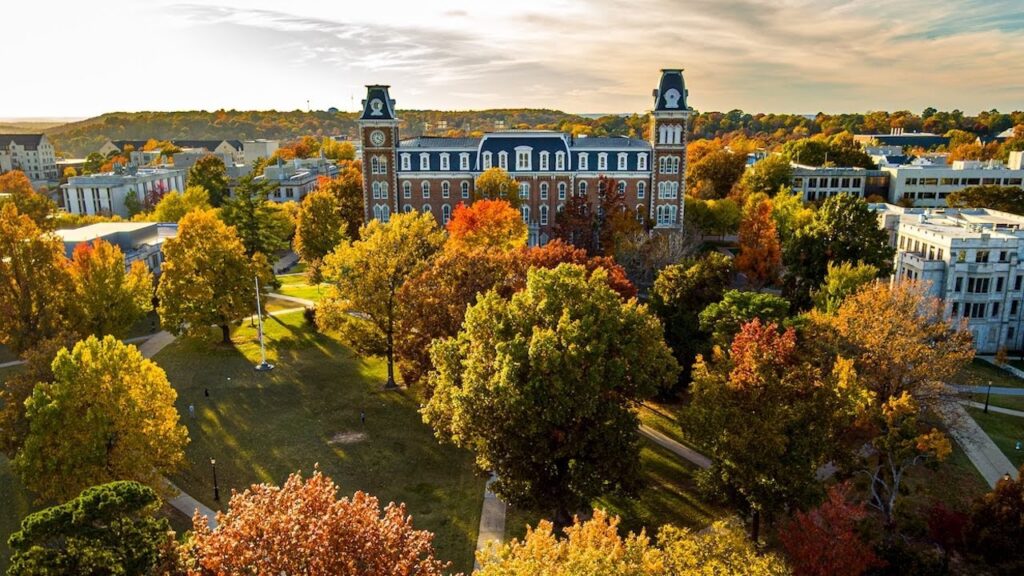
Arkansas Razorbacks baseball is a program of the University of Arkansas, a public land grant research university located in Fayetteville, Arkansas.
The university is the flagship campus of the University of Arkansas System, and it is that System, through its Board of Trustees, that legally holds ultimate authority over every varsity sport, including baseball.
There is no owner in the sense that fans of a professional club would recognize. Instead, the baseball program is a department within a public institution, funded largely by ticket sales, conference television revenue, donations, and student fees.
According to Wikipedia, the program traces its roots back to 1897, making it one of the oldest varsity sports at the university.
Quick Facts About Arkansas Razorbacks Baseball
Here is a fast reference table covering the people and institutions that run the program today.
| Program | Arkansas Razorbacks Baseball |
| Governing Institution | University of Arkansas, Fayetteville |
| Athletic Director | Hunter Yurachek |
| Head Coach | Dave Van Horn |
| Conference | Southeastern Conference (SEC) |
| Founded | 1897 |
| Home Stadium | Baum–Walker Stadium at George Cole Field |
| Ownership Type | Public University Athletic Department / Board of Trustees |
How The University Of Arkansas Governs Its Baseball Program
The chain of command for Arkansas Razorbacks baseball flows from a public board of appointed citizens all the way down to the players on the field.
Head Baseball Coach
The Board of Trustees sets broad policy and hires the chancellor. The chancellor oversees campus operations and appoints the athletic director. The athletic director then hires and evaluates every head coach, including the baseball staff, and answers directly to the chancellor and the board for the results.
A Timeline Of Arkansas Razorbacks Baseball History
The program has grown from a small campus club into one of the best attended teams in college baseball. Here are the key moments.
Arkansas fields its first organized varsity baseball team on campus in Fayetteville.
Athletic director Frank Broyles hires Norm DeBriyn, who builds the modern foundation of the program over three decades.
Arkansas reaches Omaha for the first time and finishes as national runner up.
After decades in the Southwest Conference, Arkansas moves into the Southeastern Conference.
The team moves into a purpose built ballpark near campus that becomes one of the loudest venues in college baseball.
Van Horn returns to his home state to take over as head coach beginning with the 2003 season.
Arkansas returns to the championship series and again finishes second in the nation.
The ballpark is renamed Baum Walker Stadium at George Cole Field to honor the Walker family and its foundation.
Arkansas reaches the College World Series again as the House settlement revenue sharing model reshapes how programs are funded nationwide.
Hunter Yurachek And The Athletics Department Running The Show
Hunter Yurachek serves as the Director of Athletics at the University of Arkansas, a role that makes him the day to day executive in charge of every varsity program, baseball included.
Yurachek arrived at Arkansas after previous stops at the University of Houston and other athletic departments, and he reports to Chancellor Charles F. Robinson, who was elected by the University of Arkansas System Board of Trustees in November 2022.
According to arkansasrazorbacks.com, his office sets budgets, negotiates media agreements as part of the SEC, and now oversees how the athletic department manages NIL payments and the new revenue sharing pool.
Dave Van Horn And The Coaching Staff Behind The Program
Dave Van Horn has led Arkansas baseball since the 2003 season, making him one of the longest tenured coaches in the SEC.
Under Van Horn, Arkansas has reached the College World Series eight times, won multiple SEC titles, and developed Golden Spikes Award winners including Andrew Benintendi, Kevin Kopps, and Wehiwa Aloy.
A report from On3 notes that Van Horn continues to be regarded as one of the top program builders in the sport, a reputation reflected in his selection for the American Baseball Coaches Association Hall of Fame.
Even so, Van Horn does not own the program. He is an employee of the University of Arkansas, hired by the athletic director and accountable to him for wins, graduation rates, and rules compliance.
Why Fans Fill Baum Walker Stadium Every Season
Arkansas has built one of the most loyal fan bases in college baseball, and that support is central to how the program funds itself.
Baum Walker Stadium at George Cole Field opened in 1996, seats roughly 10,737 fans for regular season play, and can hold well over 11,000 for postseason games.
Arkansas was the first program in the nation to average more than 8,000 fans per game across a full season, and the single game attendance record of 11,103 was set during a 2011 series against LSU.
That attendance matters because it generates ticket revenue, concession sales, and donor interest that flow directly back into the public athletic department budget rather than into a private owner’s pocket.
How NIL And Revenue Sharing Are Reshaping Razorbacks Baseball
The biggest change to college athletics funding in decades arrived with the House versus NCAA settlement, and Arkansas baseball is directly affected.
Under the new model, the University of Arkansas athletic department can share up to roughly 20.5 million dollars annually with athletes across all sports, with baseball receiving a portion of that pool.
Baseball rosters also expanded, growing from 27 scholarship limits toward 34 under the settlement terms, which changes how coaches recruit and how the department budgets for scholarships.
Name, image, and likeness deals arranged through boosters and collectives still exist alongside the new revenue sharing pool, and any deal over 600 dollars must clear a fair market value review.
None of this changes who owns the team. The University of Arkansas remains the institution on the hook for the money, and the Board of Trustees remains the body ultimately responsible for how it is spent.
Is Arkansas Doing A Good Job Running The Razorbacks Baseball Program: Is The Investment Really Worth It
By most measures, the University of Arkansas has run its baseball program well, though the picture is not without real tradeoffs.
On the positive side, Arkansas has reached twelve College World Series appearances, kept a respected coach in Dave Van Horn for more than two decades, and built one of the top attended stadiums in the sport, all of which raises the university’s national profile and helps recruiting across every sport on campus.
The program has also never won a national championship despite twelve trips to Omaha and two runner up finishes, which some fans and analysts point to as a gap between resources spent and titles delivered.
Critics of heavy athletic spending also note that public universities face pressure to fund NIL and revenue sharing commitments while other departments, including some Olympic sports at Arkansas, have faced budget cuts.
Supporters counter that baseball is largely self sustaining thanks to attendance and donor support, and that the exposure the program brings to the university is worth far more than its direct cost.
Could The Arkansas Razorbacks Baseball Program Leave The SEC In 2026
Given the sweeping changes happening in college sports, some fans wonder whether conference realignment could ever pull Arkansas out of the SEC.
In reality, this is very unlikely. Arkansas has been an SEC member since 1992, the conference remains one of the two dominant power leagues in college sports, and Arkansas baseball benefits enormously from SEC television exposure and scheduling.
The far more meaningful story for 2026 is not conference movement but funding. The real disruption facing Arkansas baseball comes from NIL payments and the new revenue sharing cap, which are forcing every SEC athletic department, Arkansas included, to rethink how it budgets for scholarships, coaching salaries, and facilities.
Frequently Asked Questions About Arkansas Razorbacks Baseball Ownership
Who technically owns Arkansas Razorbacks baseball
The program is owned and governed by the University of Arkansas, part of the University of Arkansas System, which is overseen by a publicly appointed Board of Trustees. There is no private owner.
Does Dave Van Horn own the team he coaches
No. Van Horn is a university employee hired by the athletic director. He controls day to day baseball operations but has no ownership stake in the program, similar to how coaches are hired across other college programs such as those covered in our who owns the NFL breakdown of professional sports governance.
How is Arkansas baseball funded today
Funding comes from ticket sales, SEC media revenue, donations, and now a share of the roughly 20.5 million dollar revenue sharing pool created after the House settlement, all managed by the athletic department under university and Board of Trustees oversight, a governance model that differs sharply from international sports bodies such as the one described in our who owns FIFA guide.
Will NIL and revenue sharing change who controls Razorbacks baseball
The money flowing to players is changing, but the ownership structure is not. The University of Arkansas and its Board of Trustees remain in charge of the program regardless of how NIL and revenue sharing rules evolve.

I am Jack Neel, a mechanical engineer, researcher, and writer. I created this website to share my knowledge about different brands and products with you. I research the manufacturers behind the brands and provide you with the information you need to make smart buying decisions.