
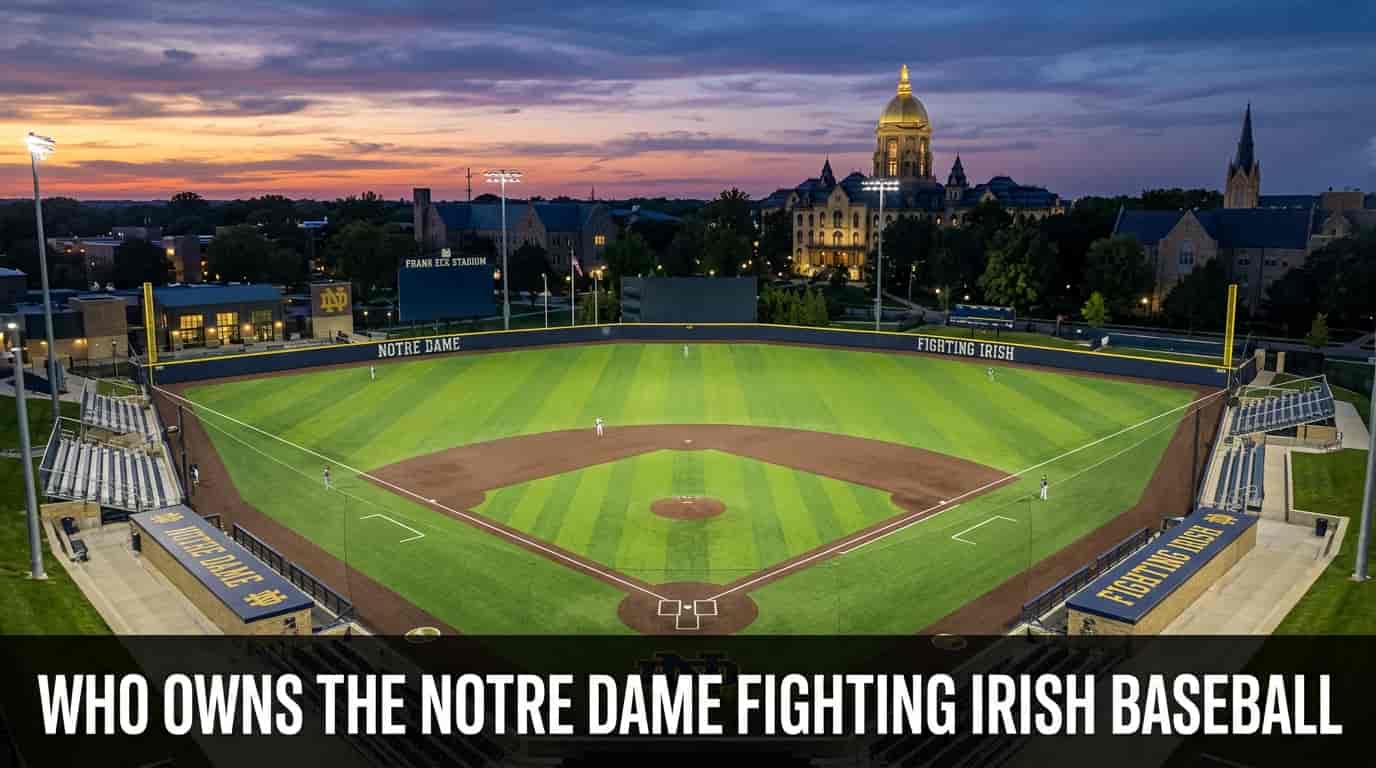
The University of Notre Dame is a private Catholic research university located in South Bend, Indiana, and it operates the Fighting Irish Baseball program directly through its athletics department. There is no single private owner the way a professional franchise has an owner or an ownership group.
Instead, the program sits inside a chain of institutional governance. The Board of Trustees oversees the university, the university president reports to that board, and the Director of Athletics manages the day to day operation of every varsity team, including baseball.
This article breaks down exactly who governs Notre Dame baseball, who coaches the team, where the Fighting Irish play home games, and how new revenue sharing rules born out of the House settlement are reshaping the money behind the program in 2026.
You will also find a full timeline of program history, a governance chart showing the reporting structure, and an honest look at whether Notre Dame is actually getting good value from its baseball investment.
So who is really in charge when a Fighting Irish batter steps into the box at Frank Eck Stadium? The answer runs all the way up to a boardroom, not a billionaire owner.
Table of Contents
Notre Dame Fighting Irish Baseball Quick Facts
| Program | Notre Dame Fighting Irish Baseball |
| Governing Institution | University of Notre Dame (private, South Bend, Indiana) |
| Athletic Director | Pete Bevacqua |
| Head Coach | Shawn Stiffler |
| Conference | Atlantic Coast Conference (ACC) |
| Founded | 1892 |
| Home Stadium | Frank Eck Stadium |
| Ownership Type | Private University Athletic Department |
Who Actually Owns Notre Dame Fighting Irish Baseball
Notre Dame Fighting Irish Baseball is owned and operated by the University of Notre Dame, a private nonprofit institution founded in 1842. As stated on Wikipedia, the program has represented the university in intercollegiate baseball since 1892, making it one of the oldest college baseball programs still competing today.
Because Notre Dame is a private university, its athletic teams are legally part of the university corporation itself. There are no outside shareholders and no ticket revenue split with private investors. Every dollar the baseball program generates or spends flows through the university budget under trustee oversight.
This structure differs sharply from professional baseball, where a wealthy individual or ownership group holds equity in the franchise. At Notre Dame, the closest thing to an owner is the Board of Trustees, a group of alumni, clergy, and business leaders who set policy for the entire university, athletics included.
How the Notre Dame Athletics Governance Structure Works
Authority over Fighting Irish baseball flows downward through four clear tiers. The chart below shows how decisions and accountability move from the top of the university down to the dugout.
University President
Director of Athletics
Head Baseball Coach
Every level in this chart answers to the level above it. The head coach reports to the athletic director, the athletic director reports to the president, and the president reports to the Board of Trustees, which holds ultimate fiduciary responsibility for the university and every program under it.
The History of Notre Dame Fighting Irish Baseball
Fighting Irish baseball has a history that stretches back well over a century, and the program has adapted through several conference moves and one of the biggest financial shifts college sports has ever seen. The timeline below covers the major milestones.
Notre Dame plays its first official baseball game, a 6 to 4 win over Michigan on April 21, 1892.
The Fighting Irish reach the College World Series for the first time in program history.
The team moves into its current home, built with a lead gift from alumnus Frank Eck, opening on March 17, 1994.
Notre Dame baseball joins the Atlantic Coast Conference, competing in the Atlantic Division while football remains independent.
Behind coach Link Jarrett, the Irish return to Omaha for the third time in program history.
Direct revenue sharing between universities and athletes starts, reshaping how Notre Dame funds every varsity roster, baseball included.
Who Is the Current Notre Dame Baseball Head Coach
Shawn Stiffler holds the John P. and Catherine Murphy Head Baseball Coach title at Notre Dame. He runs day to day operations for the roster, including recruiting, lineup decisions, and staff hiring, all under the authority delegated to him by the athletic department.
The head coach does not own the team or its brand. He is a university employee whose contract, salary, and job security are set by the Director of Athletics and ultimately answerable to the university president and Board of Trustees.
Who Is the Notre Dame Director of Athletics
Pete Bevacqua became Notre Dame’s Director of Athletics in March 2024, succeeding longtime athletic director Jack Swarbrick. Bevacqua previously served as chairman and president of NBC Sports and as chief executive officer of the PGA of America, giving him a media and business background that is increasingly relevant as college athletics moves deeper into revenue sharing and commercial partnerships.
As athletic director, Bevacqua oversees budget allocation across every Notre Dame varsity sport, including how much of the department’s revenue sharing pool baseball receives compared to football, basketball, and other programs.
Frank Eck Stadium: Home of Notre Dame Baseball
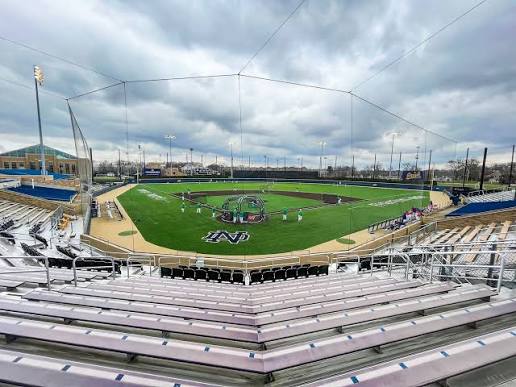
Notre Dame plays its home games at Frank Eck Stadium, a facility that opened in 1994 and seats roughly 2,500 fans. The stadium is named for alumnus Frank Eck, whose gift and later estate contributions to the university topped 35 million dollars.
The playing surface itself is named Jake Kline Field, honoring the coach who led the program for four decades. Like every facility on campus, Frank Eck Stadium is owned by the University of Notre Dame, not by the athletic department as a separate entity and not by any private party.
How Notre Dame Baseball Is Funded: NIL, Revenue Sharing, and the House Settlement
In June 2025, a federal judge granted final approval to the House versus NCAA settlement, a landmark case that allows universities to share revenue directly with athletes for the first time. According to Ropes and Gray, schools that opt in can now pay athletes directly, up to a capped pool that started around 20.5 million dollars per school for the 2025 to 2026 academic year.
Notre Dame opted into the settlement, meaning its athletic department now decides how to divide that revenue sharing pool among football, basketball, baseball, and every other varsity team. Because football and basketball generate the overwhelming majority of ticket and media revenue, baseball typically receives a smaller slice, similar to the pattern seen across most power conference athletic departments.
Beyond direct revenue sharing, Notre Dame baseball players can also earn compensation through name, image, and likeness deals arranged with independent NIL collectives. These collectives are not owned by the university, but they coordinate closely with the athletic department to support athletes across every sport, including baseball players who are not part of the highest earning programs.
Is Notre Dame Doing A Good Job Running The Fighting Irish Baseball Program: Is The Investment Really Worth It
On the positive side, Notre Dame baseball has reached the College World Series three times, most recently in 2022, and has captured multiple ACC titles since joining the conference in 2014. The program plays in a well maintained stadium, competes in one of the strongest baseball conferences in the country, and benefits from Notre Dame’s national brand when it comes to recruiting.
The university has also shown it will invest in facilities, as seen with the 35 million dollar commitment tied to Frank Eck Stadium, and the athletic department has opted into the new revenue sharing framework rather than sitting on the sidelines.
On the other hand, baseball sits well behind football and basketball in the internal pecking order for revenue sharing dollars, a common criticism at nearly every power conference school. Frank Eck Stadium, at roughly 2,500 seats, is smaller than several ACC rivals, and some fans argue the program could use a larger, more modern venue to match its on field success. Whether the current level of investment is enough to keep pace with ACC baseball powers long term remains a fair and open question.
Could The Notre Dame Fighting Irish Baseball Program Leave The ACC In 2026
There is no credible evidence that Notre Dame baseball is planning to leave the Atlantic Coast Conference in 2026. Notre Dame’s overall athletic arrangement, football independence paired with ACC membership for most other sports including baseball, has remained stable since 2014 and both sides have continued to reaffirm that relationship through recent conference media rights extensions.
The real story for 2026 is not conference realignment, it is funding pressure created by the House settlement. As revenue sharing caps rise in future years, Notre Dame and every other ACC school will have to decide how much of that growing pool baseball gets compared to revenue generating sports like football and basketball. That internal budget fight, not a conference jump, is what will most likely shape the baseball program’s competitive position over the next several seasons.
Frequently Asked Questions About Notre Dame Fighting Irish Baseball Ownership
Does anyone privately own Notre Dame Fighting Irish Baseball?
No. The program is owned and operated by the University of Notre Dame, a private nonprofit university. There is no individual owner or ownership group the way there would be for a professional team, and you can compare this structure to how a league itself is governed on our Who Owns the NFL breakdown, which covers a very different, franchise based ownership model.
Who is the head coach of Notre Dame baseball right now?
Shawn Stiffler is the current head coach, holding the John P. and Catherine Murphy Head Baseball Coach position within the athletic department.
What conference does Notre Dame baseball play in?
Notre Dame baseball competes in the Atlantic Coast Conference, a conference it joined in 2014 for baseball and most other sports outside of football, which remains an independent program. Governance structures for major athletic organizations vary widely, and our look at Who Owns FIFA shows how a global governing body compares to a university athletic department.
How does the House settlement affect Notre Dame baseball funding?
Since the House versus NCAA settlement received final approval in June 2025, Notre Dame has been able to share athletic department revenue directly with athletes, including baseball players, up to an annual cap. The athletic director and university leadership decide how that pool is divided among sports, and baseball generally receives a smaller share than football and basketball.

I am Jack Neel, a mechanical engineer, researcher, and writer. I created this website to share my knowledge about different brands and products with you. I research the manufacturers behind the brands and provide you with the information you need to make smart buying decisions.