
Maybach is made by Mercedes Benz Group, the German automaker that revived the historic name in 2015 as an ultra luxury sub brand called Mercedes Maybach.
Maybach is no longer a standalone car company. It exists today as the top trim level applied to select Mercedes Benz sedans, SUVs, and now a roadster.
The name traces back more than a century to an engineer who once built Zeppelin airship engines, long before it became a byword for chauffeur driven luxury.
This guide covers Maybach’s origin, why Daimler shut down standalone Maybach production in 2012, how it returned as a Mercedes sub brand, and what current models carry the badge.
Table of Contents
Who Owns Maybach Today?
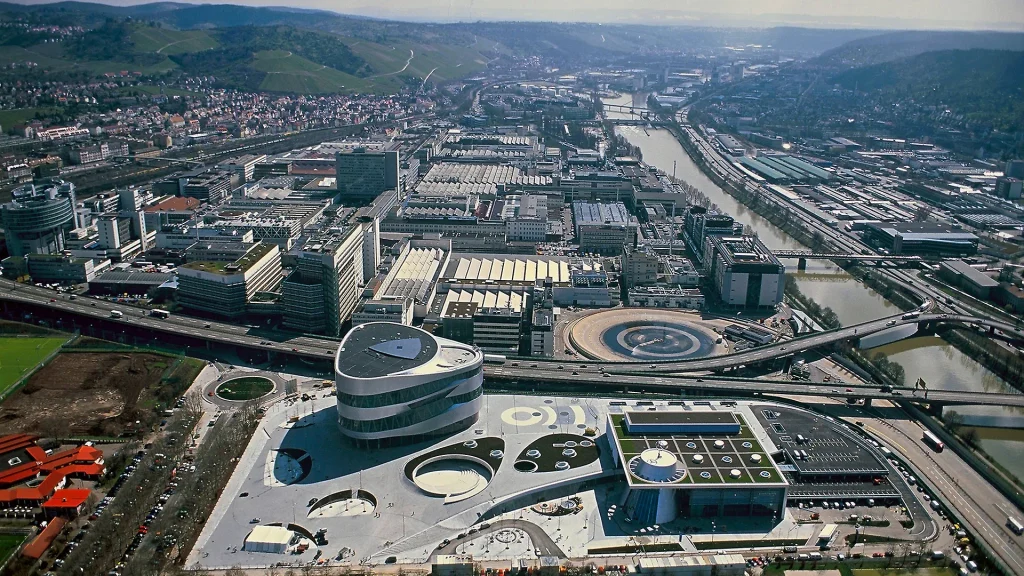
Mercedes Benz Group AG owns the Maybach name and every vehicle produced under it, since Maybach has no independent corporate structure of its own.
Mercedes Benz Group is a publicly traded German company headquartered in Stuttgart, listed on the Frankfurt Stock Exchange under ticker MBG.
Within the Mercedes Benz portfolio, Maybach functions similarly to AMG, sitting as a specialized designation applied to specific vehicles rather than an entirely separate model range.
Ola Kallenius leads Mercedes Benz Group as Chairman of the Board of Management, overseeing Maybach alongside the company’s mainstream and AMG performance lines.
| Company Overview | Details |
| Brand name | Mercedes Maybach |
| Original company founded | 1909, as Luftfahrzeug Motorenbau GmbH |
| Current status | Ultra luxury sub brand of Mercedes Benz, not a standalone automaker |
| Parent company | Mercedes Benz Group AG |
| Headquarters | Stuttgart, Germany |
| Chairman and CEO | Ola Kallenius |
| Stock ticker | MBG, Frankfurt Stock Exchange |
| Sub brand relaunch | April 2015, Mercedes Maybach S Class |
| Country | Germany |
| Official Website | mercedes-benz.com |
The Original History of Maybach
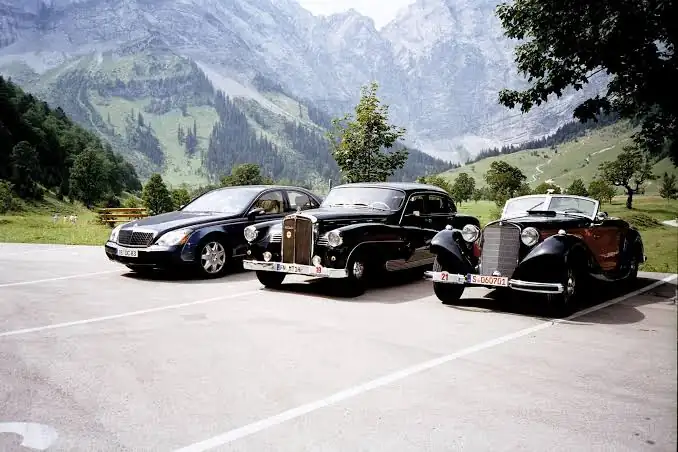
Maybach began in 1909 when engineer Wilhelm Maybach and his son Karl founded Luftfahrzeug Motorenbau GmbH, a company built to supply engines for Zeppelin airships.
The company renamed itself Maybach Motorenbau GmbH in 1912 and began producing luxury automobiles in 1921, aiming squarely at the wealthiest buyers in Europe.
Before World War II, Maybach built roughly 1,800 hand crafted cars total, positioning itself as a rival to Rolls Royce and Bugatti in prestige and price.
Wartime production shifted toward engines for tanks and other military vehicles, and the original automobile business never fully recovered afterward.
Daimler Benz acquired the Maybach engine company in 1960, effectively ending its independence, though the factory continued producing engines for industrial and marine use.
The 2002 Standalone Revival and Its Failure
Daimler Chrysler relaunched Maybach as an independent ultra luxury brand in 2002, introducing the Maybach 57 and Maybach 62 sedans.
The goal was to directly challenge Rolls Royce and Bentley, both of which had recently come under fresh ownership and investment from BMW and Volkswagen respectively.
Sales never came close to expectations. By 2010, Maybach sold only about 157 units worldwide compared with roughly 2,711 Rolls Royces sold that same year.
Daimler officially ended standalone Maybach production in December 2012, citing weak global demand as the primary reason for the shutdown.
Industry analysts at the time pointed to unclear brand positioning as a core problem, since many buyers saw little difference between a Maybach and a well equipped Mercedes S Class.
How Mercedes Maybach Returned as a Sub Brand
Mercedes Benz announced in November 2014 that Maybach would return, this time not as a separate company but as a premium trim level on the S Class.
The Mercedes Maybach S Class launched in April 2015, offering a stretched wheelbase, extended rear legroom, and additional sound insulation over the standard S Class.
This strategy solved the earlier branding confusion by clearly presenting Maybach as the pinnacle of the existing Mercedes lineup rather than a confusing competitor to it.
The approach worked far better commercially. By 2022, global Maybach sales reached about 21,600 units, with China representing the single largest market for the badge.
Mercedes Benz has steadily expanded the Maybach designation beyond sedans since that 2015 relaunch to cover additional body styles.
Core Passenger Vehicle Business
Performance Sub Brand
Ultra Luxury Sub Brand Since 2015
Current Model Applications
Maybach Timeline From Airships to Ultra Luxury
Maybach’s story includes an unusually long gap between its original decline and its eventual return as one of the best selling ultra luxury nameplates in the world.
Wilhelm and Karl Maybach establish an engine company for Zeppelin airships.
Maybach begins building hand crafted luxury automobiles.
Daimler Benz buys the Maybach engine company, ending its independence.
Daimler relaunches Maybach as an independent ultra luxury automaker.
Daimler shuts down standalone Maybach production due to weak sales.
Maybach returns as a Mercedes Benz sub brand starting with the S Class.
Mercedes Maybach reaches about 21,600 units sold worldwide.
Mercedes expands the Maybach line to an open top roadster body style.
What Models Currently Carry the Maybach Name?
The Mercedes Maybach S Class remains the badge’s flagship, offering a longer wheelbase and more rear seat luxury features than the standard S Class.
The Mercedes Maybach GLS extends the badge to a full size SUV, popular with buyers who want chauffeur style comfort with ground clearance.
Mercedes has also applied the Maybach name to an electric variant, the Mercedes Maybach EQS, and most recently to the 2026 Mercedes Maybach SL 680 roadster.
Each Maybach model is built alongside its standard Mercedes counterpart at existing Mercedes Benz plants rather than at a dedicated Maybach only factory.
Why Did the First Standalone Maybach Fail?
The 2002 standalone Maybach failed mainly because buyers could not clearly see why it cost far more than a similarly equipped Mercedes S Class.
Rolls Royce and Bentley had distinct visual identities and dedicated factories, while Maybach shared far more engineering and styling cues with mainstream Mercedes products.
Marketing also struggled to explain the brand to a global audience, since Maybach had been dormant for more than four decades before its 2002 return.
The sub brand approach adopted in 2015 avoided this problem entirely by embracing the Mercedes connection rather than hiding it.
Is Mercedes Maybach Really Worth the Premium?
Mercedes Maybach delivers genuine comfort upgrades over a standard S Class, though the premium price mainly buys rear seat luxury rather than dramatically different engineering.
Owner feedback generally praises the extended legroom, additional sound insulation, and unique interior finishes found only on Maybach trimmed vehicles.
Because Maybach shares its underlying platform and mechanical components with standard Mercedes models, reliability data tends to mirror the base S Class or GLS rather than differing significantly.
- Extended rear legroom and additional sound insulation
- Exclusive interior trims not offered on standard Mercedes models
- Reliability generally consistent with the strong Mercedes S Class platform
- Established dealer and service network worldwide
- Significant price premium over an equally equipped standard model
- Visual differences from the base Mercedes model are relatively subtle
- Limited dealer allocation can mean long wait times
- Depreciation can be steeper than mainstream luxury trims
How Maybach Compares to Other Ultra Luxury Brands
Maybach competes directly with other manufacturer owned ultra luxury marques rather than standing entirely apart from a parent company.
Bentley operates as a full standalone brand under Volkswagen Group, with its own dedicated factory in Crewe, England.
Audi, also part of Volkswagen Group, competes with Mercedes Benz across nearly every segment where Maybach and its siblings are sold.
Unlike Bentley, Maybach has no dedicated factory, which keeps production costs lower but limits how distinct the vehicles can feel from their donor models.
Where to Verify the Maybach Ownership Story
These sources provide additional background on Maybach’s history and its relaunch as a Mercedes Benz sub brand.
Wikipedia’s Maybach entry documents the brand’s founding, its 2012 shutdown, and its 2015 return as a sub brand.
Motor Authority’s coverage of the Mercedes Maybach relaunch details the 2014 announcement and 2015 launch.
Mercedes Benz publishes current Maybach model specifications and pricing on its official corporate website.
Frequently Asked Questions About Maybach
Is Maybach still a separate car company?
No. Maybach has been a sub brand of Mercedes Benz since 2015, applied as a premium trim level rather than operating as an independent automaker.
Why did Mercedes stop making standalone Maybach cars?
Daimler ended standalone Maybach production in December 2012 because global sales never approached expectations, reaching only about 157 units in 2010.
What is the difference between Maybach and a regular Mercedes?
Maybach models add a longer wheelbase, additional rear legroom, extra sound insulation, and exclusive interior trims not offered on standard Mercedes models.
Is Maybach owned by Mercedes Benz?
Yes. Maybach is fully owned and produced by Mercedes Benz Group AG, which controls every aspect of the brand’s design, manufacturing, and sales.

I am Jack Neel, a mechanical engineer, researcher, and writer. I created this website to share my knowledge about different brands and products with you. I research the manufacturers behind the brands and provide you with the information you need to make smart buying decisions.