
Karma Automotive is a privately held California based automaker, fully owned by the Chinese industrial conglomerate Wanxiang Group.
The brand builds low volume luxury plug in hybrid and extended range electric vehicles, continuing a design lineage that traces back to the original Fisker Karma.
Karma Automotive is a separate company from Fisker Inc., the newer electric vehicle maker behind the Fisker Ocean SUV that filed for bankruptcy in 2024.
Karma is headquartered in Irvine, California, with vehicle assembly taking place in Moreno Valley, California.
So who actually makes Karma cars, how did the brand come from the ashes of a bankrupt automaker, and what does it build today? Here is a complete breakdown of Karma Automotive ownership, history and current lineup.
Table of Contents
Who Makes Karma Cars?
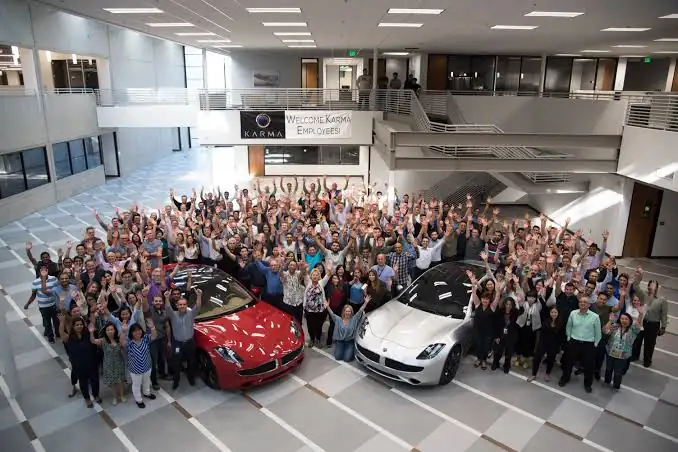
Karma cars are made by Karma Automotive, a privately owned company based in Irvine, California, that is wholly owned by Wanxiang Group of China.
Wanxiang Group is one of China’s largest private industrial conglomerates, with major operations in auto parts manufacturing and clean energy.
Karma Automotive assembles its vehicles at its own plant in Moreno Valley, California, giving the brand a genuine United States manufacturing base.
Unlike large public automakers, Karma builds vehicles in very small volumes aimed at a niche luxury and performance market rather than mass market buyers.
| Company Overview | Details |
| Company name | Karma Automotive LLC |
| Industry | Luxury plug in hybrid and electric vehicles |
| Founded | 2014 (from Fisker Automotive bankruptcy assets) |
| Headquarters | Irvine, California, United States |
| Assembly plant | Moreno Valley, California |
| Current owner | Wanxiang Group (private, China based) |
| President | Marques McCammon |
| Ownership type | Privately held |
| Country of parent | China |
| Main business | Low volume luxury plug in hybrid and EREV vehicles |
How Did Karma Automotive Start?
Karma Automotive began in February 2014, when Wanxiang Group bought the bankrupt Fisker Automotive’s assets at auction for about 149.2 million dollars.
Fisker Automotive, the original maker of the Fisker Karma plug in hybrid sedan, had been founded in 2007 by designer Henrik Fisker and Bernhard Koehler.
That original company collapsed after its battery supplier, A123 Systems, went bankrupt following a series of battery recalls that crippled Fisker’s only product.
Wanxiang’s purchase included the vehicle designs, plug in hybrid powertrain technology and the Wilmington Assembly factory in Delaware, but it notably did not include the Fisker brand name or trademarks, which stayed with Henrik Fisker personally.
From these purchased assets, Wanxiang formed an entirely new company and renamed the vehicle line Karma, launching the Karma Revero as a modernized successor to the original Fisker Karma.
Is Karma Automotive the Same as Fisker?
No, Karma Automotive and Fisker Inc. are two completely separate companies today, even though they share a common origin.
Karma Automotive descends from the assets of the original Fisker Automotive, the company behind the 2011 Fisker Karma sedan, which went bankrupt in 2013 and had its assets sold in 2014.
Fisker Inc., founded later by Henrik Fisker in 2016, was a separate and unrelated corporate entity that built the Fisker Ocean electric SUV starting in 2023.
That newer Fisker Inc. filed for its own Chapter 11 bankruptcy in June 2024 and has since been wound down through liquidation, a very different fate from Karma, which continues operating today.
So while the two brands share a name and a founder’s history, Karma Automotive is not connected to the more recent Fisker Ocean bankruptcy.
For a look at another electric vehicle startup that has faced its own manufacturing and financial challenges, see our guide to who makes Rivian.
Who Owns Karma Automotive?

Karma Automotive is wholly owned by Wanxiang Group, a large private industrial conglomerate headquartered in Hangzhou, China.
Wanxiang Group built its fortune primarily in automotive parts manufacturing before expanding into batteries, clean energy and electric vehicle ventures.
The company has owned Karma Automotive continuously since the 2014 acquisition, funding its operations, engineering and product development in the years since.
Karma is not publicly traded, so its shares cannot be bought or sold on any stock exchange, and its detailed financial results are not made public in the way a listed company’s would be.
In July 2020, Karma also raised about 100 million dollars from outside investors, broadening its funding sources beyond Wanxiang alone while Wanxiang remained the controlling owner.
What Vehicles Does Karma Make Today?
Karma Automotive currently produces the Karma GS 6 plug in hybrid and has recently ended production of the long running Karma Revero and Revero GT sedans.
The Karma Revero and Revero GT, built for eight years, were extended range plug in hybrids with aluminum spaceframe construction inherited from the original Fisker Karma design.
Karma has introduced the Gyesera as the spiritual successor to the Revero, continuing the extended range electric vehicle formula with 558 horsepower and 546 pound feet of torque.
The upcoming Karma Amaris, a two door luxury performance coupe, is expected to enter production in late 2026.
Karma has also outlined future plans for additional models including the Kaveya flagship super coupe and the Ivara crossover, though timelines for these vehicles remain subject to change.
These vehicles are sold in extremely limited numbers compared to mainstream automakers, reinforcing Karma’s position as a boutique luxury brand rather than a volume manufacturer.
Irvine, California headquarters
Current production plug in hybrid
Revero successor, in development
Coupe planned for late 2026
Where Are Karma Vehicles Built?
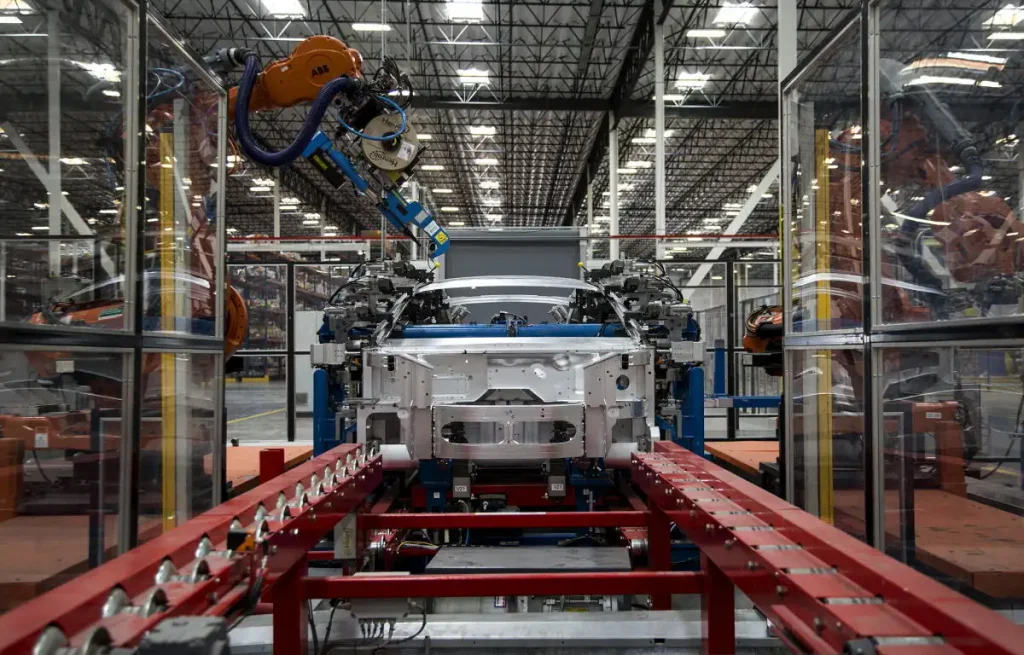
Karma vehicles are assembled at the company’s own plant in Moreno Valley, California, giving Karma a genuine domestic manufacturing footprint in the United States.
This is notable because many luxury and boutique electric vehicle brands rely on contract manufacturers overseas rather than operating their own factory.
Karma’s headquarters in Irvine, California houses its design, engineering and corporate leadership teams.
The company sells its vehicles through a small dealer network spanning North America, Europe, South America and the Middle East.
Karma Automotive Milestones Through the Years
The timeline below highlights the key events in Karma Automotive’s history since its founding.
Fisker Automotive introduces the plug in hybrid Fisker Karma sedan.
Fisker Automotive files for bankruptcy after battery supplier A123 Systems collapses.
Wanxiang Group purchases Fisker’s assets for about $149.2 million and forms Karma Automotive.
Karma introduces the Revero, an updated version of the original Fisker Karma.
Karma raises about $100 million from outside investors in July 2020.
Karma ends production of the Revero and Revero GT after eight years on the market.
Karma unveils the Amaris coupe and Gyesera as the next generation of its extended range lineup.
Who Leads Karma Automotive?
Marques McCammon serves as President of Karma Automotive, overseeing the company’s daily operations, product strategy and sales network.
As a privately held subsidiary of Wanxiang Group, Karma’s leadership reports up to Wanxiang’s ownership rather than to public shareholders.
This structure gives Karma more flexibility to pursue niche, low volume vehicle programs that would be difficult for a publicly traded automaker to justify to investors.
Product decisions, including the shift from the Revero to newer models like the Gyesera and Amaris, reflect this longer term, patient ownership approach.
Is Karma Really Good or Really Worth It?
Karma vehicles appeal mainly to a small niche of luxury buyers who want a rare, handbuilt plug in hybrid, though the brand’s low sales volume and limited service network are real tradeoffs.
Trade press coverage from outlets like GreenCarReports and Carscoops has generally praised Karma’s bold styling and unique extended range powertrain technology.
Because Karma sells only a small number of vehicles each year, finding a nearby dealer, parts or specialized service can be more difficult than with a mainstream luxury brand.
The brand’s pricing sits well into luxury and near exotic territory, positioning it against low volume competitors rather than everyday electric vehicles.
Owners who value exclusivity and a distinctive design history tend to be drawn to Karma, while buyers who prioritize widespread service networks may prefer a larger automaker.
- Distinctive design lineage tracing back to the original Fisker Karma
- Genuine United States assembly plant in California
- Backed by a large, well funded parent company in Wanxiang Group
- Extremely limited production adds exclusivity for buyers
- Very small dealer and service network
- High price point limits the buyer pool
- Low annual sales volume compared to major automakers
- New model timelines have shifted in the past
Frequently Asked Questions About Karma Cars
Who owns Karma Automotive?
Karma Automotive is wholly owned by Wanxiang Group, a private Chinese industrial conglomerate.
Wanxiang has owned the company since purchasing Fisker Automotive’s bankrupt assets in 2014.
Is Karma the same company as Fisker?
No, Karma Automotive is a separate company from Fisker Inc., though both trace back to designer Henrik Fisker’s original work.
Karma descends from the 2013 bankruptcy of the original Fisker Automotive, while Fisker Inc. was a later, unrelated company that failed in 2024.
Where are Karma cars made?
Karma vehicles are assembled at the company’s plant in Moreno Valley, California.
Karma’s corporate headquarters is located in Irvine, California.
Does Karma Automotive still make the Revero?
No, Karma ended production of the Revero and Revero GT in 2025 after eight years on the market.
The Gyesera is positioned as its spiritual successor, continuing the extended range electric vehicle formula.
For another look at how newer electric vehicle makers structure their ownership and manufacturing, see our guide to who makes Lucid cars.
Additional background on Karma Automotive’s history is available on Wikipedia, and coverage of Karma’s newest models can be found through GreenCarReports, while current offerings are listed on the official Karma Automotive website.

I am Jack Neel, a mechanical engineer, researcher, and writer. I created this website to share my knowledge about different brands and products with you. I research the manufacturers behind the brands and provide you with the information you need to make smart buying decisions.