
McLaren cars are made by McLaren Automotive, a British supercar manufacturer headquartered at the McLaren Technology Centre in Woking, Surrey, England.
McLaren is renowned for building some of the world’s most technologically advanced road cars, drawing directly on decades of Formula One engineering expertise to produce lightweight, mid-engined sports and supercars.
As of April 2025, McLaren Automotive is wholly owned by CYVN Holdings LLC, an advanced mobility investment vehicle owned by the government of Abu Dhabi, making it one of the few British luxury car brands under Gulf sovereign wealth ownership.
Knowing who makes McLaren helps buyers understand the ownership structure behind one of the most exclusive automotive brands in the world and what that means for the company’s future direction.
This article covers McLaren Automotive’s current ownership, where the cars are built, the history of the brand, and how McLaren compares to Ferrari on manufacturing and ownership.
So let’s get started.
Table of Contents
Who Makes McLaren Cars?
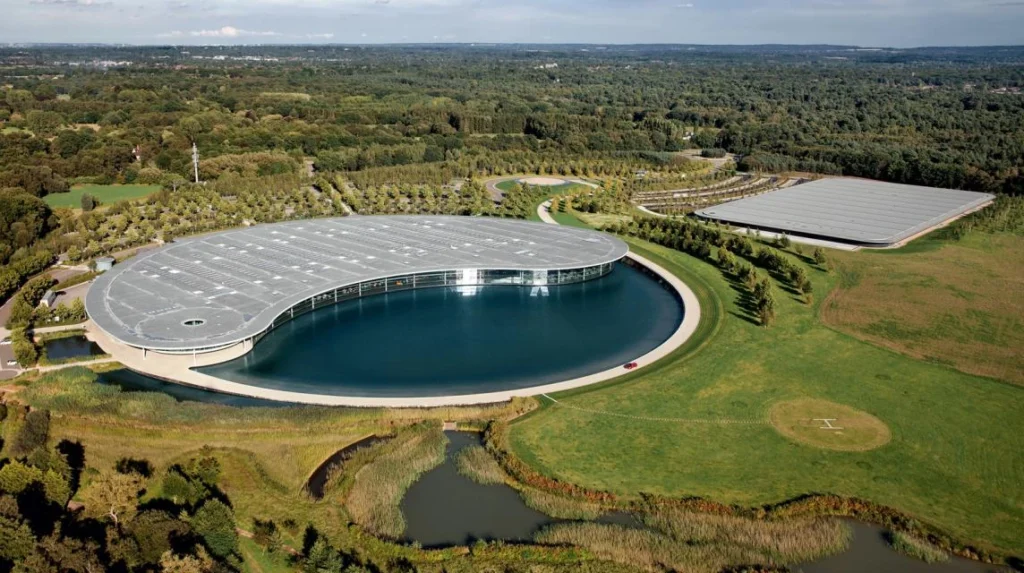
McLaren Automotive is the company that designs, engineers, and manufactures all McLaren road cars.
It is a separate entity from McLaren Racing, the Formula One team, though both operate under the broader McLaren Group umbrella and share technology and branding.
McLaren Automotive was formally established in 2010, succeeding the earlier McLaren Cars entity that had been founded in 1985.
All McLaren road cars are hand-assembled at the McLaren Production Centre, located at the McLaren Technology Centre campus in Woking, England.
According to McLaren Automotive’s Wikipedia entry, production output reached 2,188 units in 2024, reflecting the deliberately low-volume, high-precision nature of the brand.
McLaren does not outsource assembly to third-party contract manufacturers. Every car is built in-house in Woking, with each vehicle passing through a meticulous quality control process before delivery. The brand’s current CEO is Nick Collins, who took the role following the CYVN acquisition.
Who Owns McLaren Automotive?
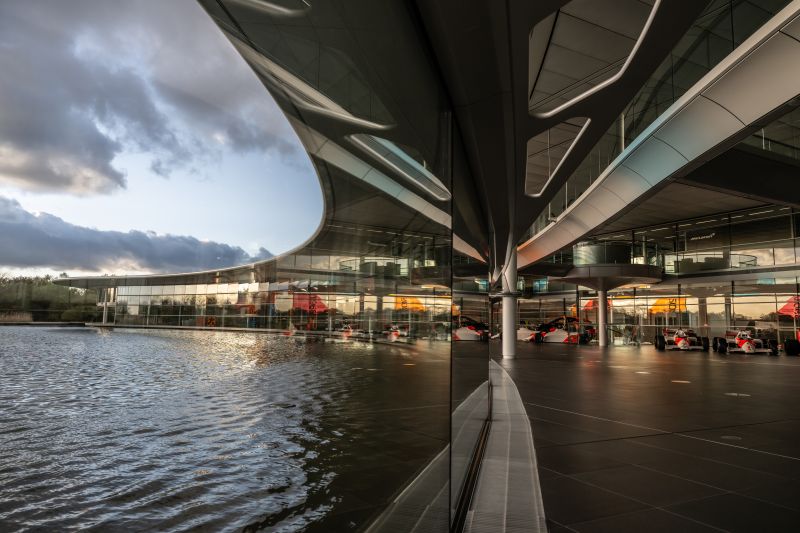
In April 2025, CYVN Holdings LLC completed its acquisition of McLaren Automotive and became the sole owner.
CYVN Holdings is an advanced mobility operator and investment vehicle based in Abu Dhabi, owned by the Abu Dhabi government.
The acquisition gave CYVN a clear strategic mandate to redefine McLaren as a high-performing British automotive business on the global stage.
Prior to the CYVN takeover, McLaren Automotive had a more complex ownership structure involving Bahrain’s Mumtalakat Holding Company and other investors.
That structure was simplified when CYVN took full control of the automotive division in April 2025.
McLaren Racing, which operates the Formula One and IndyCar teams, remains separately structured, with Mumtalakat as majority shareholder and CYVN holding a non-controlling stake as of September 2025.
McLaren Group Holdings Limited was established in April 2025 as the new holding company for McLaren Automotive, consolidating the licensing business and a stake in McLaren Racing under one structure. McLaren is not publicly traded on any stock exchange.
Where Are McLaren Cars Made?
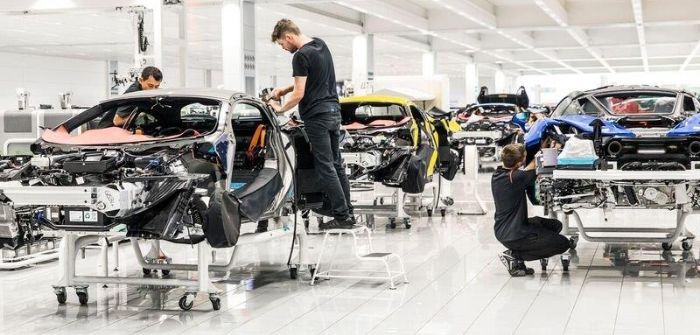
Every McLaren road car is manufactured at the McLaren Production Centre in Woking, Surrey, England.
The facility sits within the McLaren Technology Centre campus, a purpose-built complex designed by architect Norman Foster that opened in 2004.
The production facility was added to the campus specifically to bring car manufacturing and engineering under one roof.
The production process is highly manual compared to mass-market automakers. Technicians hand-assemble each car over several days, with carbon fiber monocoques forming the structural core of most models.
The brand’s use of carbon fiber at this scale, even in its entry-level models, is one of the key differentiators from competitors at similar price points.
McLaren sources its twin-turbocharged V8 engines from Ricardo plc, a British engineering company based in Shoreham-by-Sea, West Sussex.
The engines are built to McLaren’s specifications and shipped to Woking for installation. This is one of the few outsourced components in an otherwise largely in-house production process.
What Is the History of McLaren Cars?
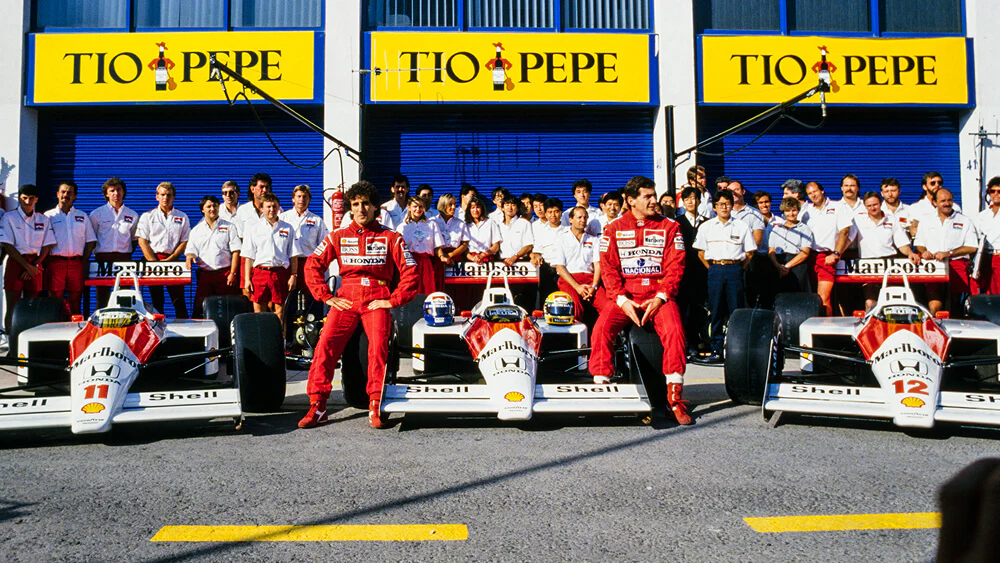
The McLaren name in motorsport dates to 1963, when New Zealand racing driver Bruce McLaren founded the McLaren Motor Racing team.
The road car business began much later, with McLaren Cars established in 1985 under Ron Dennis.
The company’s first production road car was the legendary McLaren F1, launched in 1992, which held the title of world’s fastest production car for over a decade.
McLaren Automotive was reconstituted in 2010 as a dedicated road car business separate from the racing operation, launching the MP4-12C in 2011 as its first modern series-production model.
Since then, the company has expanded its lineup across Sports Series, Super Series, and Ultimate Series model families, producing cars such as the 720S, Artura, and the track-focused Senna.
The Artura, launched in 2021 and updated for subsequent model years, is McLaren’s first series-production hybrid supercar, using a new twin-turbocharged V6 paired with an electric motor.
It represents the brand’s pivot toward electrification while retaining the lightweight carbon fiber construction that defines McLaren’s engineering philosophy.
McLaren vs. Ferrari: How Do the Two Brands Compare?
McLaren and Ferrari are the two most frequently compared supercar brands in the world, both with deep Formula One heritage and both producing limited-volume, high-performance road cars at premium price points.
Ferrari is headquartered in Maranello, Italy, and is publicly traded on the New York Stock Exchange under the ticker RACE, giving it a very different ownership and financial structure than McLaren.
Ferrari produces approximately 14,000 cars per year compared to McLaren’s roughly 2,000 to 3,000, making Ferrari significantly larger in volume terms while still being far smaller than mainstream automakers.
Ferrari builds all its cars in Maranello and manufactures its own engines entirely in-house, while McLaren sources engines from Ricardo but handles all final assembly in Woking.
On technology, McLaren has consistently led on carbon fiber use and power-to-weight ratios, while Ferrari holds an edge on brand heritage, exclusivity perception, and resale values.
Both brands release special limited-edition models with prices well into the millions, targeting the same pool of ultra-high-net-worth collectors globally. For other exotic car ownership articles, see Who Makes Maserati and Who Makes Alfa Romeo.
Frequently Asked Questions About McLaren
Is McLaren a British car?
Yes. McLaren Automotive is a British company headquartered in Woking, Surrey, England. Every McLaren road car is designed, engineered, and hand-assembled at the McLaren Technology Centre in Woking, making it one of the few remaining British-made supercar brands.
Who owns McLaren now?
As of April 2025, McLaren Automotive is wholly owned by CYVN Holdings LLC, an investment vehicle owned by the government of Abu Dhabi, UAE. McLaren Racing, the Formula One team, is separately majority-owned by Bahrain’s Mumtalakat Holding Company with CYVN holding a minority stake.
Where are McLaren cars manufactured?
All McLaren road cars are manufactured at the McLaren Production Centre in Woking, England. The facility is part of the McLaren Technology Centre campus and produces each car by hand, with a full production run of roughly 2,000 to 3,000 vehicles per year across all model lines.
Does McLaren make its own engines?
McLaren does not manufacture its own engines. The twin-turbocharged V8 engines used in most McLaren models are built by Ricardo plc, a British engineering company, to McLaren’s specifications. The Artura’s twin-turbocharged V6 was developed in partnership between McLaren and an external engineering partner as part of the brand’s hybrid program.

I am Jack Neel, a mechanical engineer, researcher, and writer. I created this website to share my knowledge about different brands and products with you. I research the manufacturers behind the brands and provide you with the information you need to make smart buying decisions.