
Suzuki Motor Corporation is a publicly traded Japanese company, not a business controlled by a single owner today.
It is headquartered in Hamamatsu, Japan, and it builds small cars, motorcycles, ATVs and marine engines sold around the world.
Suzuki has a close capital alliance with Toyota, though Toyota does not control the company outright.
Suzuki left the American passenger car market back in 2012, but the brand never fully left the United States, since its motorcycles, ATVs and marine products remain widely available.
So who really makes Suzuki vehicles, who owns the company today, and what happened to Suzuki cars in America? Here is a complete breakdown of Suzuki ownership, leadership and current operations.
Table of Contents
Who Makes Suzuki Vehicles?

Suzuki vehicles are made by Suzuki Motor Corporation, a publicly traded Japanese manufacturer headquartered in Hamamatsu, Shizuoka Prefecture.
There is no single controlling owner today, and Suzuki shares are held by a wide mix of institutional investors, banks and individual shareholders.
Suzuki trades on the Tokyo Stock Exchange under ticker code 7269.
Suzuki manufactures most of its vehicles at its own plants in Japan, India, Indonesia and several other countries through wholly owned subsidiaries and joint ventures.
| Company Overview | Details |
| Company name | Suzuki Motor Corporation |
| Industry | Automobiles, motorcycles, ATVs and marine engines |
| Founded | 1909 (as Suzuki Loom Works) |
| Founder | Michio Suzuki |
| Headquarters | Hamamatsu, Shizuoka Prefecture, Japan |
| Current owner | Public shareholders (Tokyo Stock Exchange listed) |
| Toyota equity stake | About 4.9 percent |
| Chairman | Toshihiro Suzuki |
| Stock ticker | 7269 |
| Country | Japan |
| Main business | Small cars, motorcycles, ATVs and marine products |
Is Suzuki Owned by Toyota?
No, Toyota does not own Suzuki, though the two companies hold small equity stakes in each other as part of a broader technology and business alliance.
In August 2019, Toyota agreed to acquire about a 4.9 percent stake in Suzuki, while Suzuki agreed to take about a 0.2 percent stake in Toyota in return.
This arrangement was structured as a strategic partnership rather than a takeover, allowing both companies to collaborate on areas such as electrification, connected car technology and autonomous driving research.
Suzuki has continued to operate independently, keeping its own management, brand identity and product lineup separate from Toyota’s.
The remainder of Suzuki’s shares are held by a broad group of Japanese banks, insurance companies, pension funds and individual investors typical of a major Tokyo Stock Exchange listed manufacturer.
Who Founded Suzuki?
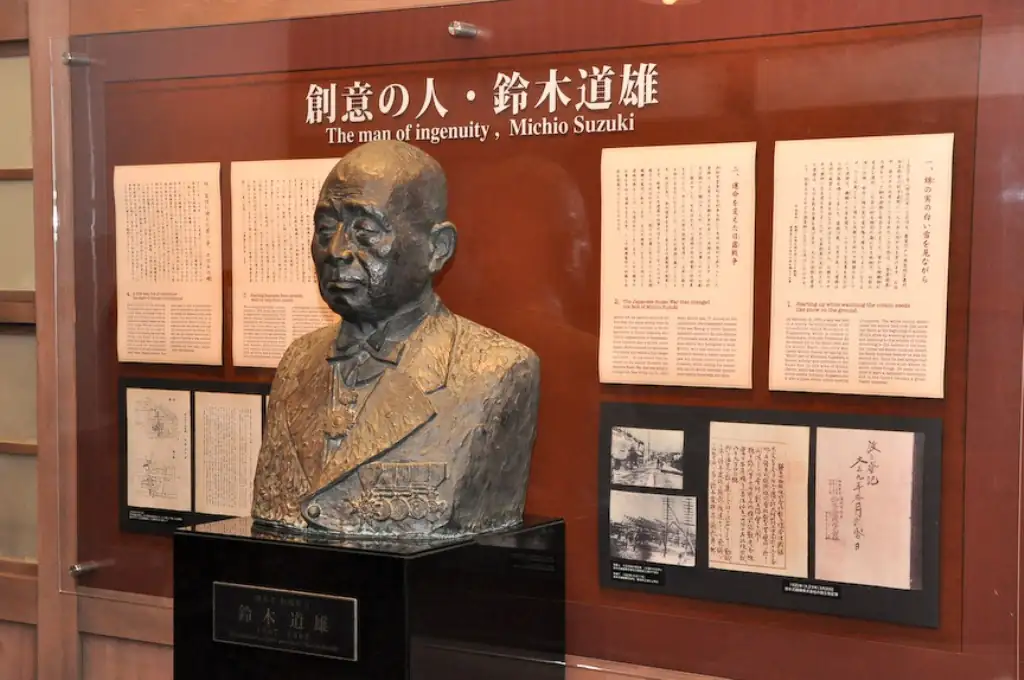
Suzuki was founded in 1909 by Michio Suzuki, who established Suzuki Loom Works in Hamamatsu, Japan, to build weaving looms for the country’s silk industry.
The company spent its first three decades focused entirely on textile machinery before Michio Suzuki began exploring automobile development in 1937.
Suzuki completed several small car prototypes with innovative liquid cooled four stroke engines, but World War II halted civilian vehicle production before the design reached the market.
After the war, Suzuki pivoted to motorcycles in 1952, capitalizing on Japan’s need for affordable, fuel efficient transportation during postwar reconstruction.
Suzuki returned to passenger cars in 1955 with the Suzulight, marking the true beginning of its modern automobile business.
What Happened to Suzuki Cars in the United States?
Suzuki stopped selling passenger cars in the United States in November 2012, when American Suzuki Motor Corporation filed for Chapter 11 bankruptcy protection.
The company cited a combination of factors, including a persistently strong yen that made Japanese built cars expensive to import, tightening safety and emissions regulations, and Suzuki’s narrow lineup of mostly small cars in a market favoring larger vehicles.
At the time, Suzuki sold models such as the Swift, SX4, Kizashi and Grand Vitara in the United States, but sales volumes were too low to justify continued investment.
Importantly, the exit only affected passenger cars sold through American Suzuki Motor Corporation.
For more on how other Japanese manufacturers have structured their global operations, see our guide to who makes Mitsubishi.
Does Suzuki Still Sell Anything in America?
Yes, Suzuki still sells motorcycles, ATVs and marine outboard engines in the United States, even though it no longer sells passenger cars there.
Suzuki Motor of America handles the brand’s motorcycle, ATV and marine business in the country today.
Suzuki Manufacturing of America Corporation, based in Rome, Georgia, produces ATVs for the American market, giving Suzuki an actual domestic manufacturing presence.
Suzuki motorcycles, including the long running GSX R sportbike series and the high performance Hayabusa, remain popular and widely available through American dealerships.
Suzuki’s marine division also supplies outboard motors used on boats throughout the United States and remains a significant part of the company’s American business.
What Vehicles Does Suzuki Make Globally?
Suzuki’s global lineup includes small cars like the Alto, Swift, Baleno and Ciaz, along with SUVs such as the Jimny, Vitara and Grand Vitara.
Suzuki is one of the largest automakers in India through its majority owned subsidiary, Maruti Suzuki, which produces cars specifically for the Indian market and export.
The compact Jimny off roader has developed a strong following worldwide for its rugged capability and small footprint.
Suzuki also remains a major player in Southeast Asian and African markets, where affordable, fuel efficient small cars are in high demand.
Beyond cars, Suzuki continues to be one of the world’s largest motorcycle manufacturers, competing directly with Honda, Yamaha and Kawasaki.
Tokyo Stock Exchange investors
About 4.9 percent equity stake
Majority owned Indian subsidiary
Motorcycles, ATVs and marine
ATV plant in Rome, Georgia
How Much Is Suzuki Worth?
Suzuki Motor Corporation reported full year revenue of about 6.293 trillion yen for its fiscal year 2025, up from 5.825 trillion yen the year before.
Profit attributable to the parent company rose to about 439.267 billion yen, equal to roughly 227.66 yen per share, an increase from the prior year.
Operating profit came in at about 622.909 billion yen, a slight decline from 642.851 billion yen, reflecting cost pressures even as revenue grew.
For fiscal year 2026, Suzuki has guided toward revenue growth of about 8.1 percent to roughly 6.8 trillion yen, while projecting profit to fall by about 13.5 percent to around 380 billion yen.
This guidance reflects a common pattern among Japanese automakers currently managing rising input costs and shifting currency conditions alongside continued sales growth.
| Financial Snapshot | Figure |
| Fiscal 2025 revenue | About 6.293 trillion yen |
| Fiscal 2025 profit to parent | About 439.267 billion yen |
| Fiscal 2025 operating profit | About 622.909 billion yen |
| Fiscal 2026 revenue guidance | About 6.8 trillion yen (up 8.1 percent) |
| Fiscal 2026 profit guidance | About 380 billion yen (down 13.5 percent) |
Suzuki Milestones Through the Years
The timeline below highlights the events that shaped Suzuki into the manufacturer it is today.
Michio Suzuki establishes Suzuki Loom Works in Hamamatsu, Japan.
Suzuki pivots into motorcycle manufacturing after World War II.
Suzuki returns to automobile production with the Suzulight.
American Suzuki Motor Corporation files for Chapter 11 bankruptcy and exits US car sales.
Toyota acquires about a 4.9 percent stake in Suzuki as part of a strategic partnership.
Toshihiro Suzuki takes over as Chairman from his father, Osamu Suzuki.
Suzuki reports full year revenue of about 6.293 trillion yen.
Who Leads Suzuki Today?
Toshihiro Suzuki serves as Chairman of Suzuki Motor Corporation, having taken over from his father Osamu Suzuki, who led the company for more than four decades.
Osamu Suzuki stepped down as Chairman in June 2021 after leading Suzuki since 1978, remaining involved with the company in an advisory capacity afterward.
Like other major Japanese automaker leaders, Toshihiro Suzuki manages strategy and operations on behalf of shareholders rather than owning the company outright.
Suzuki’s board of directors, elected by shareholders, oversees the company’s overall direction and major decisions.
Is Suzuki Really Good or Really Worth It?
Suzuki has a strong global reputation for building affordable, fuel efficient small cars and motorcycles, though customer service feedback online is mixed like most large automakers.
On Trustpilot, reviews of Suzuki’s global consumer site are limited in volume but generally reflect the kind of mixed feedback typical of large international car brands.
Suzuki motorcycles, particularly the GSX R series and Hayabusa, are widely respected among American riders for performance and reliability.
Suzuki’s small cars remain extremely popular in markets like India, where Maruti Suzuki consistently ranks among the best selling car brands in the country.
For American consumers specifically, the absence of new Suzuki passenger cars since 2012 remains the brand’s biggest limitation, since shoppers cannot buy a new Suzuki branded car in the United States today.
- Strong reputation for affordable, fuel efficient small cars
- Respected motorcycle lineup including the Hayabusa
- Market leading position in India through Maruti Suzuki
- Continued US presence through motorcycles, ATVs and marine
- No new passenger cars sold in the United States since 2012
- Smaller global scale compared to Toyota or Honda
- Profit guidance for fiscal 2026 points to a decline
- Limited presence in larger vehicle segments
Frequently Asked Questions About Suzuki
Does Suzuki still sell cars in the United States?
No, Suzuki stopped selling passenger cars in the United States in November 2012.
The brand continues to sell motorcycles, ATVs and marine engines in America today.
Is Suzuki owned by Toyota?
No, Toyota does not own Suzuki, though Toyota holds about a 4.9 percent equity stake as part of a technology alliance.
Suzuki also holds a small reciprocal stake in Toyota, and both companies operate independently.
Who is the current leader of Suzuki?
Toshihiro Suzuki serves as Chairman of Suzuki Motor Corporation.
He succeeded his father Osamu Suzuki, who led the company from 1978 until 2021.
What does Suzuki make besides cars?
Suzuki also manufactures motorcycles, ATVs and marine outboard engines sold worldwide, including in the United States.
These product lines remain a major and growing part of Suzuki’s global business.
For more on how other Japanese automakers balance independent operation with strategic alliances, see our guide to who makes Mazda.
Additional background on Suzuki’s history is available on Wikipedia, and current models and financial reports can be found on the official Global Suzuki website.

I am Jack Neel, a mechanical engineer, researcher, and writer. I created this website to share my knowledge about different brands and products with you. I research the manufacturers behind the brands and provide you with the information you need to make smart buying decisions.